


Concise review: preleukemic stem cells: molecular biology and clinical implications of the precursors to leukemia stem cells
- PMID: 23349328
- PMCID: PMC3659760
- DOI: 10.5966/sctm.2012-0109
Concise review: preleukemic stem cells: molecular biology and clinical implications of the precursors to leukemia stem cells
Abstract
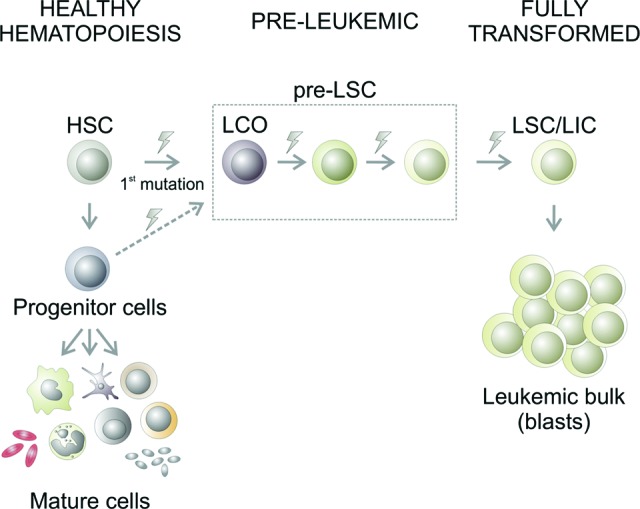
Recent experimental evidence has shown that acute myeloid leukemia (AML) and myelodysplastic syndromes (MDS) arise from transformed immature hematopoietic cells following the accumulation of multiple stepwise genetic and epigenetic changes in hematopoietic stem cells and committed progenitors. The series of transforming events initially gives rise to preleukemic stem cells (pre-LSC), preceding the formation of fully transformed leukemia stem cells (LSC). Despite the established use of poly-chemotherapy, relapse continues to be the most common cause of death in AML and MDS. The therapeutic elimination of all LSC, as well as pre-LSC, which provide a silent reservoir for the re-formation of LSC, will be essential for achieving lasting cures. Conventional sequencing and next-generation genome sequencing have allowed us to describe many of the recurrent mutations in the bulk cell populations in AML and MDS, and recent work has also focused on identifying the initial molecular changes contributing to leukemogenesis. Here we review recent and ongoing advances in understanding the roles of pre-LSC, and the aberrations that lead to pre-LSC formation and subsequent LSC transformation.
Figures
References
-
- Gilliland DG, Tallman MS. Focus on acute leukemias. Cancer Cell. 2002;1:417–420. - PubMed
-
- Hope KJ, Jin L, Dick JE. Acute myeloid leukemia originates from a hierarchy of leukemic stem cell classes that differ in self-renewal capacity. Nat Immunol. 2004;5:738–743. - PubMed
-
- Friedman AD. Transcriptional control of granulocyte and monocyte development. Oncogene. 2007;26:6816–6828. - PubMed
-
- Laiosa CV, Stadtfeld M, Graf T. Determinants of lymphoid-myeloid lineage diversification. Annu Rev Immunol. 2006;24:705–738. - PubMed
-
- Tenen DG. Disruption of differentiation in human cancer: AML shows the way. Nat Rev Cancer. 2003;3:89–101. - PubMed
Publication types
MeSH terms
Grants and funding
LinkOut - more resources
Full Text Sources
Other Literature Sources
Medical
Research Materials
Miscellaneous
