


A naturally-occurring histone acetyltransferase inhibitor derived from Garcinia indica impairs newly acquired and reactivated fear memories
- PMID: 23349897
- PMCID: PMC3549978
- DOI: 10.1371/journal.pone.0054463
A naturally-occurring histone acetyltransferase inhibitor derived from Garcinia indica impairs newly acquired and reactivated fear memories
Erratum in
-
Correction: A Naturally-Occurring Histone Acetyltransferase Inhibitor Derived from Garcinia indica Impairs Newly Acquired and Reactivated Fear Memories.PLoS One. 2017 Jul 17;12(7):e0181892. doi: 10.1371/journal.pone.0181892. eCollection 2017. PLoS One. 2017. PMID: 28715509 Free PMC article.
Abstract
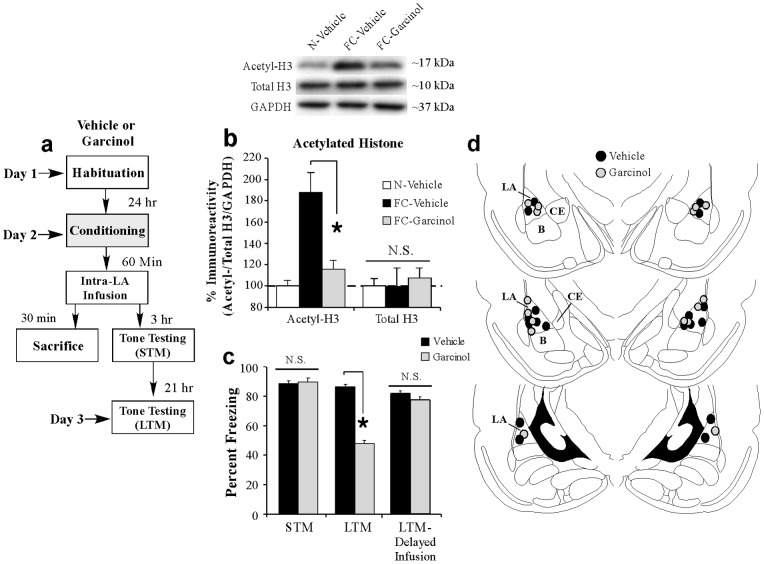
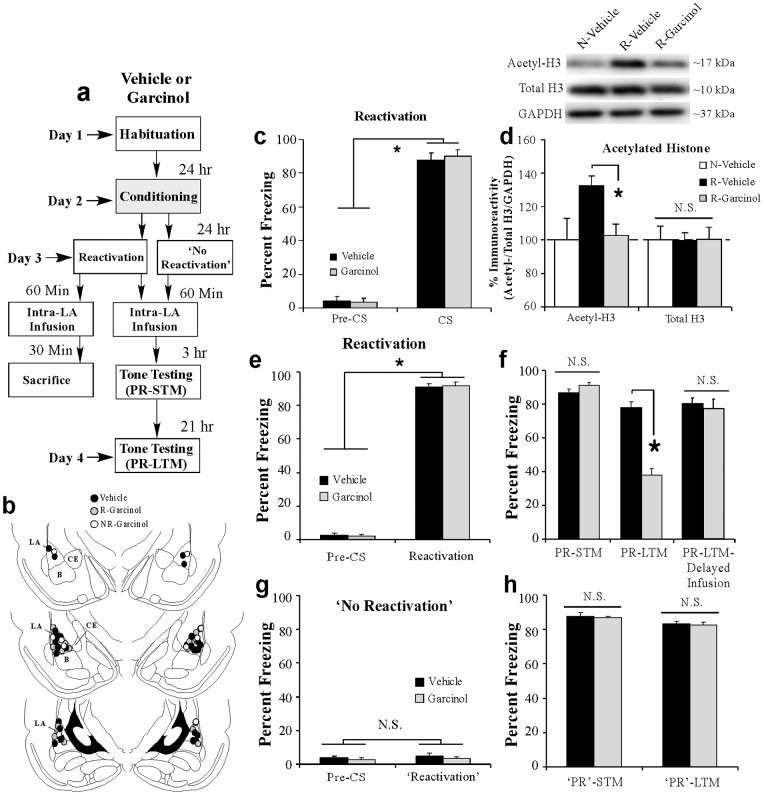
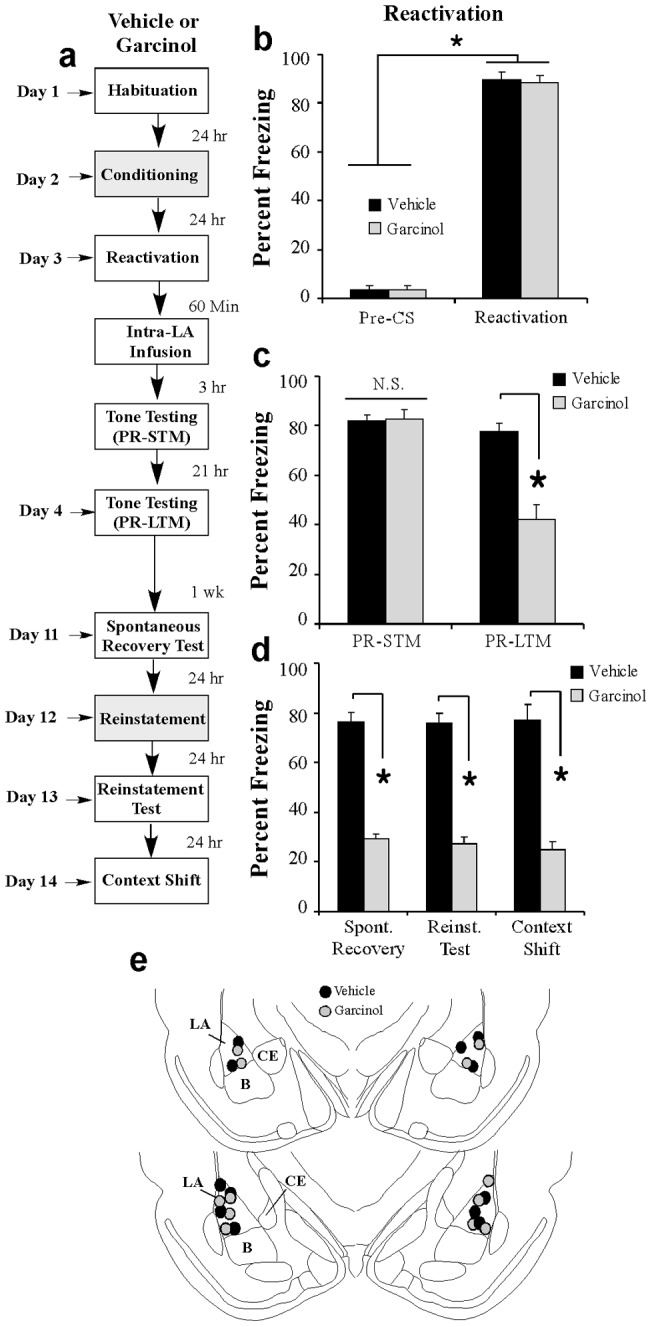
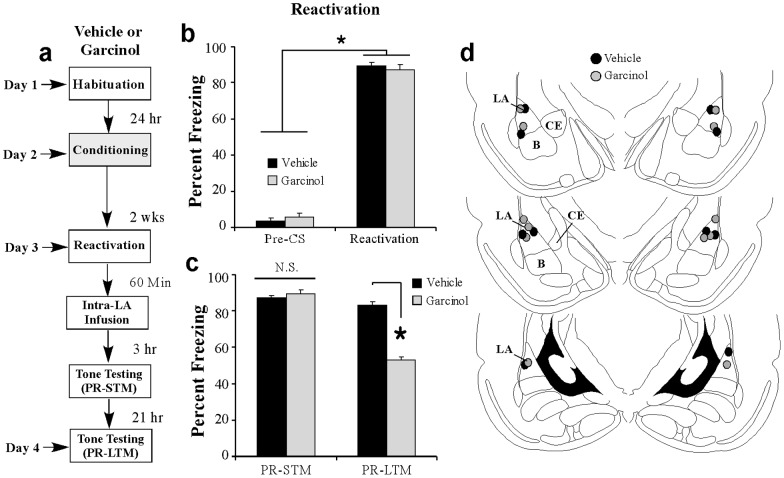
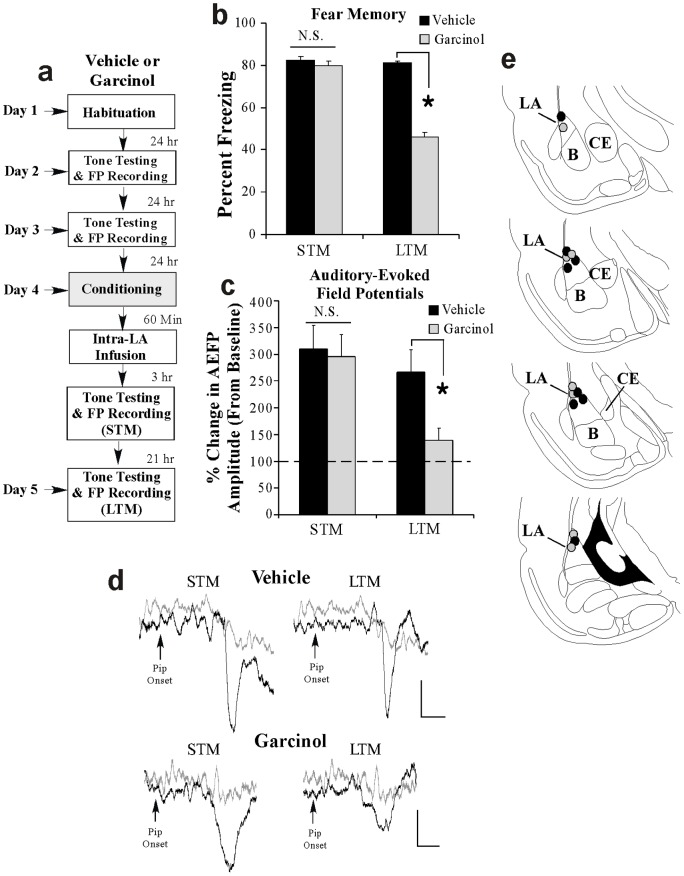
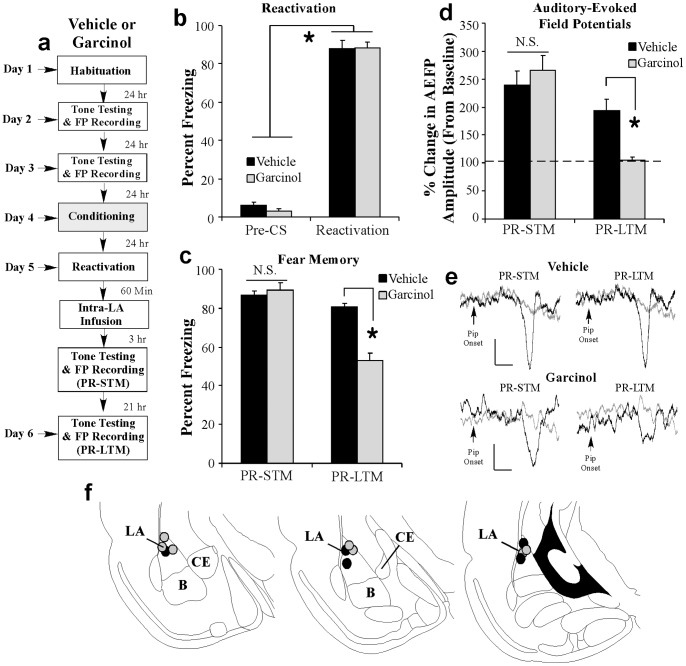
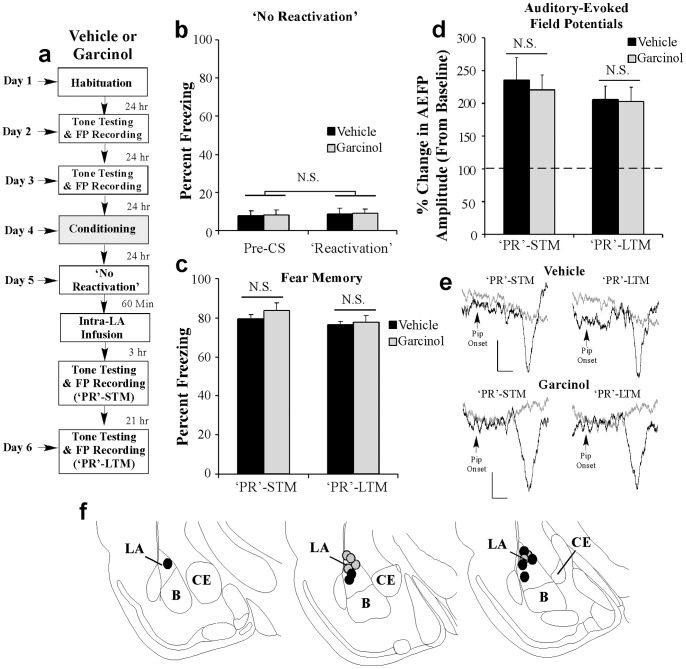
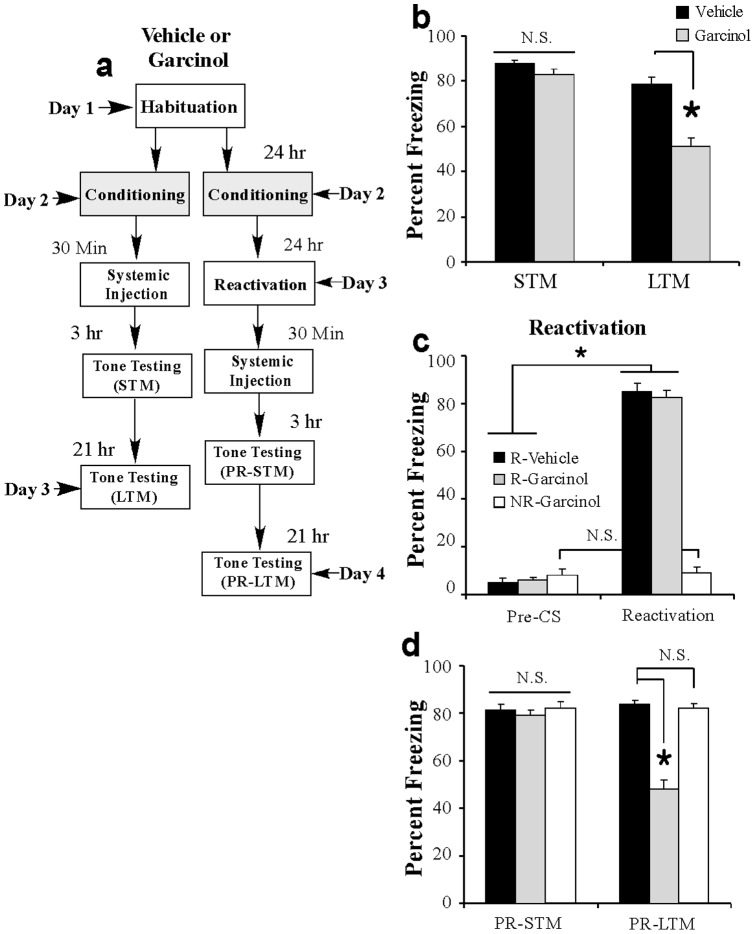
The study of the cellular and molecular mechanisms underlying the consolidation and reconsolidation of traumatic fear memories has progressed rapidly in recent years, yet few compounds have emerged that are readily useful in a clinical setting for the treatment of anxiety disorders such as post-traumatic stress disorder (PTSD). Here, we use a combination of biochemical, behavioral, and neurophysiological methods to systematically investigate the ability of garcinol, a naturally-occurring histone acetyltransferase (HAT) inhibitor derived from the rind of the fruit of the Kokum tree (Garcina indica), to disrupt the consolidation and reconsolidation of Pavlovian fear conditioning, a widely studied rodent model of PTSD. We show that local infusion of garcinol into the rat lateral amygdala (LA) impairs the training and retrieval-related acetylation of histone H3 in the LA. Further, we show that either intra-LA or systemic administration of garcinol within a narrow window after either fear conditioning or fear memory retrieval significantly impairs the consolidation and reconsolidation of a Pavlovian fear memory and associated neural plasticity in the LA. Our findings suggest that a naturally-occurring compound derived from the diet that regulates chromatin function may be useful in the treatment of newly acquired or recently reactivated traumatic memories.
Conflict of interest statement
Figures
References
-
- Milner B, Squire LR, Kandel ER (1998) Cognitive neuroscience and the study of memory. Neuron 20: 445–468. - PubMed
-
- Sara SJ (2000) Retrieval and reconsolidation: toward a neurobiology of remembering. Learn Mem 7: 73–84. - PubMed
-
- Nader K (2003) Memory traces unbound. Trends Neurosci 26: 65–72. - PubMed
-
- Pitman RK, Shalev AY, Orr SP (2000) Posttraumatic stress disorder: emotion, conditioning, & memory. In: Gazzaniga MS, editor. The New Cognitive Neurosciences. Cambridge: MIT Press.
-
- Tronson NC, Taylor JR (2007) Molecular mechanisms of memory reconsolidation. Nat Rev Neurosci 8: 262–275. - PubMed
Publication types
MeSH terms
Substances
Grants and funding
LinkOut - more resources
Full Text Sources
Other Literature Sources
Medical
