


Environmental enrichment and gut inflammation modify stress-induced c-Fos expression in the mouse corticolimbic system
- PMID: 23349972
- PMCID: PMC3547954
- DOI: 10.1371/journal.pone.0054811
Environmental enrichment and gut inflammation modify stress-induced c-Fos expression in the mouse corticolimbic system
Abstract
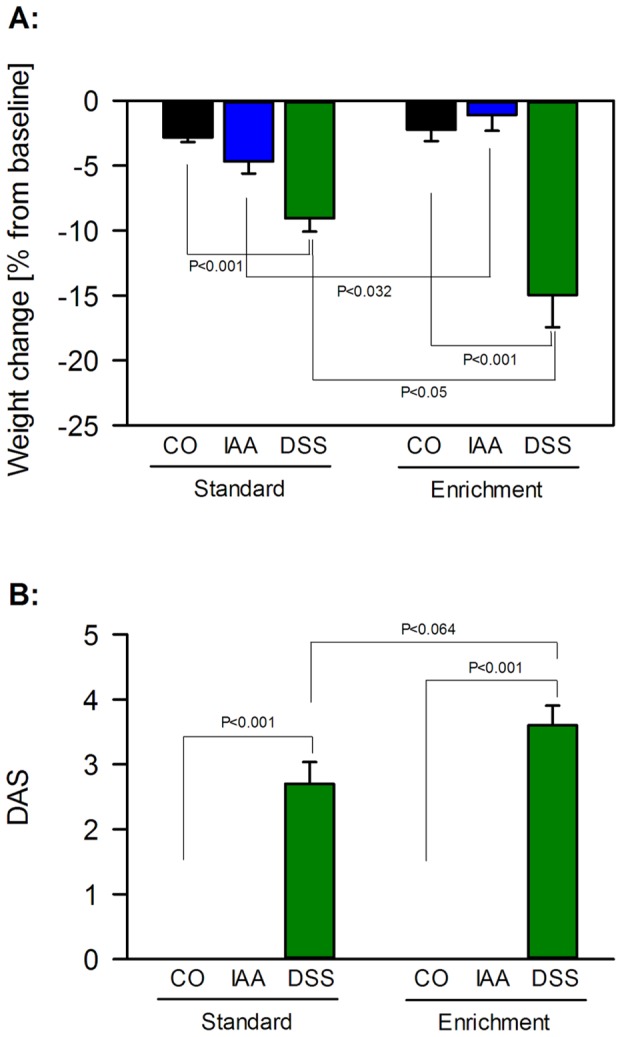
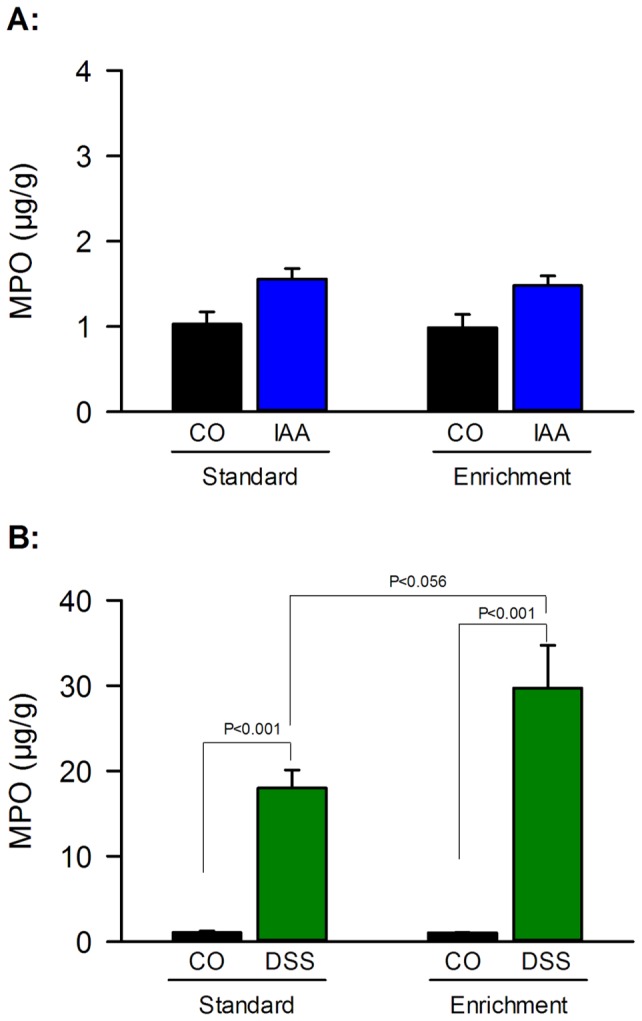
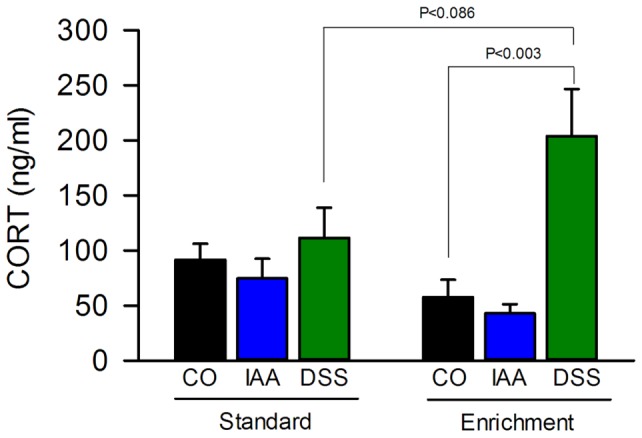
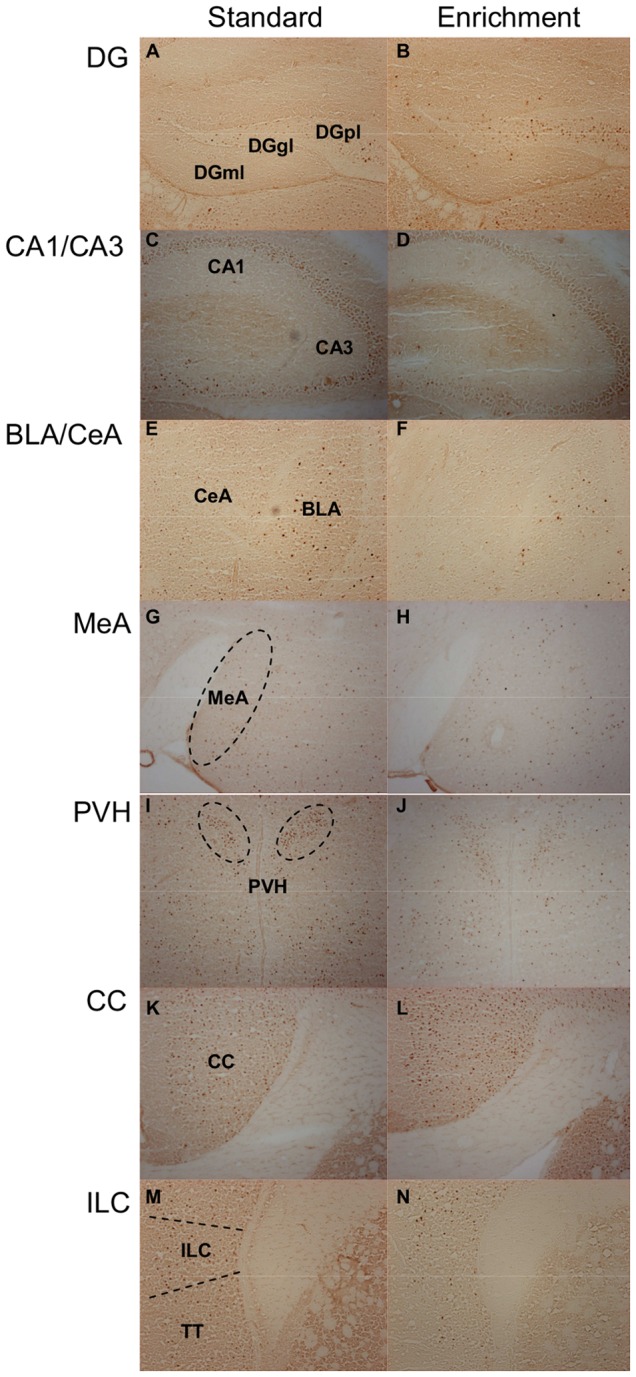
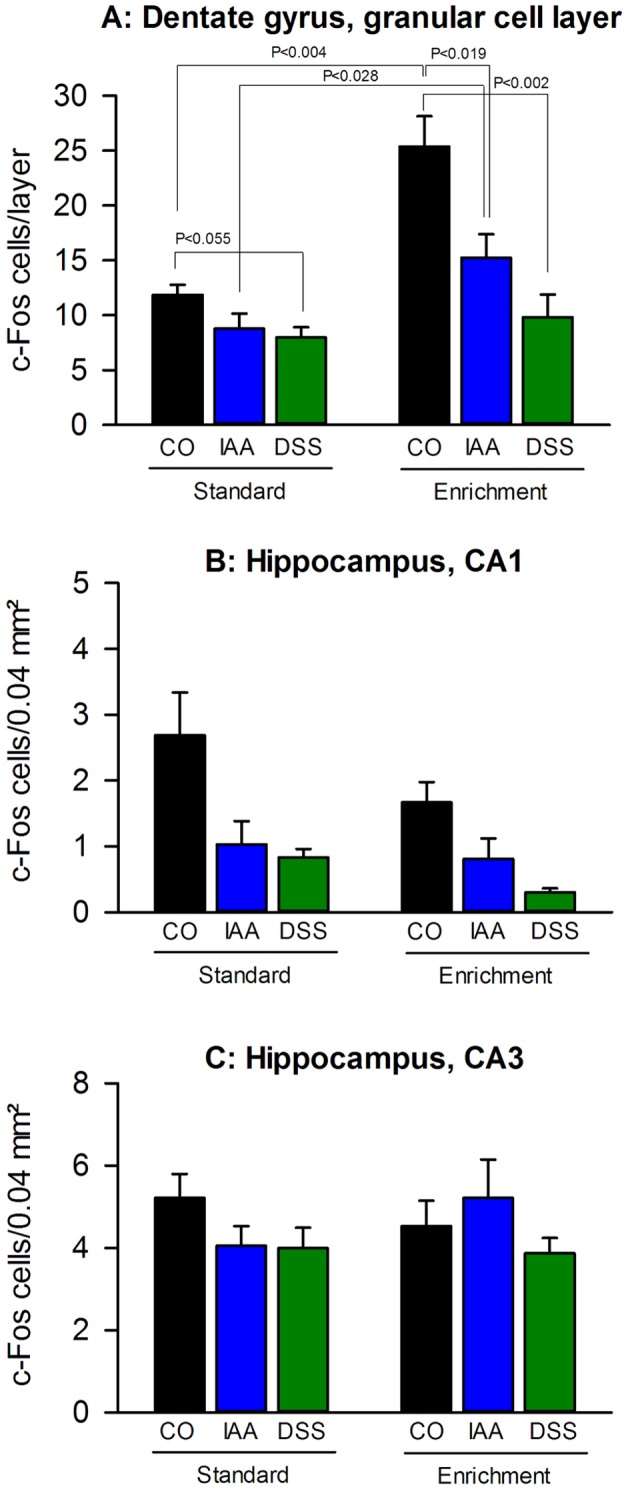
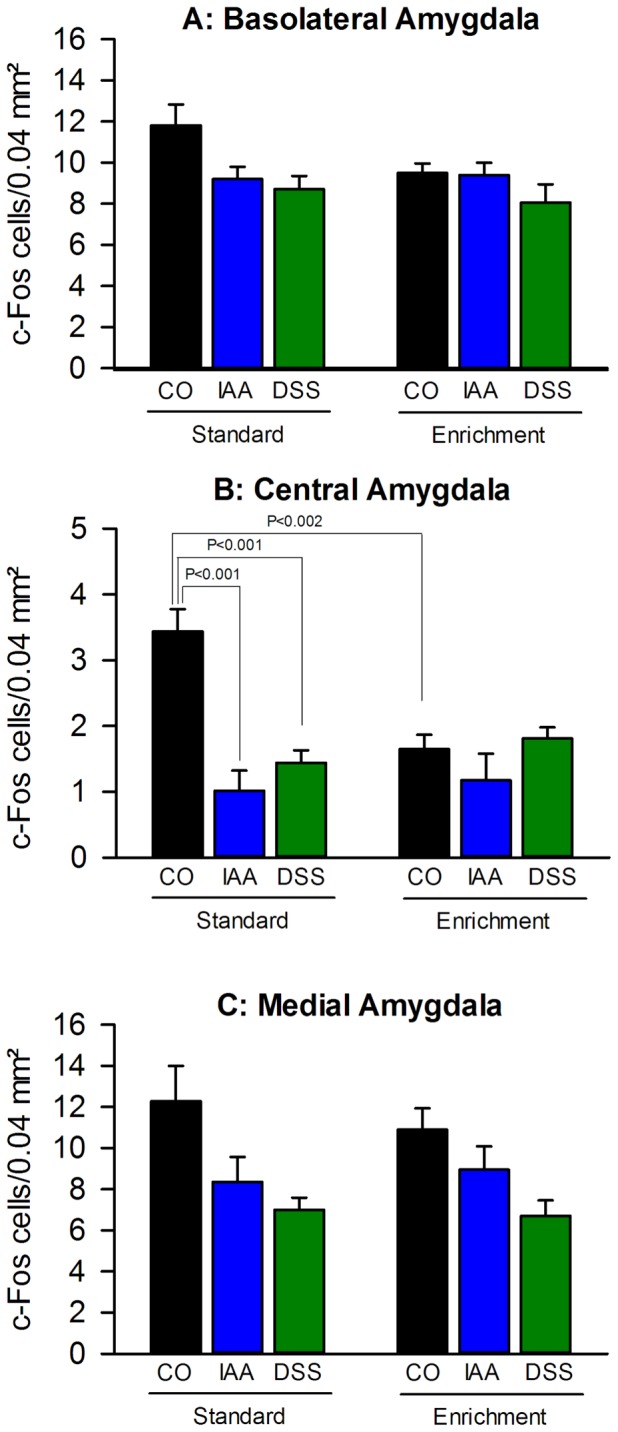
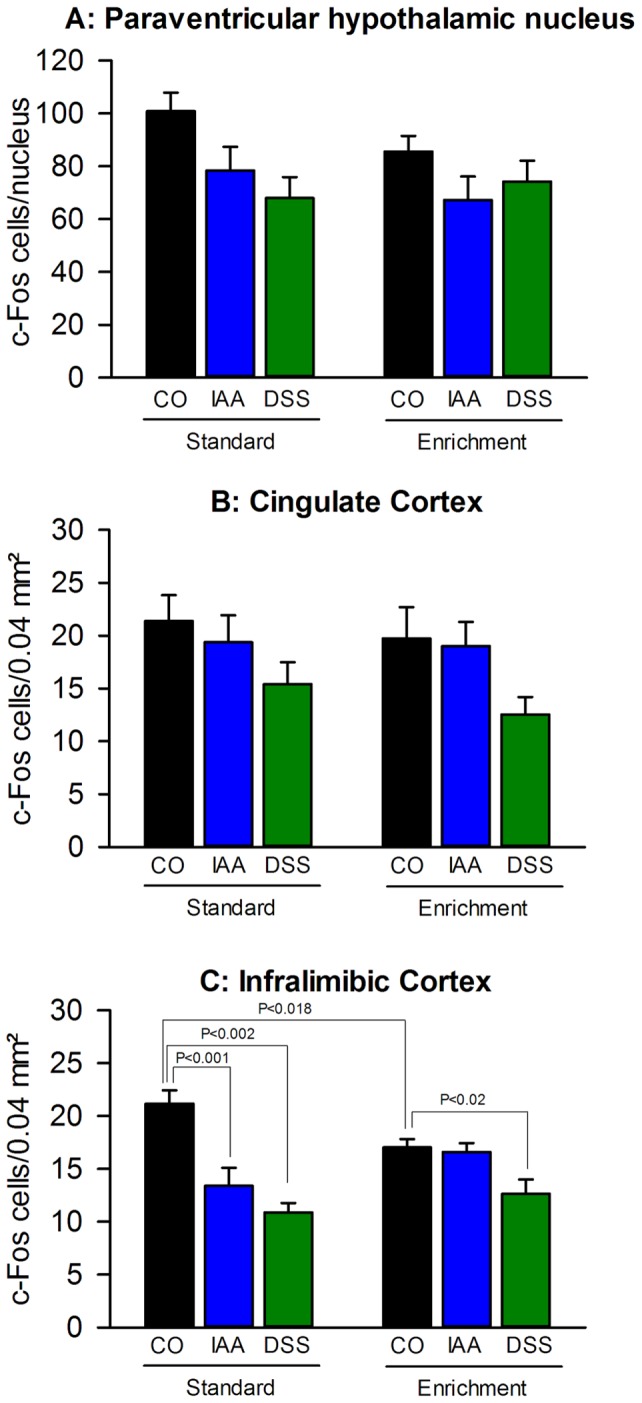
Environmental enrichment (EE) has a beneficial effect on rodent behaviour, neuronal plasticity and brain function. Although it may also improve stress coping, it is not known whether EE influences the brain response to an external (psychological) stressor such as water avoidance stress (WAS) or an internal (systemic) stressor such as gastrointestinal inflammation. This study hence explored whether EE modifies WAS-induced activation of the mouse corticolimbic system and whether this stress response is altered by gastritis or colitis. Male C67BL/6N mice were housed under standard or enriched environment for 9 weeks, after which they were subjected to a 1-week treatment with oral iodoacetamide to induce gastritis or oral dextran sulfate sodium to induce colitis. Following exposure to WAS the expression of c-Fos, a marker of neuronal activation, was measured by immunocytochemistry. EE aggravated experimentally induced colitis, but not gastritis, as shown by an increase in the disease activity score and the colonic myeloperoxidase content. In the brain, EE enhanced the WAS-induced activation of the dentate gyrus and unmasked an inhibitory effect of gastritis and colitis on WAS-evoked c-Fos expression within this part of the hippocampus. Conversely, EE inhibited the WAS-evoked activation of the central amygdala and prevented the inhibitory effect of gastritis and colitis on WAS-evoked c-Fos expression in this region. EE, in addition, blunted the WAS-induced activation of the infralimbic cortex and attenuated the inhibitory effect of gastritis and colitis on WAS-evoked c-Fos expression in this area. These data reveal that EE has a region-specific effect on stress-induced c-Fos expression in the corticolimbic system, which is likely to improve stress resilience. The response of the prefrontal cortex - amygdala - hippocampus circuitry to psychological stress is also modified by the systemic stress of gut inflammation, and this interaction between external and internal stressors is modulated by the housing environment.
Conflict of interest statement
Figures
References
-
- van Praag H, Kempermann G, Gage FH (2000) Neural consequences of environmental enrichment. Nature Reviews. Neuroscience 1: 191–198. - PubMed
-
- Leggio MG, Mandolesi L, Federico F, Spirito F, Ricci B, et al. (2005) Environmental enrichment promotes improved spatial abilities and enhanced dendritic growth in the rat. Behavioural Brain Research 163: 78–90. - PubMed
-
- Meshi D, Drew MR, Saxe M, Ansorge MS, David D, et al. (2006) Hippocampal neurogenesis is not required for behavioral effects of environmental enrichment. Nature Neuroscience 9: 729–731. - PubMed
-
- Roy V, Belzung C, Delarue C, Chapillon P (2001) Environmental enrichment in BALB/c mice: Effects in classical tests of anxiety and exposure to a predatory odor. Physiology & Behavior 74: 313–320. - PubMed
-
- Van de Weerd HA, Aarsen EL, Mulder A, Kruitwagen CL, Hendriksen CF, et al. (2002) Effects of environmental enrichment for mice: Variation in experimental results. Journal of Applied Animal Welfare Science: JAAWS 5: 87–109. - PubMed
Publication types
MeSH terms
Substances
LinkOut - more resources
Full Text Sources
Other Literature Sources
Research Materials
