Transforaminal epidural steroid injections prevent the need for surgery in patients with sciatica secondary to lumbar disc herniation: a retrospective case series
- PMID: 23351495
- PMCID: PMC3617112
- DOI: 10.1503/cjs.014611
Transforaminal epidural steroid injections prevent the need for surgery in patients with sciatica secondary to lumbar disc herniation: a retrospective case series
Abstract
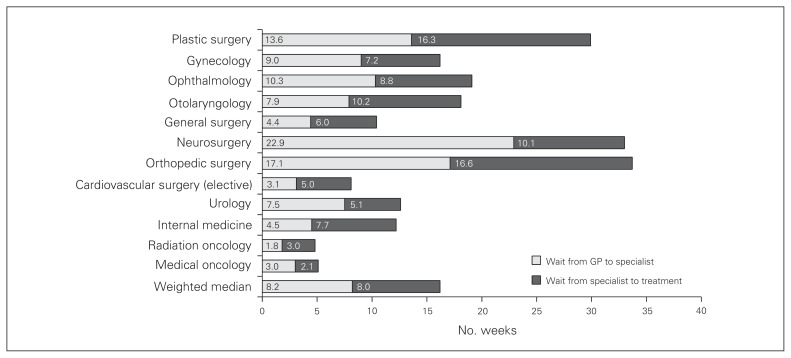
Background: The median orthopedic surgery wait time in Canada is 33.7 weeks, thus alternative treatments for pathologies such as lumbar disc herniations (LDH) are needed. We sought to determine whether transforaminal epidural steroid injections (TFESIs) alleviate or merely delay the need for surgery.
Methods: We retrospectively reviewed the charts of patients with LDH who received TFESIs between September 2006 and July 2008. Patient demographics, level and side of pathology, workers' compensation status, levels injected, treatment outcome and time from referral to treatment were evaluated. The primary outcome measure was the need for versus the avoidance of surgery.
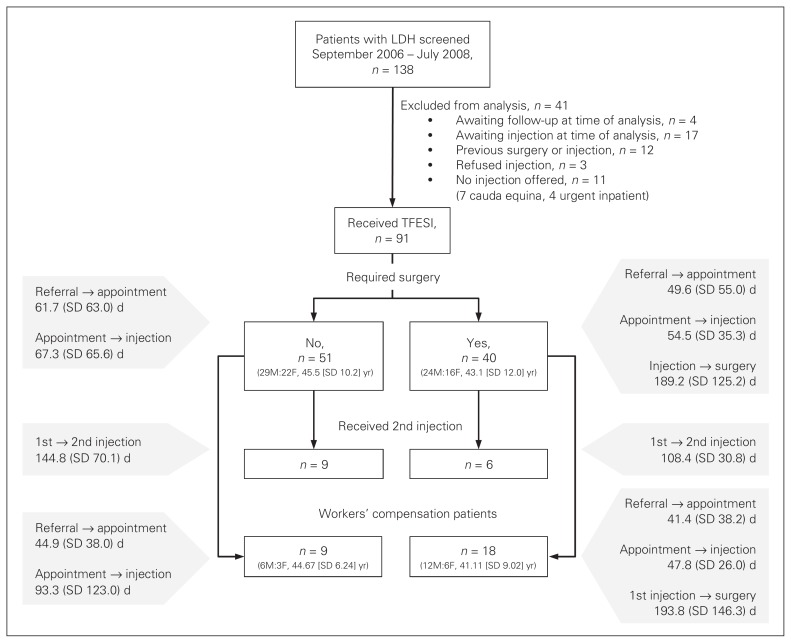
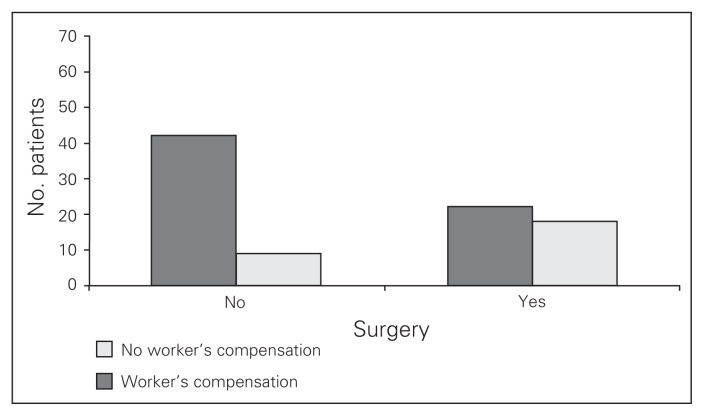
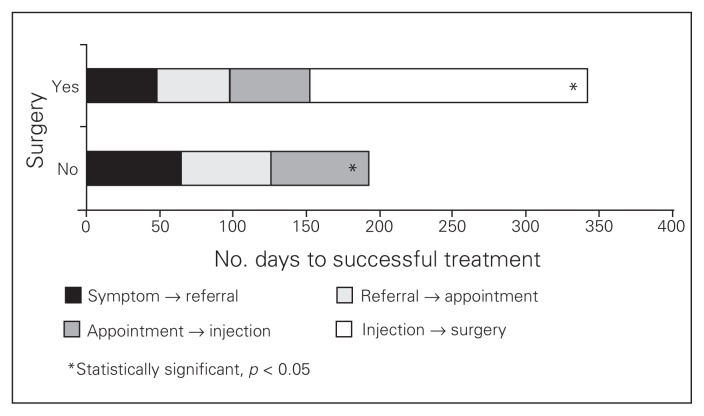
Results: We included 91 patients in our analysis. Time from family physician referral to injection was 123 (standard deviation [SD] 88) days; no significant differences in wait times were found between TFESI patients and those requiring surgery. In all, 51 patients (22 women, 29 men) with a mean age of 45.8 (SD 10.2) years avoided surgery following TFESI, whereas 40 patients (16 women, 24 mean) with a mean age of 43.1 (SD 12.0) years proceeded to surgery within 189 (SD 125) days postinjection. In all, 15 patients received multiple injections, and of these, 9 did not require surgical intervention. Age, sex and level/side of pathology did not influence the treatment outcome. Workers' compensation status influenced outcome significantly; these patients demonstrated less benefit from TFESI.
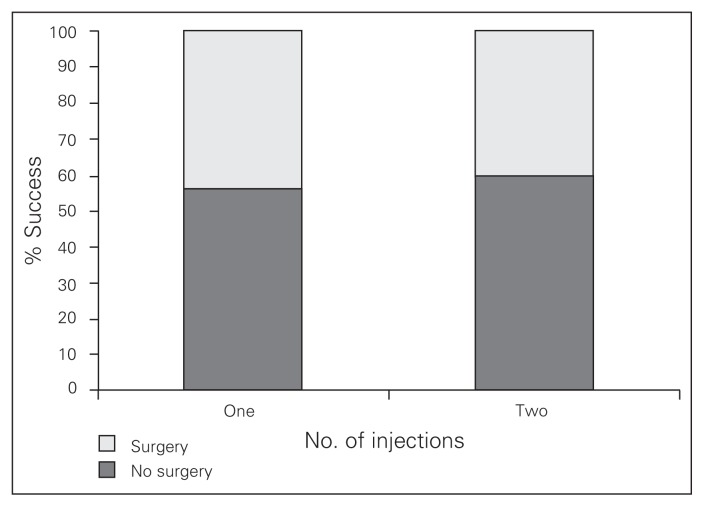
Conclusion: Transforaminal epidural steroid injections are an important treatment tool, preventing the need for surgery in 56% of patients with LDH.
Contexte: Le temps d’attente médian pour une chirurgie orthopédique au Canada est de 33,7 semaines. Il faut donc trouver des traitements de rechange pour certaines pathologies, telles que les hernies lombaires. Nous avons voulu déterminer si les infiltrations épidurales de corticostéroïdes par voie transforaminale (IECTF) procurent un soulagement ou ne font que retarder le recours à la chirurgie.
Méthodes: Nous avons analysé rétrospectivement les dossiers de patients souffrant d’hernie lombaire qui ont été soumis à des IECTF entre septembre 2006 et juillet 2008. Nous avons tenu compte des caractéristiques démographiques des patients, de l’ampleur et de la latéralité de la pathologie, du statut à l’égard des indemnités pour accidents du travail, des doses injectées, des résultats du traitement et du délai entre la consultation et le traitement. Le paramètre principal était le recours ou non à la chirurgie.
Résultats: Nous avons inclus 91 patients dans notre analyse. Le délai entre la demande de consultation par le médecin de famille et l’administration de l’infiltration a été de 123 (écart-type [ET] 88) jours; aucune différence significative quant au temps d’attente n’a été observée entre les patients soumis à l’IECTF et les patients soumis à la chirurgie. En tout, 51 patients (22 femmes, 29 hommes) âgés en moyenne de 45,8 (ET 10,2) ans ont évité la chirurgie après l’IECTF, tandis que 40 patients (16 femmes, 24 hommes) âgés en moyenne de 43,1 (ET 12,0) ans ont subi une chirurgie dans les 189 (ET 125) jours suivant l’injection. En tout, 15 patients ont reçu plusieurs infiltrations; parmi eux, 9 n’ont pas eu besoin d’une intervention chirurgicale. L’âge, le sexe, l’ampleur et la latéralité de la pathologie n’ont exercé aucune influence sur les résultats du traitement. Le statut à l’égard des indemnités pour accidents du travail a eu une influence significative sur les résultats. Ces patients semblent avoir moins bénéficié des IECTF.
Conclusion: Les infiltrations épidurales de corticostéroïdes par voie transforaminale sont un outil thérapeutique important et préviennent le recours à la chirurgie chez 56 % des patients qui souffrent d’hernie lombaire.
Figures
References
-
- Awad JN, Moskovich R. Lumbar disc herniations: surgical versus nonsurgical treatment. Clin Orthop Relat Res. 2006;443:183–97. - PubMed
-
- Organisation for Economic Co-operation and Development (OECD) OECD Health Data 2012: How does Canada compare? Paris (France): OECD; 2012. [accessed 2012 Dec. 11]. Available: www.oecd.org/canada/BriefingNoteCANADA2012.pdf.
-
- Cherkin DC, Deyo R, Loeser J, et al. An international comparison of back surgery rates. Spine. 1994;19:1201–6. - PubMed
MeSH terms
Substances
LinkOut - more resources
Full Text Sources
Other Literature Sources
Medical