


Beta-barrel scaffold of fluorescent proteins: folding, stability and role in chromophore formation
- PMID: 23351712
- PMCID: PMC3739439
- DOI: 10.1016/B978-0-12-407699-0.00004-2
Beta-barrel scaffold of fluorescent proteins: folding, stability and role in chromophore formation
Abstract
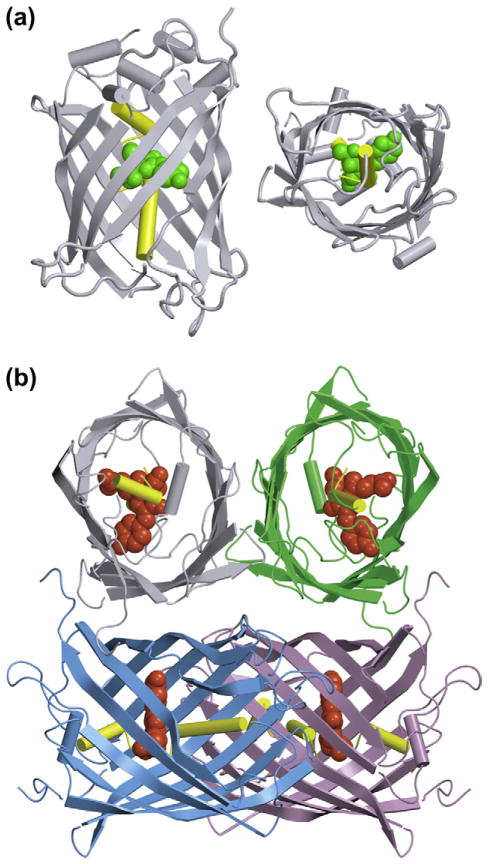
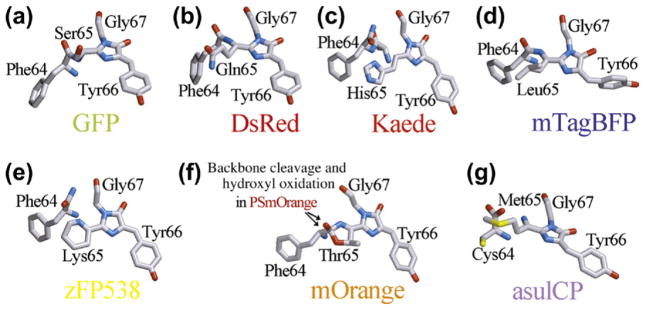
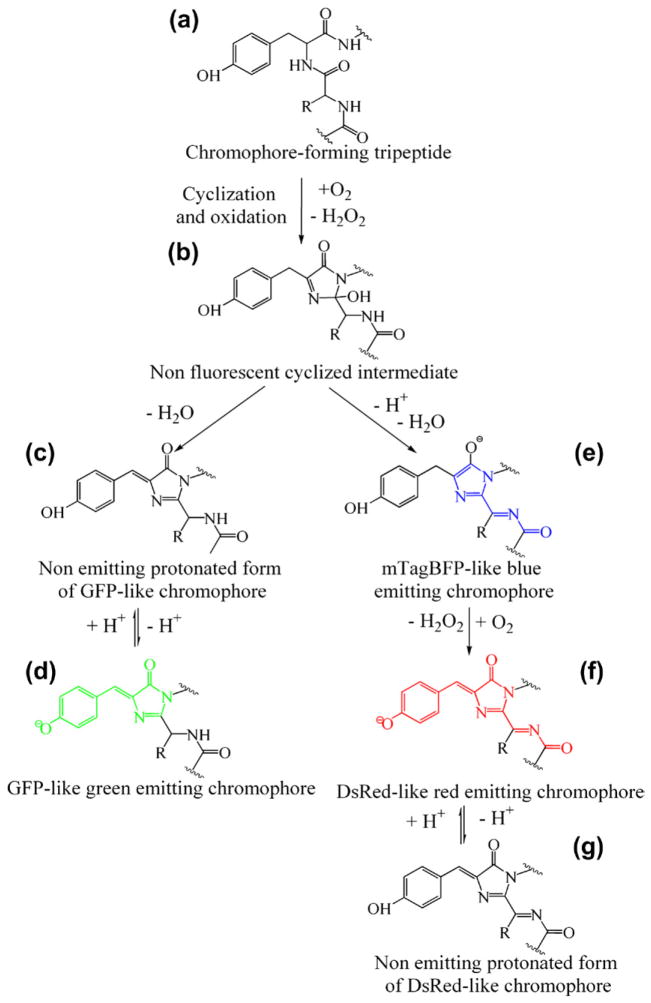
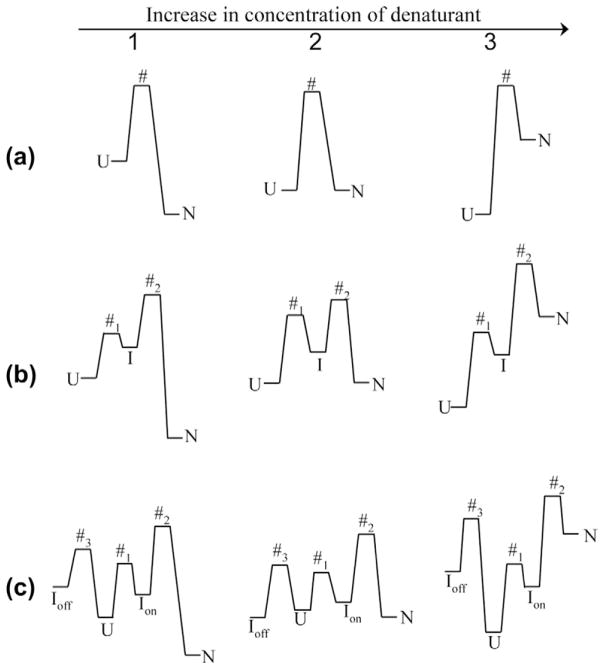
This review focuses on the current view of the interaction between the β-barrel scaffold of fluorescent proteins and their unique chromophore located in the internal helix. The chromophore originates from the polypeptide chain and its properties are influenced by the surrounding protein matrix of the β-barrel. On the other hand, it appears that a chromophore tightens the β-barrel scaffold and plays a crucial role in its stability. Furthermore, the presence of a mature chromophore causes hysteresis of protein unfolding and refolding. We survey studies measuring protein unfolding and refolding using traditional methods as well as new approaches, such as mechanical unfolding and reassembly of truncated fluorescent proteins. We also analyze models of fluorescent protein unfolding and refolding obtained through different approaches, and compare the results of protein folding in vitro to co-translational folding of a newly synthesized polypeptide chain.
Copyright © 2013 Elsevier Inc. All rights reserved.
Figures
References
-
- Aglyamova GV, Hunt ME, Modi CK, Matz MV. Multi-colored homologs of the green fluorescent protein from hydromedusa Obelia sp. Photochem Photobiol Sci. 2011;10:1303–1309. - PubMed
Publication types
MeSH terms
Substances
Grants and funding
LinkOut - more resources
Full Text Sources
Other Literature Sources
