


Identification of widespread adenosine nucleotide binding in Mycobacterium tuberculosis
- PMID: 23352146
- PMCID: PMC3558932
- DOI: 10.1016/j.chembiol.2012.11.008
Identification of widespread adenosine nucleotide binding in Mycobacterium tuberculosis
Abstract
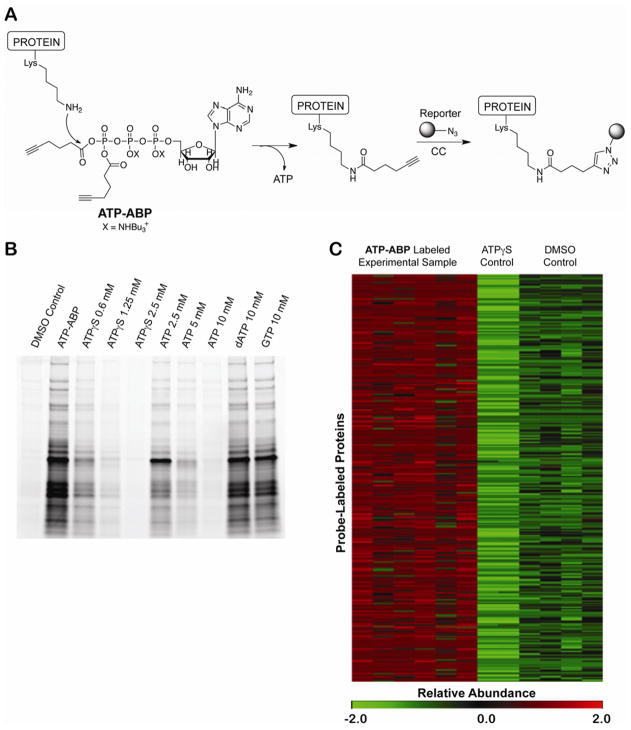
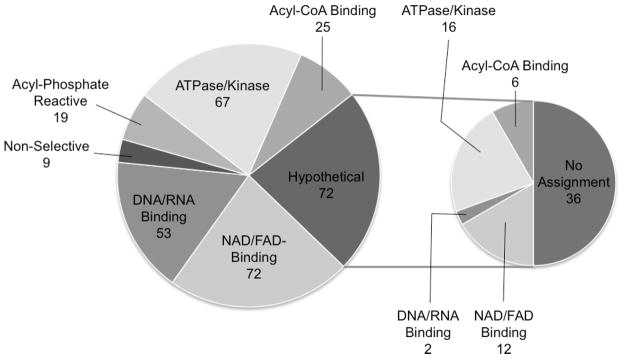
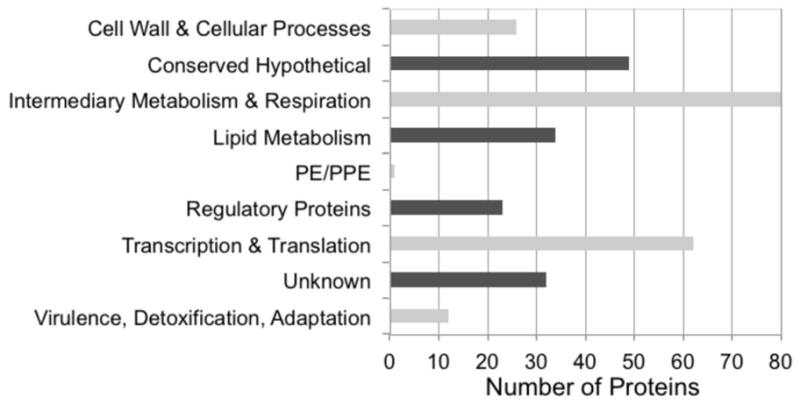
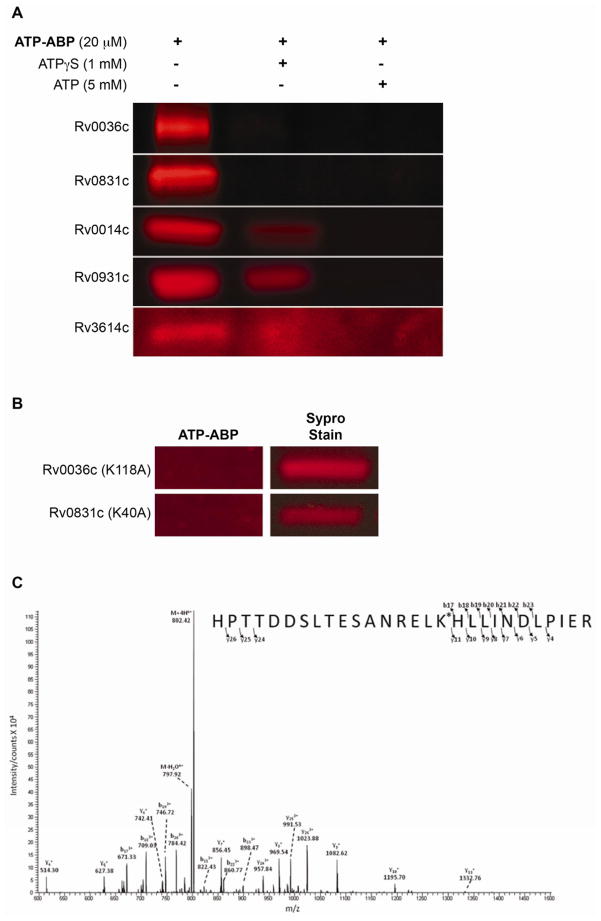
Computational prediction of protein function is frequently error-prone and incomplete. In Mycobacterium tuberculosis (Mtb), ~25% of all genes have no predicted function and are annotated as hypothetical proteins, severely limiting our understanding of Mtb pathogenicity. Here, we utilize a high-throughput quantitative activity-based protein profiling (ABPP) platform to probe, annotate, and validate ATP-binding proteins in Mtb. We experimentally validate prior in silico predictions of >240 proteins and identify 72 hypothetical proteins as ATP binders. ATP interacts with proteins with diverse and unrelated sequences, providing an expanded view of adenosine nucleotide binding in Mtb. Several hypothetical ATP binders are essential or taxonomically limited, suggesting specialized functions in mycobacterial physiology and pathogenicity.
Copyright © 2013 Elsevier Ltd. All rights reserved.
Figures

References
-
- Ansong C, Purvine SO, Adkins JN, Lipton MS, Smith RD. Proteogenomics: needs and roles to be filled by proteomics in genome annotation. Brief Funct Genomic Proteomic. 2008;7:50–62. - PubMed
-
- Barglow KT, Cravatt BF. Activity-based protein profiling for the functional annotation of enzymes. Nat Methods. 2007;4:822–827. - PubMed
-
- Bork P. Powers and pitfalls in sequence analysis: the 70% hurdle. Genome Res. 2000;10:398–400. - PubMed
-
- Bork P, Koonin EV. Predicting functions from protein sequences--where are the bottlenecks? Nat Genet. 1998;18:313–318. - PubMed
-
- Cravatt BF, Wright AT, Kozarich JW. Activity-based protein profiling: from enzyme chemistry to proteomic chemistry. Annu Rev Biochem. 2008;77:383–414. - PubMed
Publication types
MeSH terms
Substances
Grants and funding
LinkOut - more resources
Full Text Sources
Other Literature Sources
Medical
