


BMP and TGF-β pathway mediators are critical upstream regulators of Wnt signaling during midbrain dopamine differentiation in human pluripotent stem cells
- PMID: 23352789
- PMCID: PMC3983720
- DOI: 10.1016/j.ydbio.2013.01.012
BMP and TGF-β pathway mediators are critical upstream regulators of Wnt signaling during midbrain dopamine differentiation in human pluripotent stem cells
Abstract
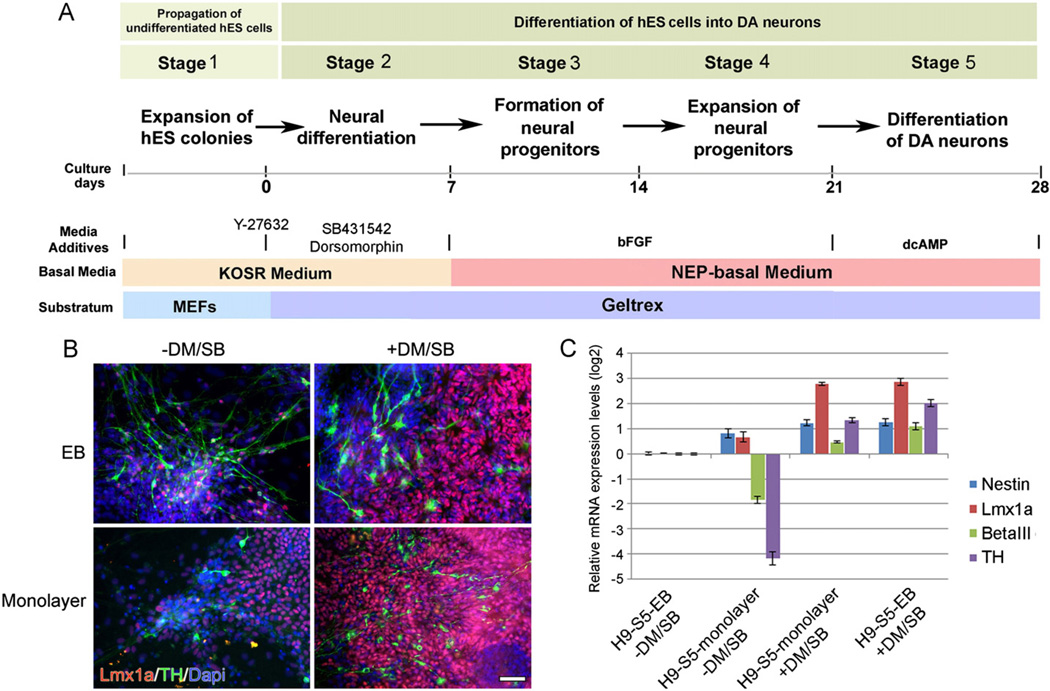
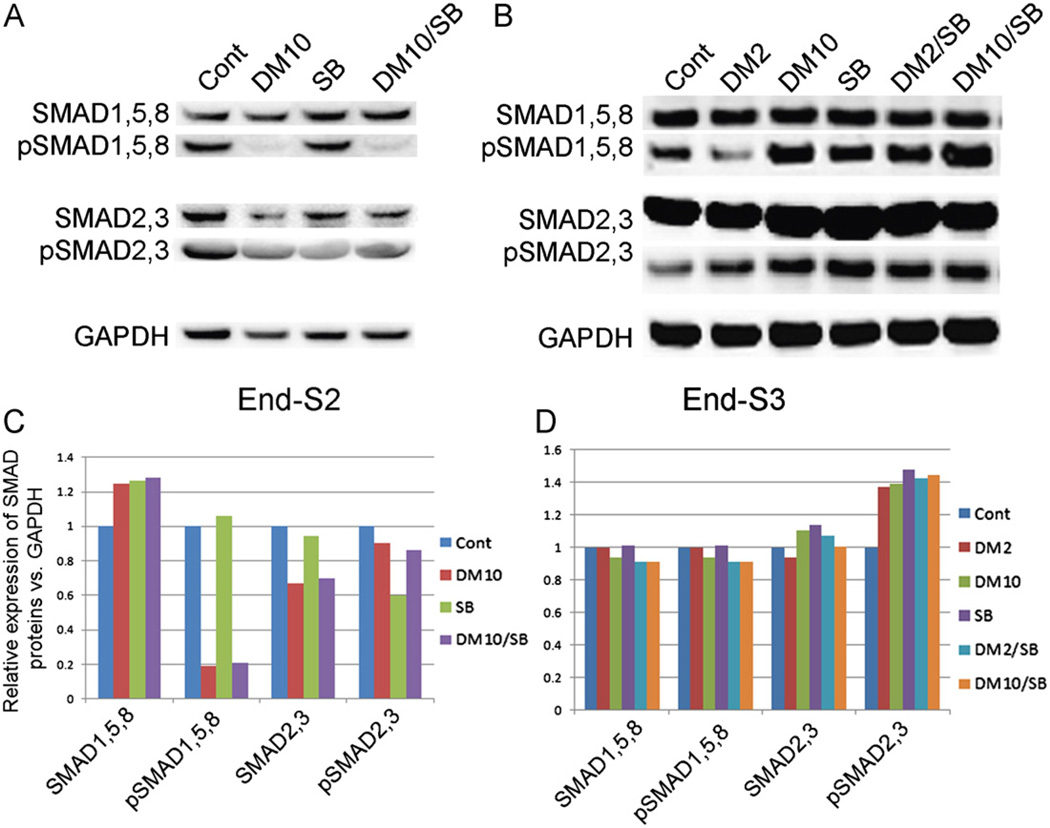
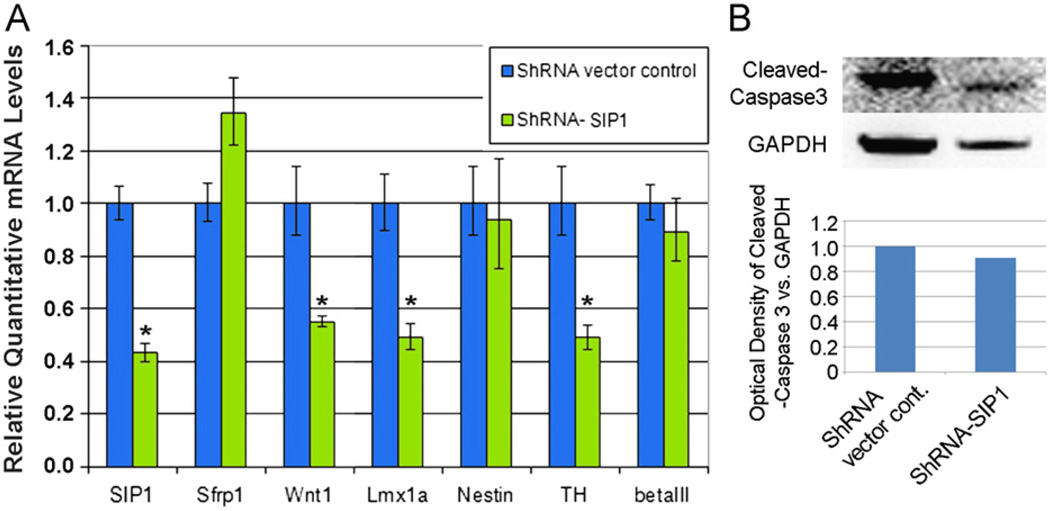
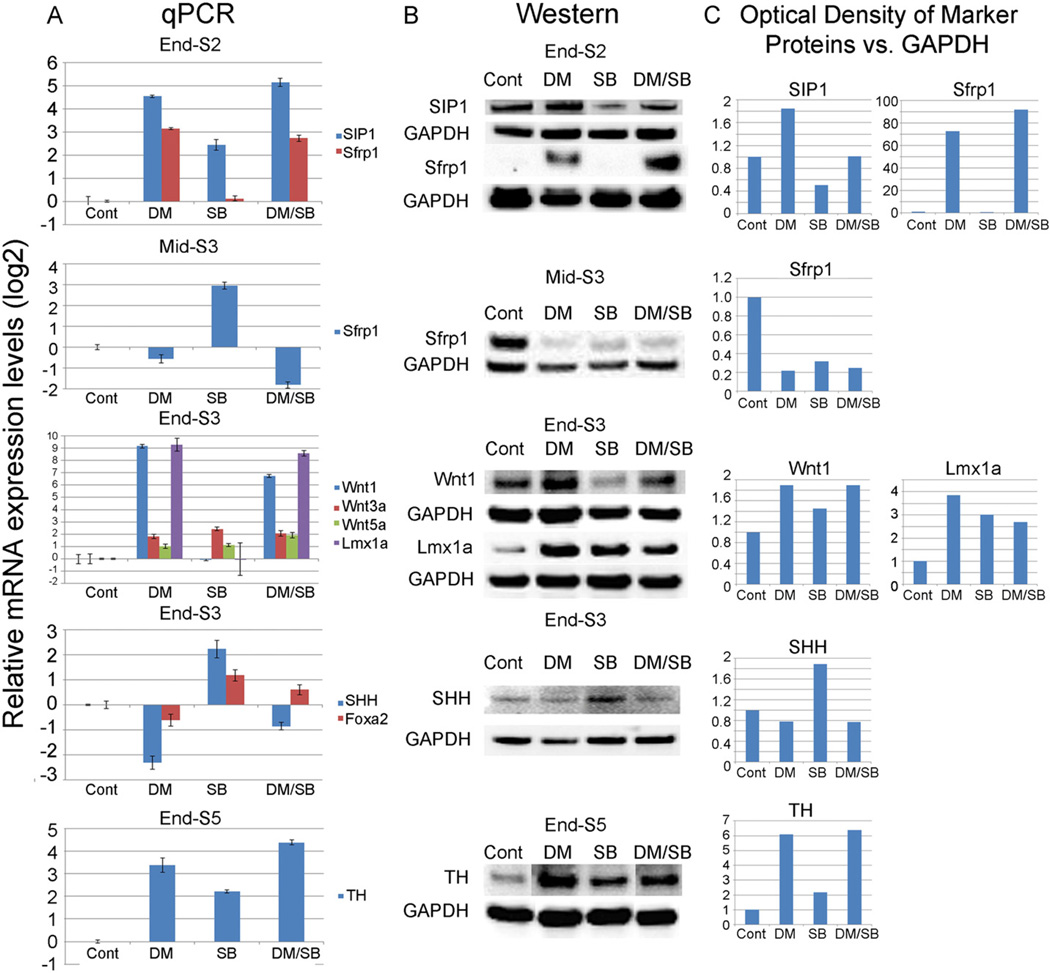
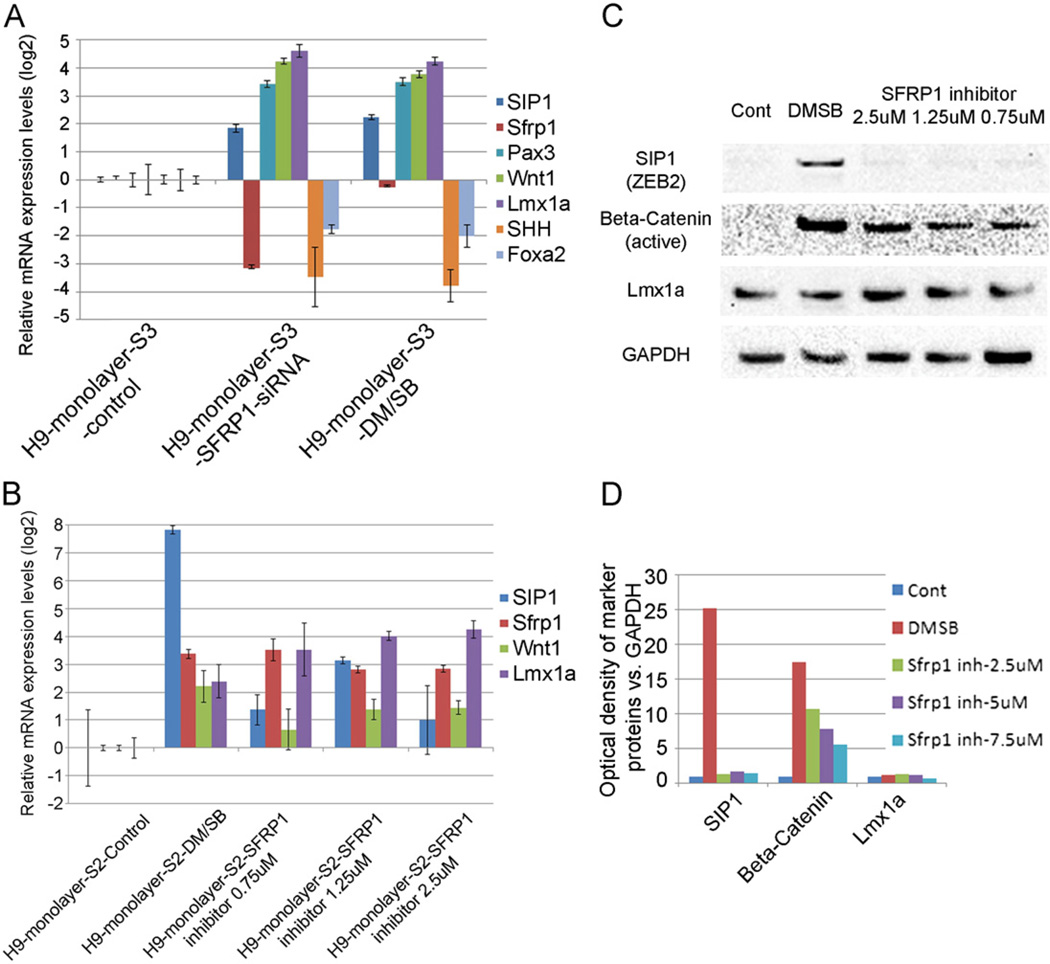
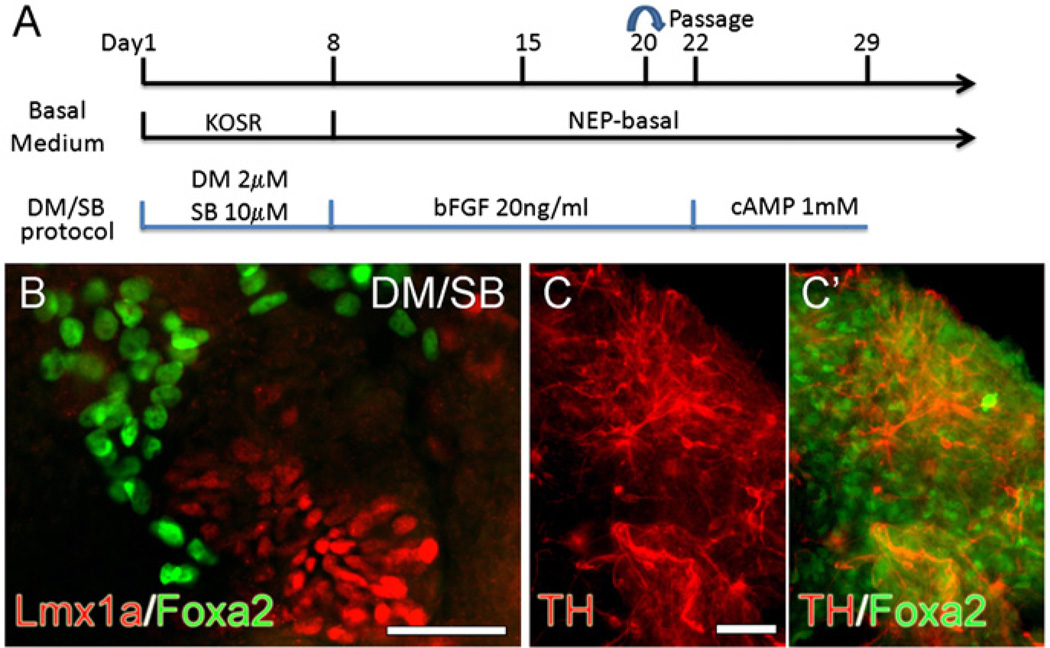
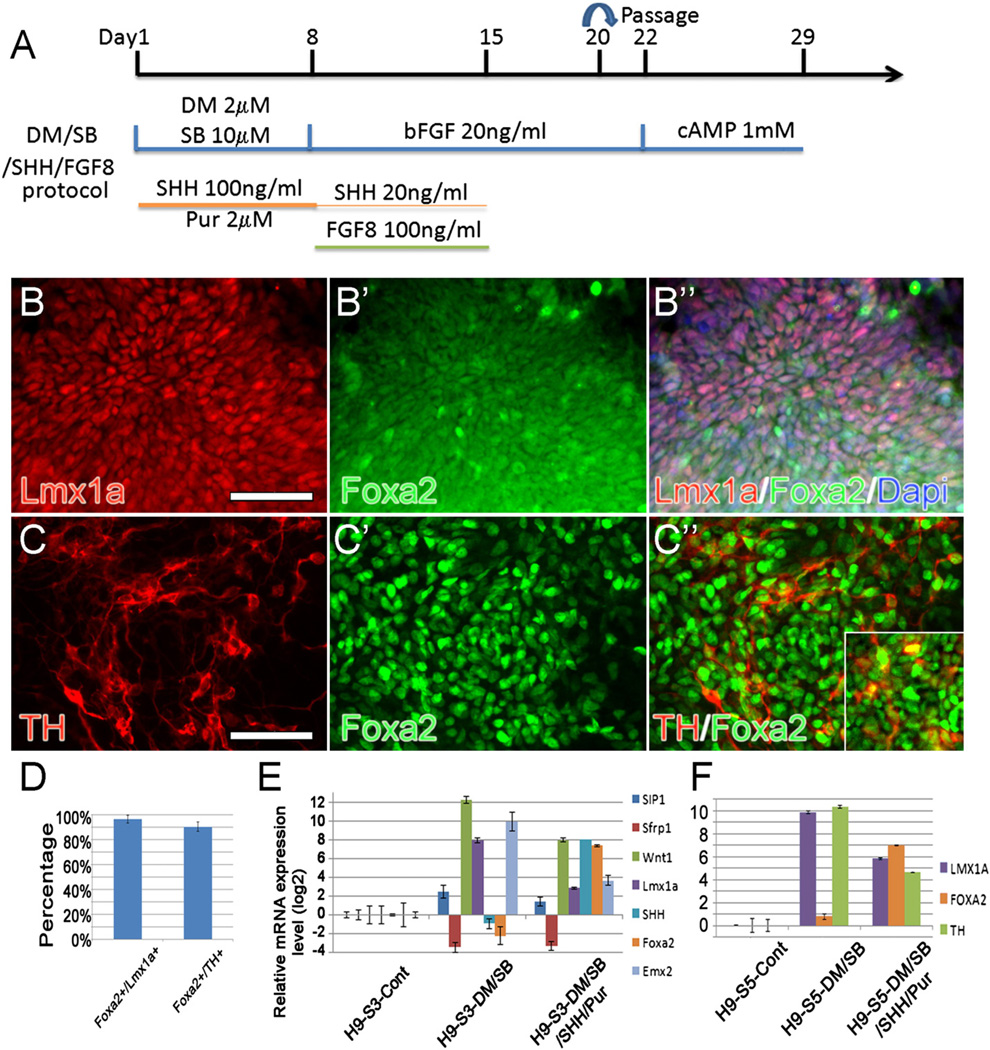
Although many laboratories currently use small molecule inhibitors of the BMP (Dorsomorphin/DM) and TGF-β (SB431542/SB) signaling pathways in protocols to generate midbrain dopamine (mDA) neurons from hES and hiPS cells, until now, these substances have not been thought to play a role in the mDA differentiation process. We report here that the transient inhibition of constitutive BMP (pSMADs 1, 5, 8) signaling, either alone or in combination with TGF-β inhibition (pSMADs 2, 3), is critically important in the upstream regulation of Wnt1-Lmx1a signaling in mDA progenitors. We postulate that the mechanism via which DM or DM/SB mediates these effects involves the up-regulation in SMAD-interacting protein 1 (SIP1), which results in greater repression of the Wnt antagonist, secreted frizzled related protein 1 (Sfrp1) in stem cells. Accordingly, knockdown of SIP1 reverses the inductive effects of DM/SB on mDA differentiation while Sfrp1 knockdown/inhibition mimics DM/SB. The rise in Wnt1-Lmx1a levels in SMAD-inhibited cultures is, however, accompanied by a reciprocal down-regulation in SHH-Foxa2 levels leading to the generation of few TH+ neurons that co-express Foxa2. If however, exogenous SHH/FGF8 is added along with SMAD inhibitors, equilibrium in these two important pathways is achieved such that authentic (Lmx1a+Foxa2+TH+) mDA neuron differentiation is promoted while alternate cell fates are suppressed in stem cell cultures. These data indicate that activators/inhibitors of BMP and TGF-β signaling play a critical upstream regulatory role in the mDA differentiation process in human pluripotent stem cells.
Copyright © 2013 Elsevier Inc. All rights reserved.
Figures

References
-
- Andersson E, Tryggvason U, Deng Q, Friling S, Alekseenko Z, Robert B, Perlmann T, Ericson J. Identification of intrinsic determinants of midbrain dopamine neurons. Cell. 2006;124:393–405. - PubMed
-
- Arenas E. Stem cells in the treatment of Parkinson’s disease. Brain Res. Bull. 2002;57:795–808. - PubMed
-
- Arenas E. Engineering a dopaminergic phenotype in stem/precursor cells: role of Nurr1, glia-derived signals, and Wnts. Ann. N Y Acad. Sci. 2005;1049:51–66. - PubMed
-
- Ben-Hur T, Idelson M, Khaner H, Pera M, Reinhartz E, Itzik A, Reubinoff BE. Transplantation of human embryonic stem cell-derived neural progenitors improves behavioral deficit in Parkinsonian rats. Stem Cells. 2004;22:1246–1255. - PubMed
-
- Blaess S, Corrales JD, Joyner AL. Sonic hedgehog regulates Gli activator and repressor functions with spatial and temporal precision in the mid/hindbrain region. Development. 2006;133:1799–1809. - PubMed
Publication types
MeSH terms
Substances
Grants and funding
LinkOut - more resources
Full Text Sources
Other Literature Sources
Research Materials
