Microarray analysis of gene expression in vestibular schwannomas reveals SPP1/MET signaling pathway and androgen receptor deregulation
- PMID: 23354516
- PMCID: PMC3597452
- DOI: 10.3892/ijo.2013.1798
Microarray analysis of gene expression in vestibular schwannomas reveals SPP1/MET signaling pathway and androgen receptor deregulation
Abstract
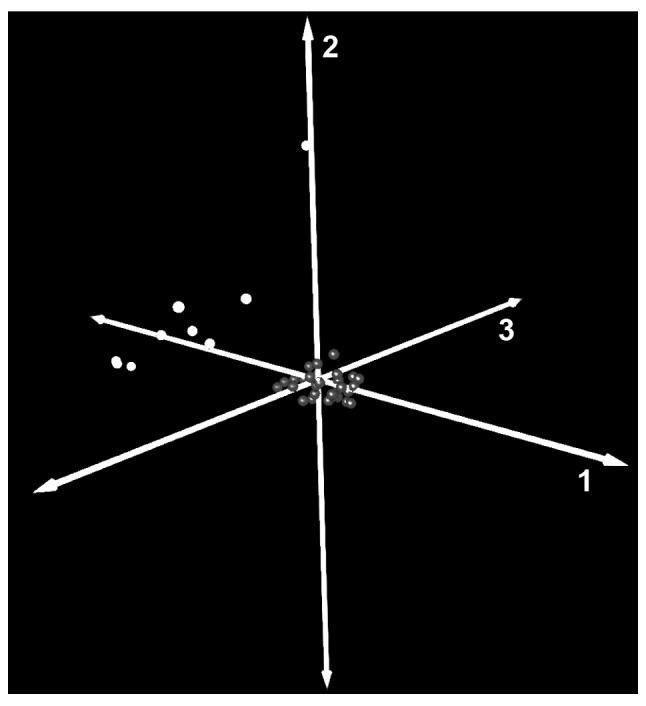
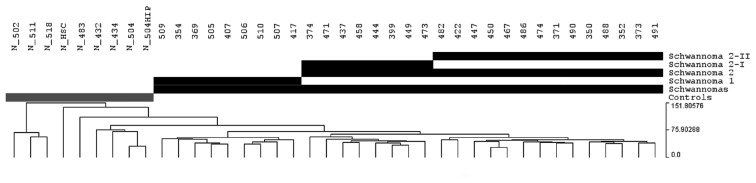
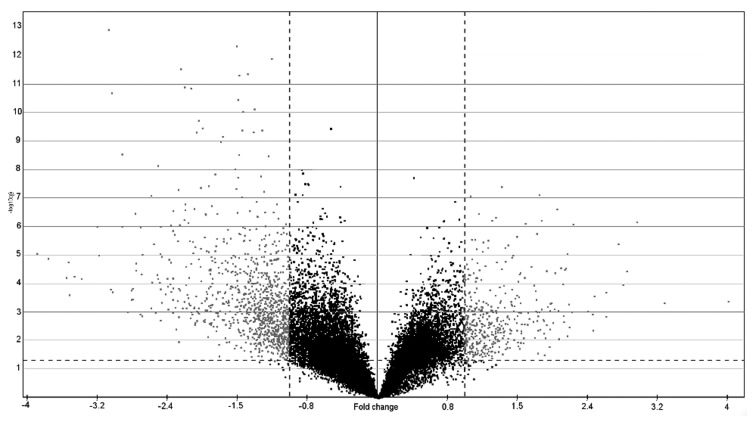
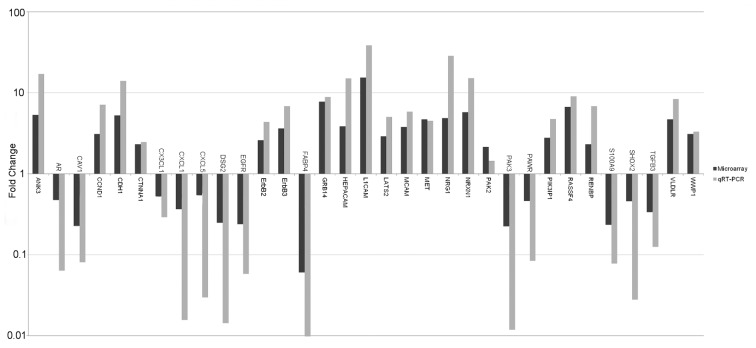
Vestibular schwannomas are benign neoplasms that arise from the vestibular nerve. The hallmark of these tumors is the biallelic inactivation of neurofibromin 2 (NF2). Transcriptomic alterations, such as the neuregulin 1 (Nrg1)/ErbB2 pathway, have been described in schwannomas. In this study, we performed a whole transcriptome analysis in 31 vestibular schwannomas and 9 control nerves in the Affymetrix Gene 1.0 ST platform, validated by quantitative real-time PCR (qRT-PCR) using TaqMan low density arrays. We performed a mutational analysis of NF2 by PCR/denaturing high-performance liquid chromatography (dHPLC) and multiplex ligation-dependent probe amplification (MLPA), as well as a microsatellite marker analysis of the loss of heterozygosity (LOH) of chromosome 22q. The microarray analysis demonstrated that 1,516 genes were deregulated and 48 of the genes were validated by qRT-PCR. At least 2 genetic hits (allelic loss and/or gene mutation) in NF2 were found in 16 tumors, seven cases showed 1 hit and 8 tumors showed no NF2 alteration. MET and associated genes, such as integrin, alpha 4 (ITGA4)/B6, PLEXNB3/SEMA5 and caveolin-1 (CAV1) showed a clear deregulation in vestibular schwannomas. In addition, androgen receptor (AR) downregulation may denote a hormonal effect or cause in this tumor. Furthermore, the osteopontin gene (SPP1), which is involved in merlin protein degradation, was upregulated, which suggests that this mechanism may also exert a pivotal role in schwannoma merlin depletion. Finally, no major differences were observed among tumors of different size, histological type or NF2 status, which suggests that, at the mRNA level, all schwannomas, regardless of their molecular and clinical characteristics, may share common features that can be used in their treatment.
Figures
References
-
- Rouleau GA, Merel P, Lutchman M, et al. Alteration in a new gene encoding a putative membrane-organizing protein causes neuro-fibromatosis type 2. Nature. 1993;363:515–521. - PubMed
-
- Hadfield KD, Smith MJ, Urquhart JE, et al. Rates of loss of heterozygosity and mitotic recombination in NF2 schwannomas, sporadic vestibular schwannomas and schwannomatosis schwannomas. Oncogene. 2010;29:6216–6221. - PubMed
Publication types
MeSH terms
Substances
LinkOut - more resources
Full Text Sources
Other Literature Sources
Medical
Molecular Biology Databases
Research Materials
Miscellaneous