


Gender differences in electrophysiological gene expression in failing and non-failing human hearts
- PMID: 23355885
- PMCID: PMC3552854
- DOI: 10.1371/journal.pone.0054635
Gender differences in electrophysiological gene expression in failing and non-failing human hearts
Abstract
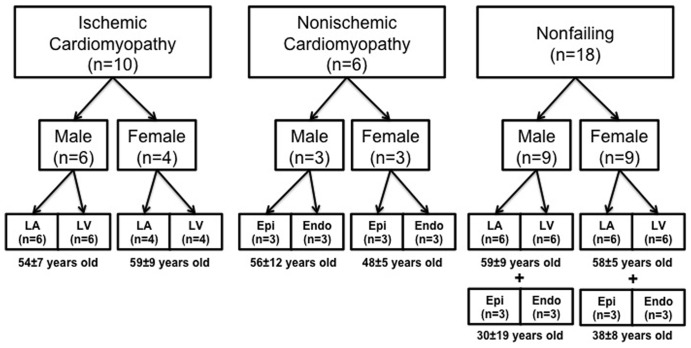
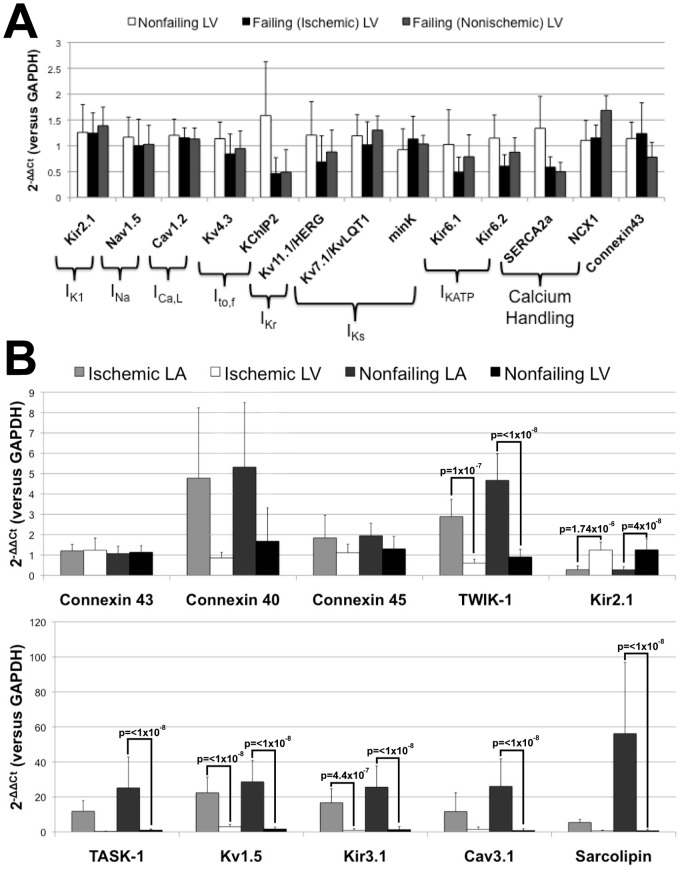
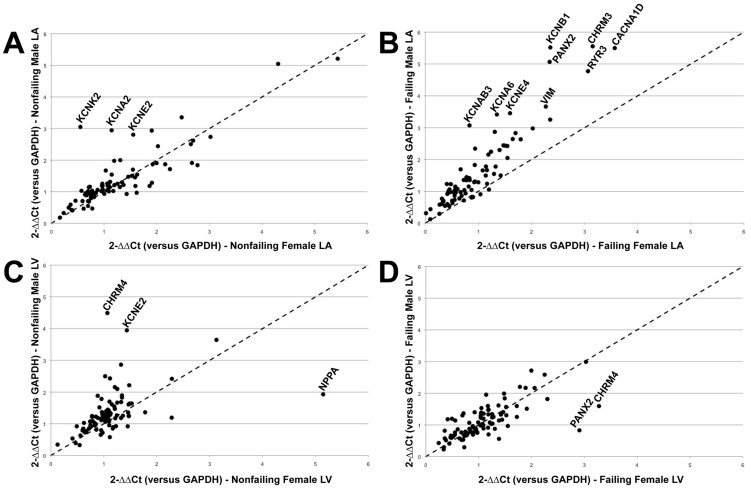
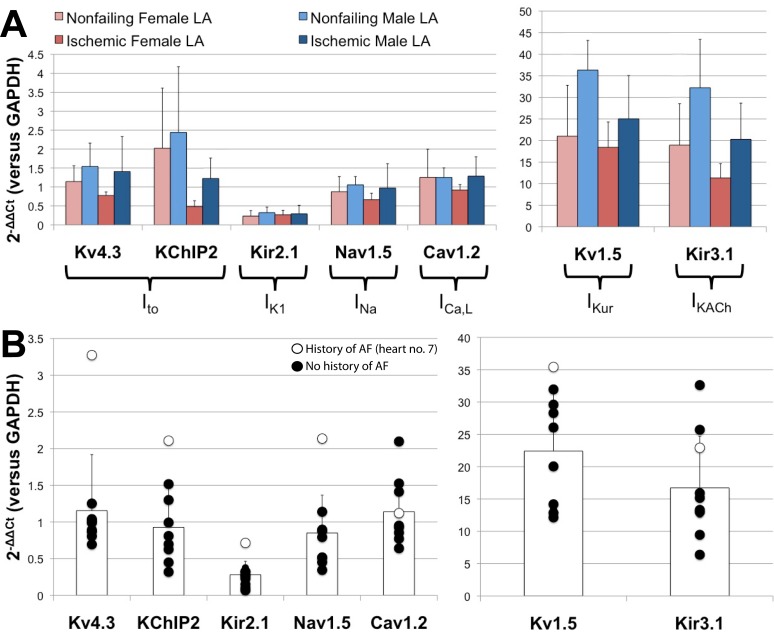
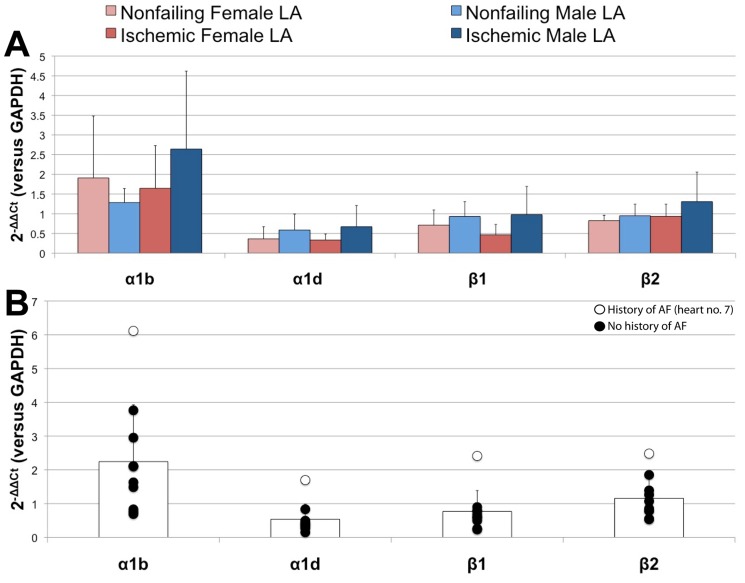
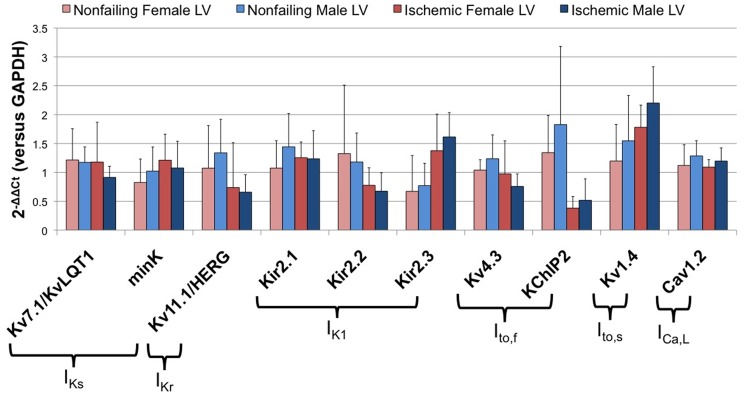
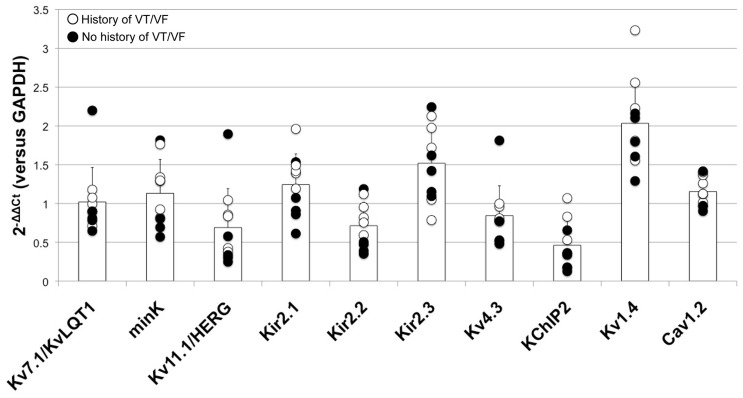
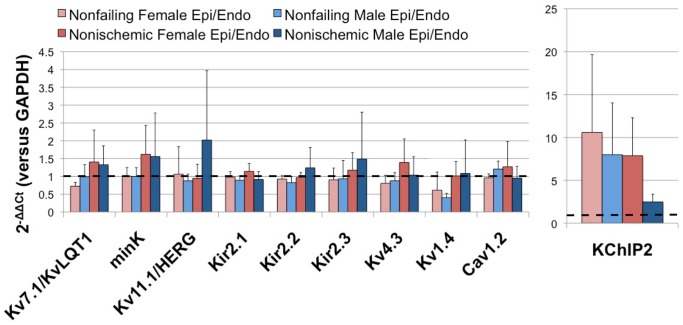
The increasing availability of human cardiac tissues for study are critically important in increasing our understanding of the impact of gender, age, and other parameters, such as medications and cardiac disease, on arrhythmia susceptibility. In this study, we aimed to compare the mRNA expression of 89 ion channel subunits, calcium handling proteins, and transcription factors important in cardiac conduction and arrhythmogenesis in the left atria (LA) and ventricles (LV) of failing and nonfailing human hearts of both genders. Total RNA samples, prepared from failing male (n = 9) and female (n = 7), and from nonfailing male (n = 9) and female (n = 9) hearts, were probed using custom-designed Taqman gene arrays. Analyses were performed to explore the relationships between gender, failure state, and chamber expression. Hierarchical cluster analysis revealed chamber specific expression patterns, but failed to identify disease- or gender-dependent clustering. Gender-specific analysis showed lower expression levels in transcripts encoding for K(v)4.3, KChIP2, K(v)1.5, and K(ir)3.1 in the failing female as compared with the male LA. Analysis of LV transcripts, however, did not reveal significant differences based on gender. Overall, our data highlight the differential expression and transcriptional remodeling of ion channel subunits in the human heart as a function of gender and cardiac disease. Furthermore, the availability of such data sets will allow for the development of disease-, gender-, and, most importantly, patient-specific cardiac models, with the ability to utilize such information as mRNA expression to predict cardiac phenotype.
Conflict of interest statement
Figures
References
-
- Kannel WB, Wolf PA, Benjamin EJ, Levy D (1998) Prevalence, incidence, prognosis, and predisposing conditions for atrial fibrillation: population-based estimates. Am J Cardiol 82: 2N–9N. - PubMed
-
- Locati EH, Zareba W, Moss AJ, Schwartz PJ, Vincent GM, et al. (1998) Age- and sex-related differences in clinical manifestations in patients with congenital long-QT syndrome: findings from the International LQTS Registry. Circulation 97: 2237–2244. - PubMed
-
- Abi-Gerges N, Philp K, Pollard C, Wakefield I, Hammond TG, et al. (2004) Sex differences in ventricular repolarization: from cardiac electrophysiology to Torsades de Pointes. Fundam Clin Pharmacol 18: 139–151. - PubMed
-
- Burke JH, Goldberger JJ, Ehlert FA, Kruse JT, Parker MA, et al. (1996) Gender differences in heart rate before and after autonomic blockade: evidence against an intrinsic gender effect. Am J Med 100: 537–543. - PubMed
Publication types
MeSH terms
Substances
Grants and funding
LinkOut - more resources
Full Text Sources
Other Literature Sources
Medical
Molecular Biology Databases
