


Effects of iron supplementation on red blood cell hemoglobin content in pregnancy
- PMID: 23355942
- PMCID: PMC3555212
- DOI: 10.4081/hr.2012.e24
Effects of iron supplementation on red blood cell hemoglobin content in pregnancy
Abstract
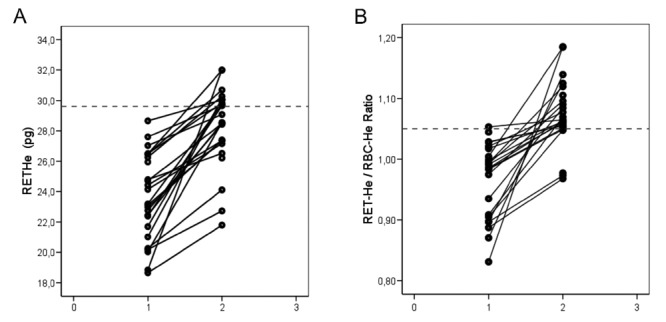
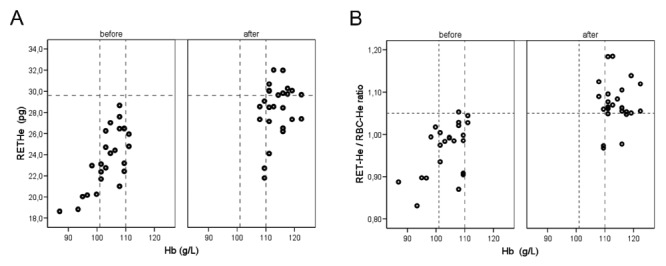
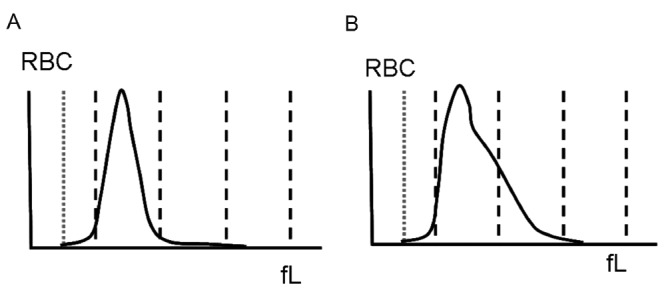
Although a mild degree of anemia is common in the third trimester of pregnancy, it remains a challenge to establish whether a decrease in hemoglobin (Hb) concentration is physiological or pathological. The World Health Organization suggested a Hb concentration of 110 g/L to discriminate anemia. Several European investigators recommended Hb cut-off values of between 101-110 g/L. The aim of this study was to establish short-term effects of iron supplementation on the hemoglobin content of reticulocytes (Ret-He) and red blood cells (RBC-He) in case of suspected iron deficient erythropoiesis (IDE) in the third trimester of pregnancy. Twenty-five subjects with suspected IDE during pregnancy (Hb ≤110g/L, Ret-He <29.6 pg, zinc protoporphyrin >75 mol/mol hem) participated in the study. After iron supplementation, reticulocyte counts increased from 0.061±0.015×10(12)/L to 0.079±0.026×10(12)/L and Ret-He increased from 23.6±2.8 pg to 28.3±2.6 pg (P=<0.001). RBC-He increased from 26.9±1.9 pg to 27.4±1.8 pg (not significant, NS) and Ret-He/RBC-He ratio increased from 0.97±0.06 towards 1.07±0.05 (P=<0.001). Hb concentrations demonstrated an obvious increase from 105±6 g/L towards 115±5 g/L (P≤0.001) after supplementation. An obvious increase in RBC distribution width was observed from 45.0±3.6 fL towards 52.3±7.0 fL (P≤0.001). We recommend that Ret-He and Ret-He/RBC-He ratio be integrated into the protocols for anemia screening and for monitoring effects of iron supplementation during pregnancy. In particular, the parameters should be considered in subjects with Hb results in the controversial range of 101-108 g/L.
Keywords: IDE; anemia; pregnancy; reticulocyte haemoglobin..
Conflict of interest statement
Conflict of interests: the authors declare no conflict of interests.
Figures
References
-
- Lindsay H. Pregnancy and iron deficiency: unresolved issues. Nutr Rev. 1997;55:91–101. - PubMed
-
- Hercberg S, Preziosi P, Galan P. Iron deficiency in Europe. Public Health Nutr. 2001;4:537–45. - PubMed
-
- Nybo M, Friis-Hansen L, Felding P. Higher prevalence of anemia among pregnant immigrant women compared to pregnant ethnic Danish women. Ann Hematol. 2007;86:647–51. - PubMed
-
- Milman N, Bergholt T, Byg K, et al. Reference intervals for haematological variables during normal pregnancy and postpartum in 434 healthy Danish women. Eur J Haematol. 2007;79:39–46. - PubMed
-
- Ervasti M, Kotisaari S, Heinonen S, Punnonen K. Use of advanced red blood cell and reticulocyte indices improves the accuracy in diagnosing iron deficiency in pregnant women at term. Eur J Haematol. 2007;79:539–45. - PubMed
LinkOut - more resources
Full Text Sources
Miscellaneous
