


A method to achieve homogeneous dispersion of large transmembrane complexes within the holes of carbon films for electron cryomicroscopy
- PMID: 23356983
- PMCID: PMC3698441
- DOI: 10.1016/j.jsb.2013.01.004
A method to achieve homogeneous dispersion of large transmembrane complexes within the holes of carbon films for electron cryomicroscopy
Abstract
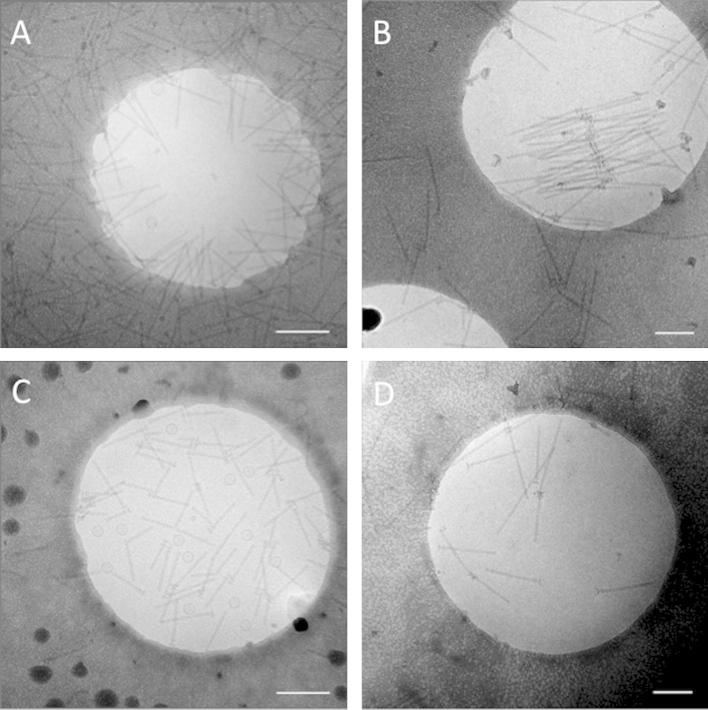
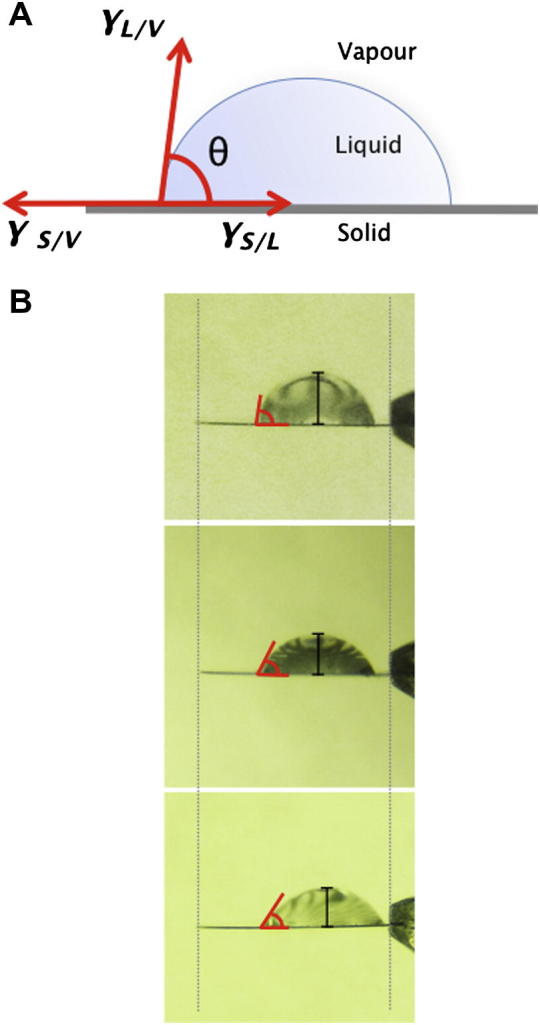
Difficulties associated with using X-ray crystallography for structural studies of large macromolecular complexes have made single particle cryo-electron microscopy (cryoEM) a key technique in structural biology. The efficient application of the single particle cryoEM approach requires the sample to be vitrified within the holes of carbon films, with particles well dispersed throughout the ice and adopting multiple orientations. To achieve this, the carbon support film is first hydrophilised by glow discharge, which allows the sample to spread over the film. Unfortunately, for transmembrane complexes especially, this procedure can result in severe sample adsorption to the carbon support film, reducing the number of particles dispersed in the ice. This problem is rate-limiting in the single particle cryoEM approach and has hindered its widespread application to hydrophobic complexes. We describe a novel grid preparation technique that allows for good particle dispersion in the ice and minimal hydrophobic particle adhesion to the support film. This is achieved by hydrophilisation of the carbon support film by the use of selected detergents that interact with the support so as to achieve a hydrophilic and neutral or selectively charged surface.
Crown Copyright © 2013. Published by Elsevier Inc. All rights reserved.
Figures
References
-
- Anatrace, Detergents and their uses in membrane protein science. <http://media.affymetrix.com/support/technical/anatrace/docs/Detergent_Bo...
-
- Dubochet J., Adrian M., Lepault J., McDowall A.W. Emerging techniques: cryo-electron microscopy of vitrified biological specimens. Trends Biochem. Sci. 1985;10:143–146.
-
- Hayat M. 4th ed. Cambridge University Press; 2000. Prinicples and Techniques of Electron Microscopy: Biological Applications.
-
- Jiang W., Ludtke S.J. Electron cryomicroscopy of single particles at subnanometer resolution. Curr. Opin. Struct. Biol. 2005;15:571–577. - PubMed
Publication types
MeSH terms
Substances
Grants and funding
LinkOut - more resources
Full Text Sources
Other Literature Sources
