


Long-range neural synchronization supports fast and efficient reading: EEG correlates of processing expected words in sentences
- PMID: 23357072
- PMCID: PMC3817365
- DOI: 10.1016/j.neuroimage.2013.01.031
Long-range neural synchronization supports fast and efficient reading: EEG correlates of processing expected words in sentences
Abstract
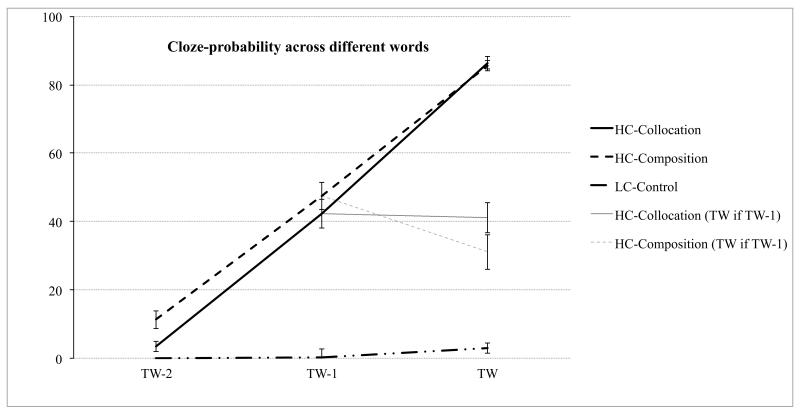
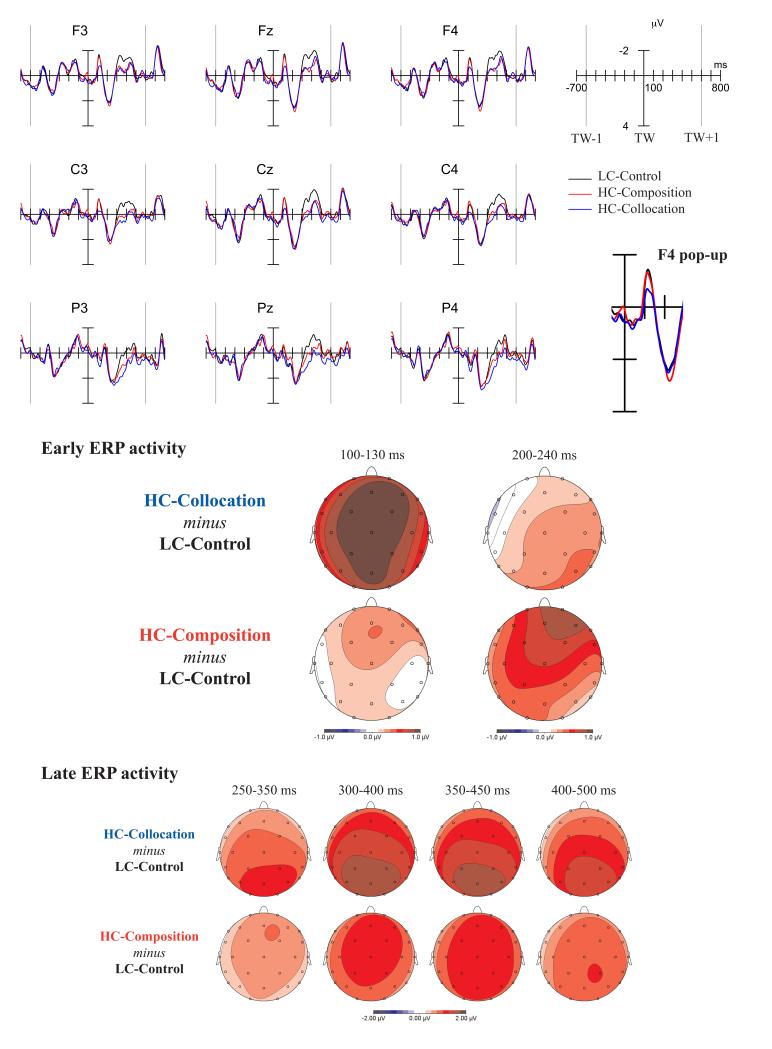
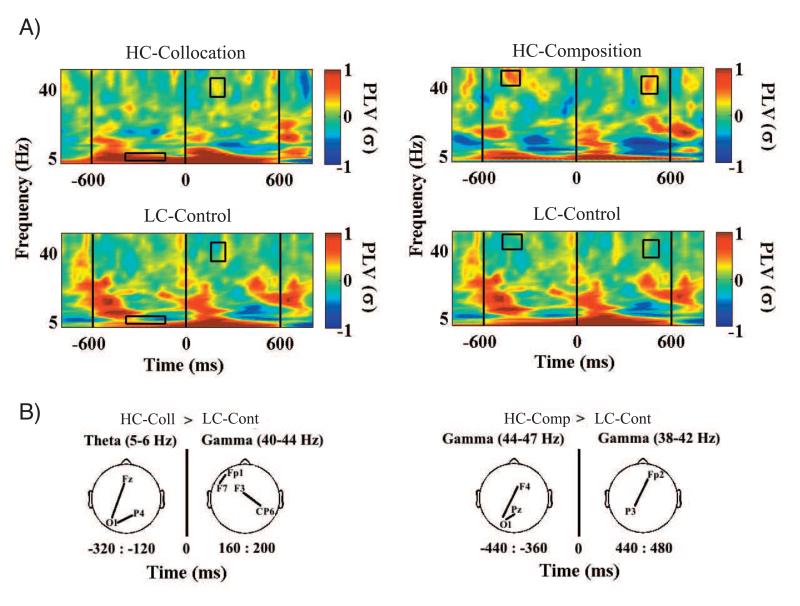
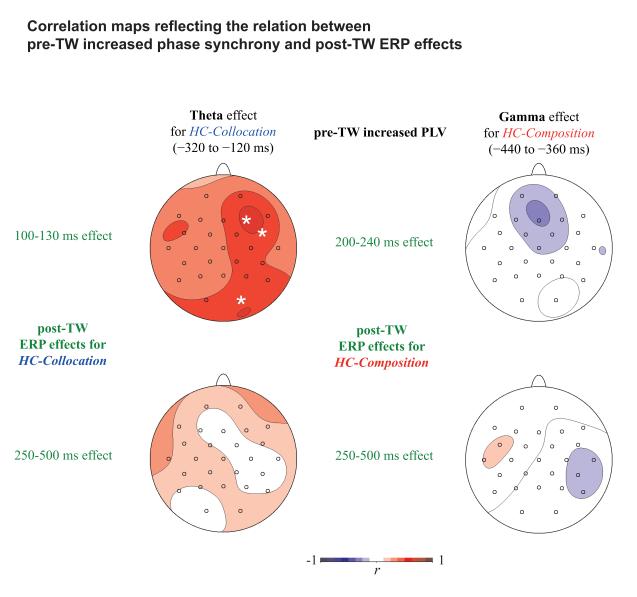
Word reading is heavily influenced by the information provided by previous context. In this study, we analyzed the neurophysiological bases of sentence reading through the EEG activity elicited during reading the same word embedded in differently constraining contexts: a) a low-constraining context; b) a high-constraining semantic compositional context; c) a high-constraining collocational context in which the item was in final position of a multi-word fixed-order expression. Cloze-probability of the two high-constraining contexts was equated. Before reading the target word we observed increased EEG gamma phase synchronization for the high-constraining compositional context and increased EEG theta synchronization for the collocational context (both compared to the low-constraining condition). After reading the target word we observed increased frontal positive EEG evoked activity (~220ms) for the high-constraining compositional context but an even earlier (~120ms) effect for the high-constraining collocational condition that was distributed over the scalp. A positive correlation was found only between the increased theta synchronization and the early EEG effect for the high-constraining collocational condition. Results indicate that long-range frontal-occipital interactions in the theta band - indexing working memory operations - support early visual-orthographic analysis of an incoming stimulus (such as the expected word); gamma-phase synchronization better represents binding operations between feed-forward activation and matching feedback. These data suggest that internal linguistic knowledge stored in long-term memory - if unambiguously pre-activated - supports the low-level perceptual processes involved in reading.
Copyright © 2013 Elsevier Inc. All rights reserved.
Figures
References
-
- Bastiaansen MCM, Hagoort P. Event-induced theta responses as a window on the dynamics of memory. Cortex. 2003;39:967–972. - PubMed
-
- Bastiaansen MCM, van Berkum JJ, Hagoort P. Event-related theta power increases in the human EEG during online sentence processing. Neurosci. Lett. 2002;323:13–16. - PubMed
-
- Benjamini Y, Yekutieli D. The control of the false discovery rate in multiple testing under dependency. Ann. Stat. 2001;29:1165–1188.
Publication types
MeSH terms
Grants and funding
LinkOut - more resources
Full Text Sources
Other Literature Sources
