


Molecular communication between tumor-associated fibroblasts and head and neck squamous cell carcinoma
- PMID: 23357526
- PMCID: PMC3615086
- DOI: 10.1016/j.oraloncology.2012.12.014
Molecular communication between tumor-associated fibroblasts and head and neck squamous cell carcinoma
Abstract
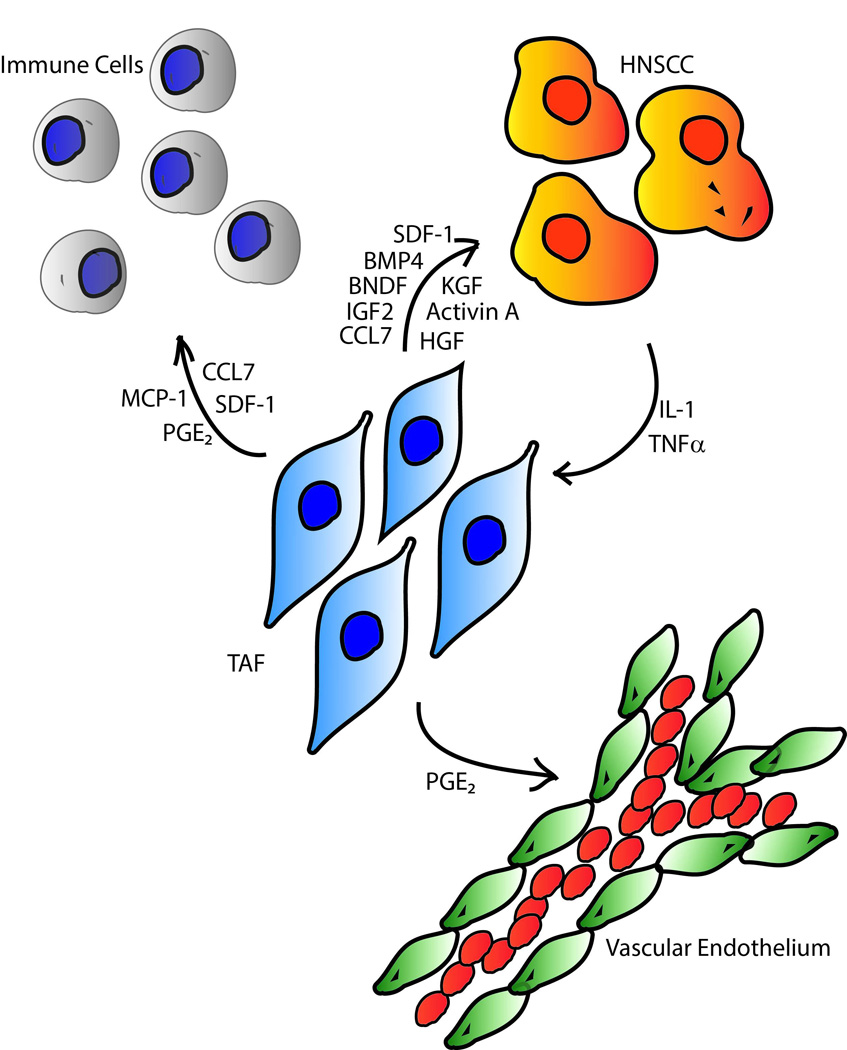
Over the past few decades, it has become increasingly clear that the lethality of cancers depends on more than the malignant cells themselves. The environment those malignant cells are exposed to is just as important a determinant of their behavior. Head and neck squamous cell carcinoma (HNSCC) is both common and deadly. It is the 6th most frequently occurring cancers, and prognosis is still generally poor. Recent evidence indicates that activated fibroblasts residing within the tumor stroma play a significant role in promoting the aggressive spread often seen in head and neck cancer. Tumor associated fibroblasts (TAFs) have also been implicated in facilitating angiogenesis and suppressing the normal anti-tumor function of immune cells. Studying the signaling molecules involved in these processes will facilitate the development of promising targets and inhibitors to prevent tumor-associated fibroblasts from exerting their reinforcing effects on the tumor. In this article, we review the recent literature on the signals used in tumor associated fibroblast communication, with a focus on potential therapeutic targets. Further, we highlight the lead candidates for TAF-targeted therapeutic interventions. Future anti-cancer strategies may achieve better results than current approaches by targeting the support cells in tumor stroma in addition to the cancerous cells.
Copyright © 2013 Elsevier Ltd. All rights reserved.
Figures
References
-
- Döbróssy L. Epidemiology of head and neck cancer: Magnitude of the problem. Cancer and Metastasis Reviews. 2005;24:9–17. - PubMed
-
- Chin D, Boyle GM, Williams RM, Ferguson K, Pandeya N, Pedley J, et al. Novel markers for poor prognosis in head and neck cancer. International Journal of Cancer. 2005;113:789–797. - PubMed
-
- Haddad RI, Shin DM. Recent advances in head and neck cancer. N Engl J Med. 2008;359:1143–1154. - PubMed
-
- Lim KP, Cirillo N, Hassona Y, Wei W, Thurlow JK, Cheong SC, et al. Fibroblast gene expression profile reflects the stage of tumour progression in oral squamous cell carcinoma. The Journal of Pathology. 2011;223:459–469. - PubMed
Publication types
MeSH terms
Substances
Grants and funding
LinkOut - more resources
Full Text Sources
Other Literature Sources
Medical
Miscellaneous
