


doi: 10.1021/jm301847z.
Epub 2013 Feb 18.
Development of inhibitors of the PAS-B domain of the HIF-2α transcription factor
Affiliations
- PMID: 23363003
- PMCID: PMC3676484
- DOI: 10.1021/jm301847z
Item in Clipboard
Development of inhibitors of the PAS-B domain of the HIF-2α transcription factor
J Med Chem.
.
Abstract
Hypoxia inducible factors (HIFs) are heterodimeric transcription factors induced in a variety of pathophysiological settings, including cancer. We describe the first detailed structure-activity relationship study of small molecules designed to inhibit HIF-2α-ARNT heterodimerization by binding an internal cavity of the HIF-2α PAS-B domain. Through a series of biophysical characterizations of inhibitor-protein interactions (NMR and X-ray crystallography), we have established the structural requirements for artificial inhibitors of the HIF-2α-ARNT PAS-B interaction. These results may serve as a foundation for discovering therapeutic agents that function by a novel mode of action.
Figures
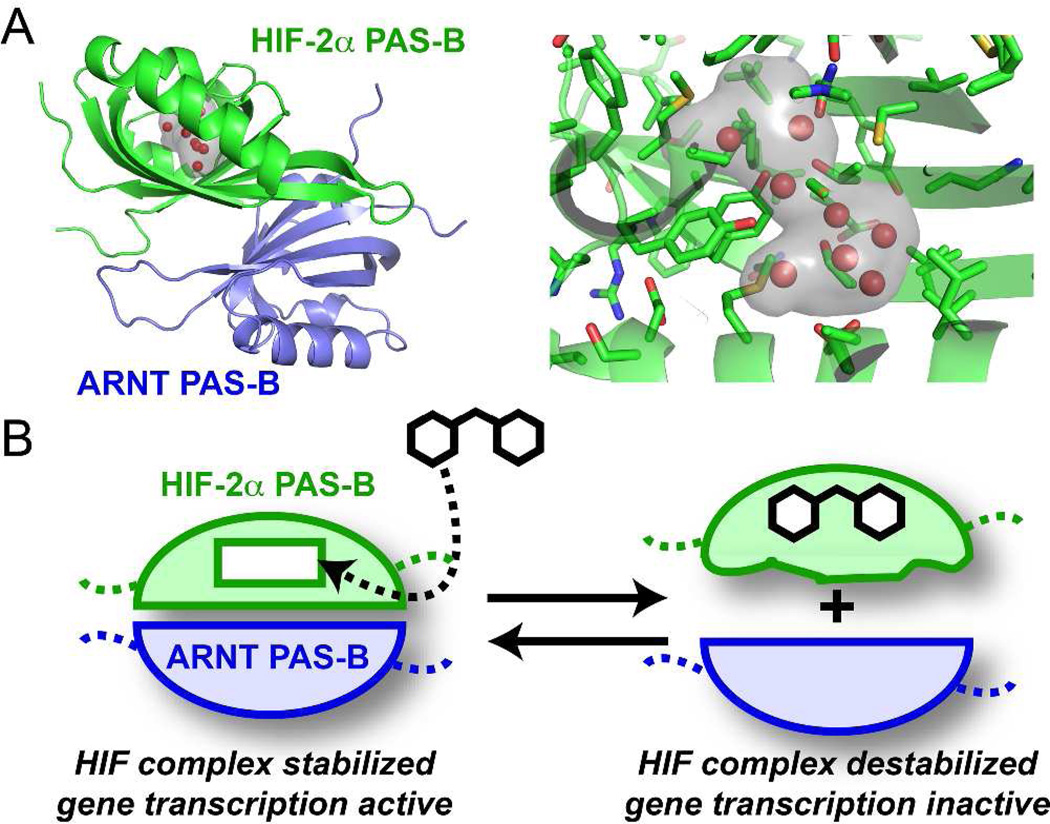
Basis of small molecule regulation of protein-protein interactions in HIF-2. A) Crystal structure of the HIF-2α–ARNT PAS-B heterodimer (PDB code: 3F1P), highlighting the internal cavity within HIF-2α PAS-B (grey surface, internal waters represented as red spheres). Sidechains lining the cavity are provided by a mix of hydrophobic and polar residues as shown. B) Schematic for small molecule regulation of HIF-2, with ligand binding to the HIF-2α PAS-B cavity, distorting the adjacent β-sheet that also provides the ARNT PAS-B binding surface.
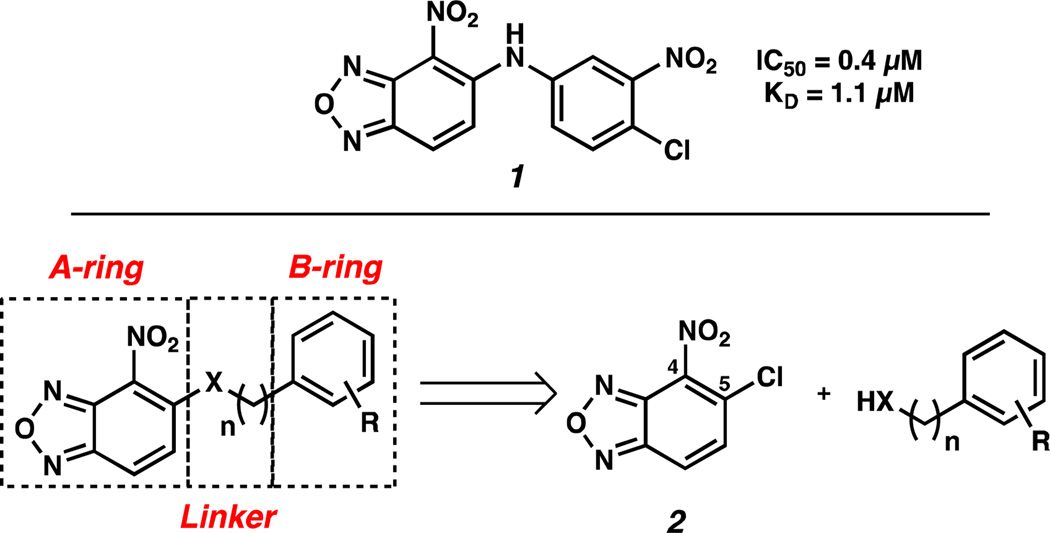
Compound identified from the initial high-throughput screen and Strategic Molecular Subsections for SAR Studies.
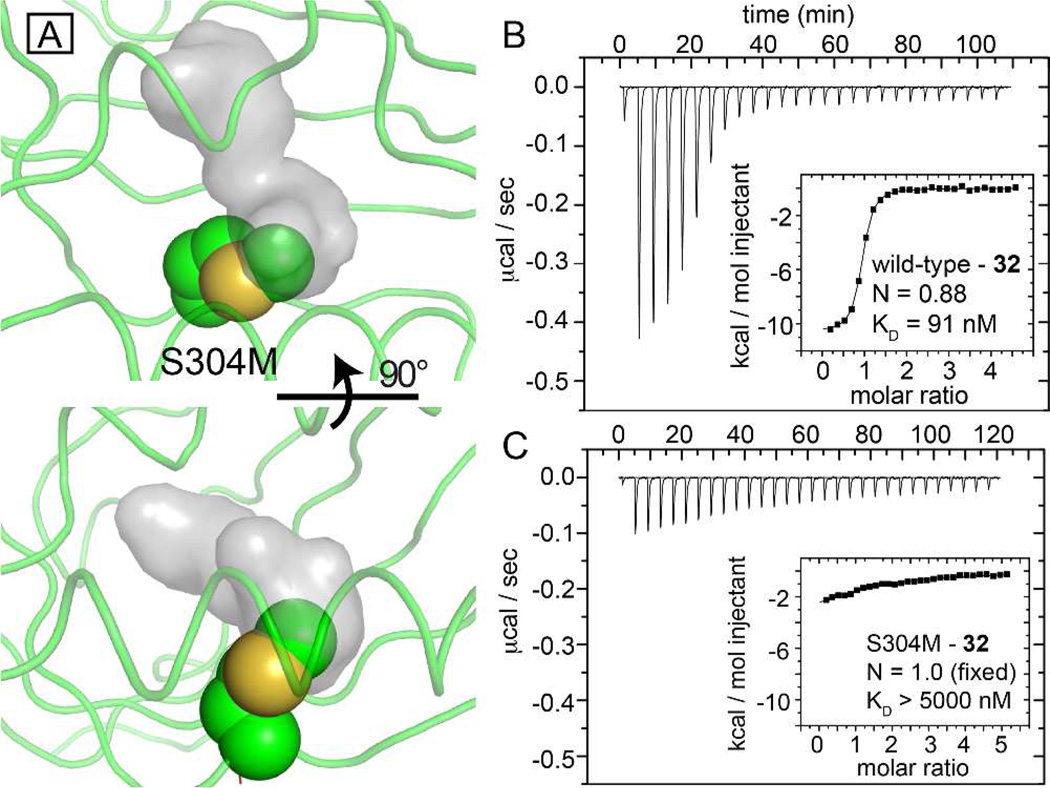
A single internal mutation within the HIF-2α PAS-B cavity attenuates ligand binding. A) Two views of a model of the S304M mutation (spheres) suggests that the new sidechain will intrude upon the apo- protein cavity (grey surface, from PDB code: 3F1P). (B, C) ITC of wild-type (B) and S304M (C) complexes with compound 32, demonstrating that the mutation reduces the affinity of the protein over 50-fold, validating the biophysically-characterized ligand binding site.
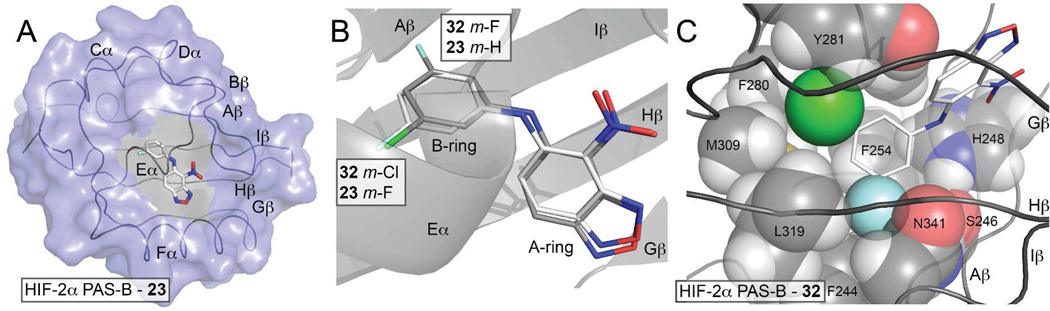
Binding modes of HIF-2 antagonists. A) The HIF-2 PAS-B* - 23 ternary complex (PDB code: 4GS9) confirms that this inactive HTS-lead analog binds into the HIF-2α PAS-B internal cavity. To better view the internally-bound ligand, secondary structural elements are indicated along the ribbon diagram and the HIF-2α PAS-B surface (blue) has been cut away for residues that separate the binding site from bulk solvent (from this perspective). Although present in these structures, the ARNT PAS-B domain has been omitted for clarity. B) Comparison of the HIF-2 PAS-B complexes with compounds 23 and 32 shows that the mono-substituted m-fluorinated B-ring of 23 flips roughly 180 degrees relative to 32 (PDB code: 4GHI). C) Close protein - 32 contacts at the m-fluorine site suggests that bound 23 adopts a lower energy bound conformation by placing its single halogen where 32 positions its m-chlorine.
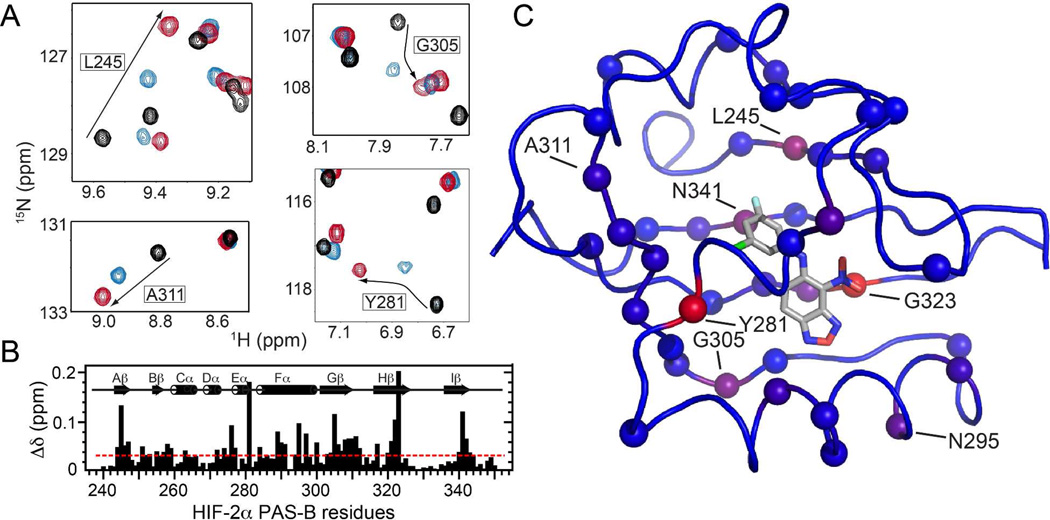
Solution NMR characterization of the 23 and 32 complexes with HIF-2α PAS-B. A) 15N/1H HSQC spectra of apo HIF-2α PAS-B (black) and its complexes with 23 (blue) and 32 (red) reveal sites differentially perturbed by the two analogs. B) Chemical shift differences in HIF-2α PAS-B observed between the complexes (with ligands 23 and 32) are plotted along the protein sequence. The red line at 0.033 ppm denotes the average difference observed across all sites. C) Chemical shift differences mapped onto the HIF-2α PAS-B – 32 complex structure (PDB code: 4GHI) as a blue to red gradient, with spheres marking sites experiencing a greater than average difference.
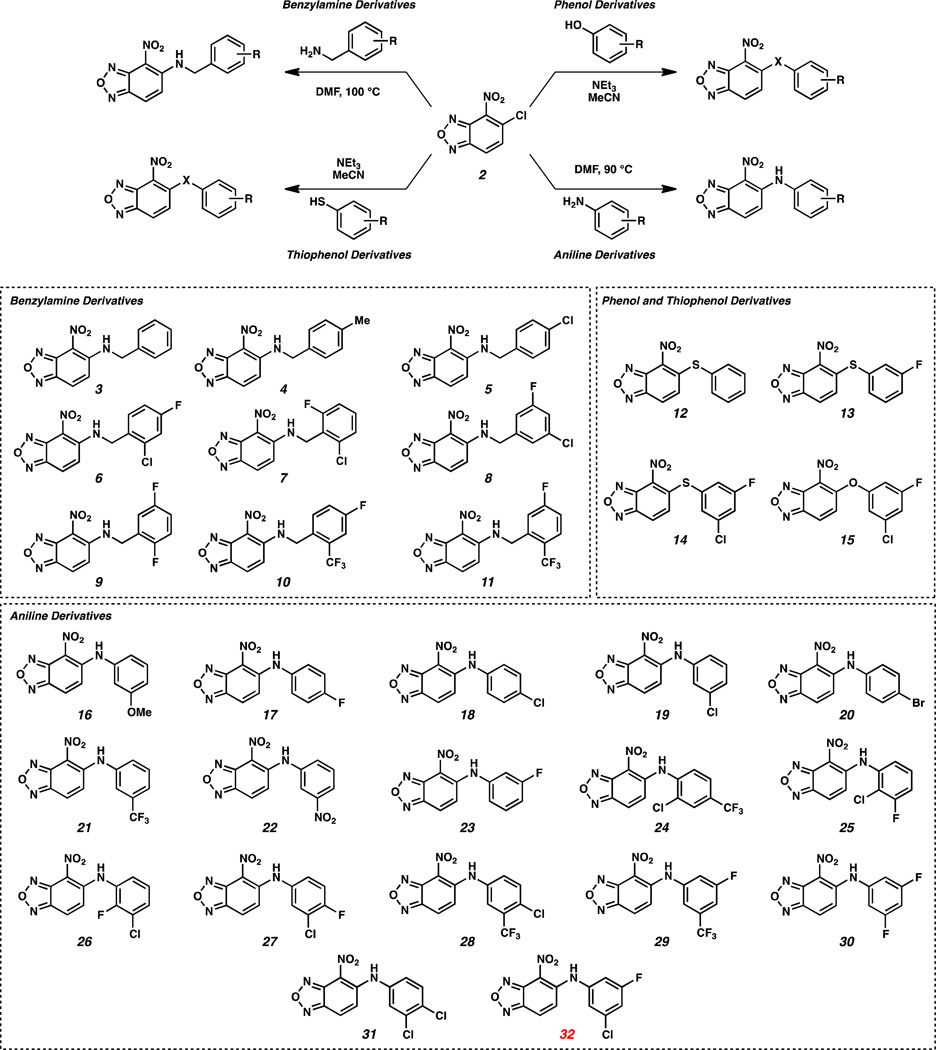
Synthesis of Analogs of 1.
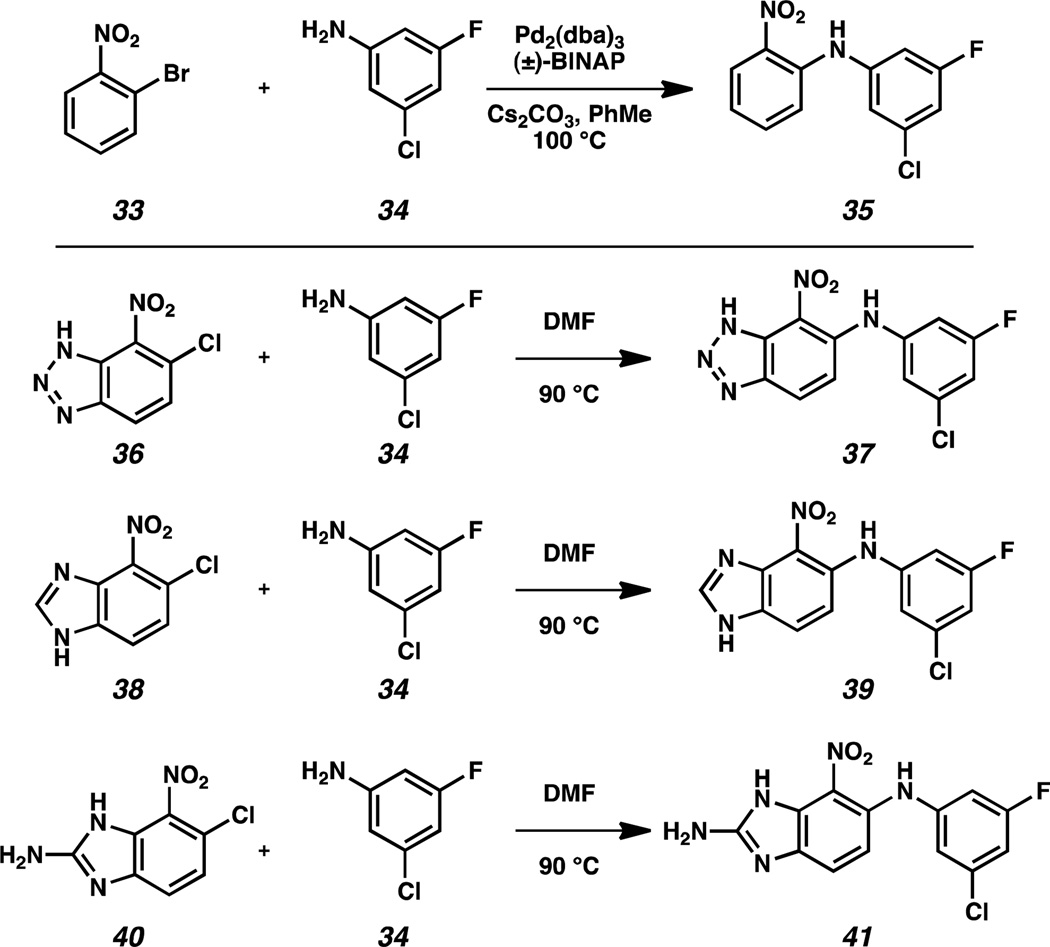
A-ring Modifications of Compound 32.
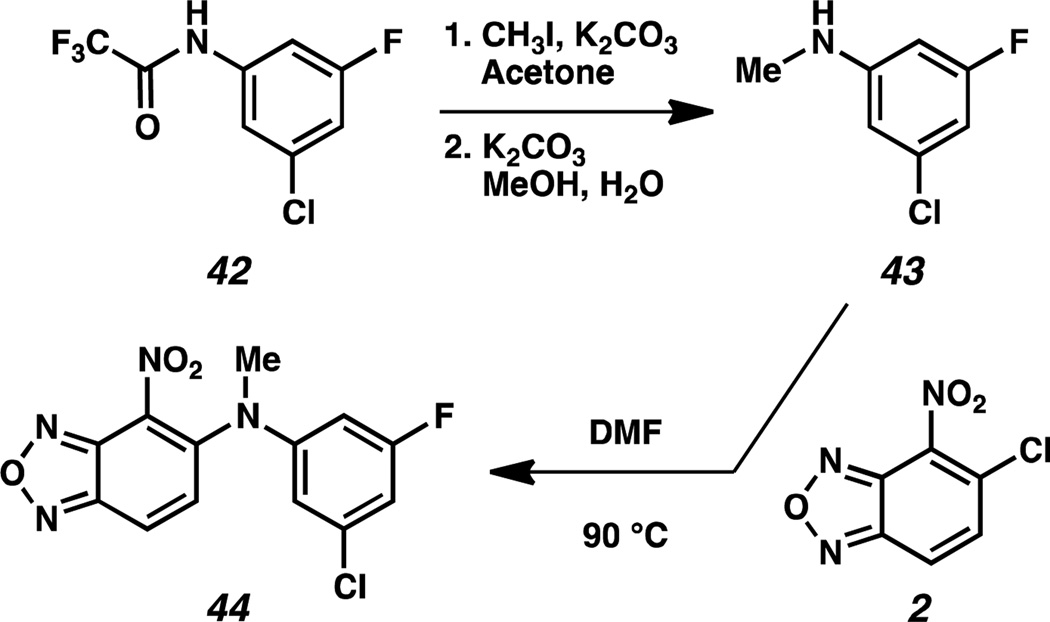
Synthesis of N-methylated analog 45.
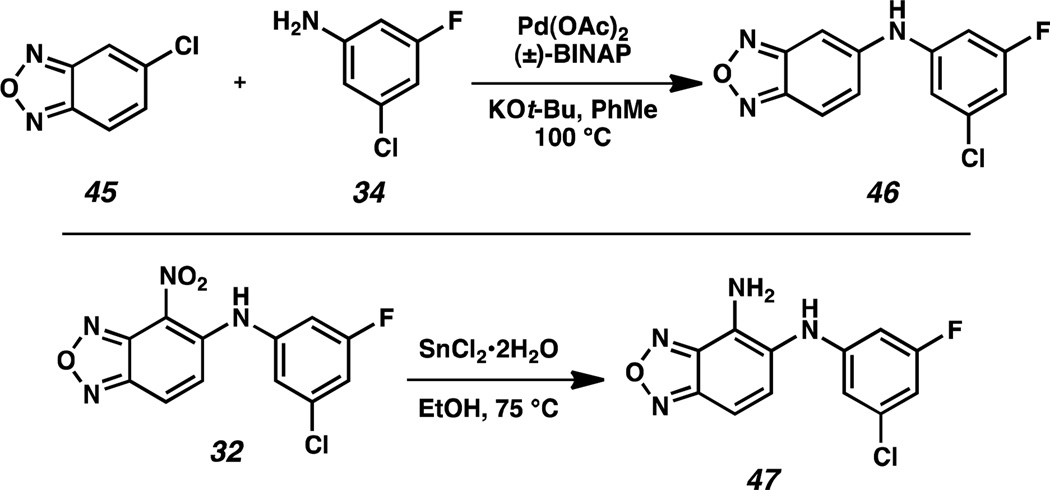
Conversion of 4-nitro functional group.

Synthesis of 4-amidobenzoxadiazoles.
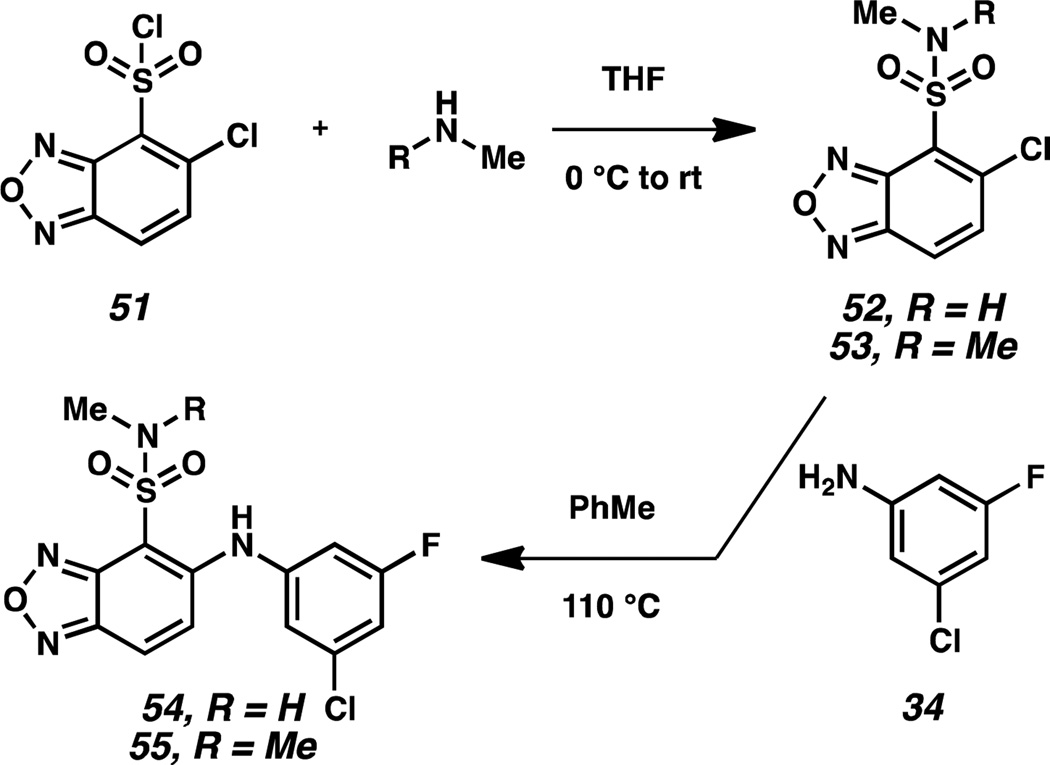
Synthesis of 4-sulfonamidobenzoxadiazoles.
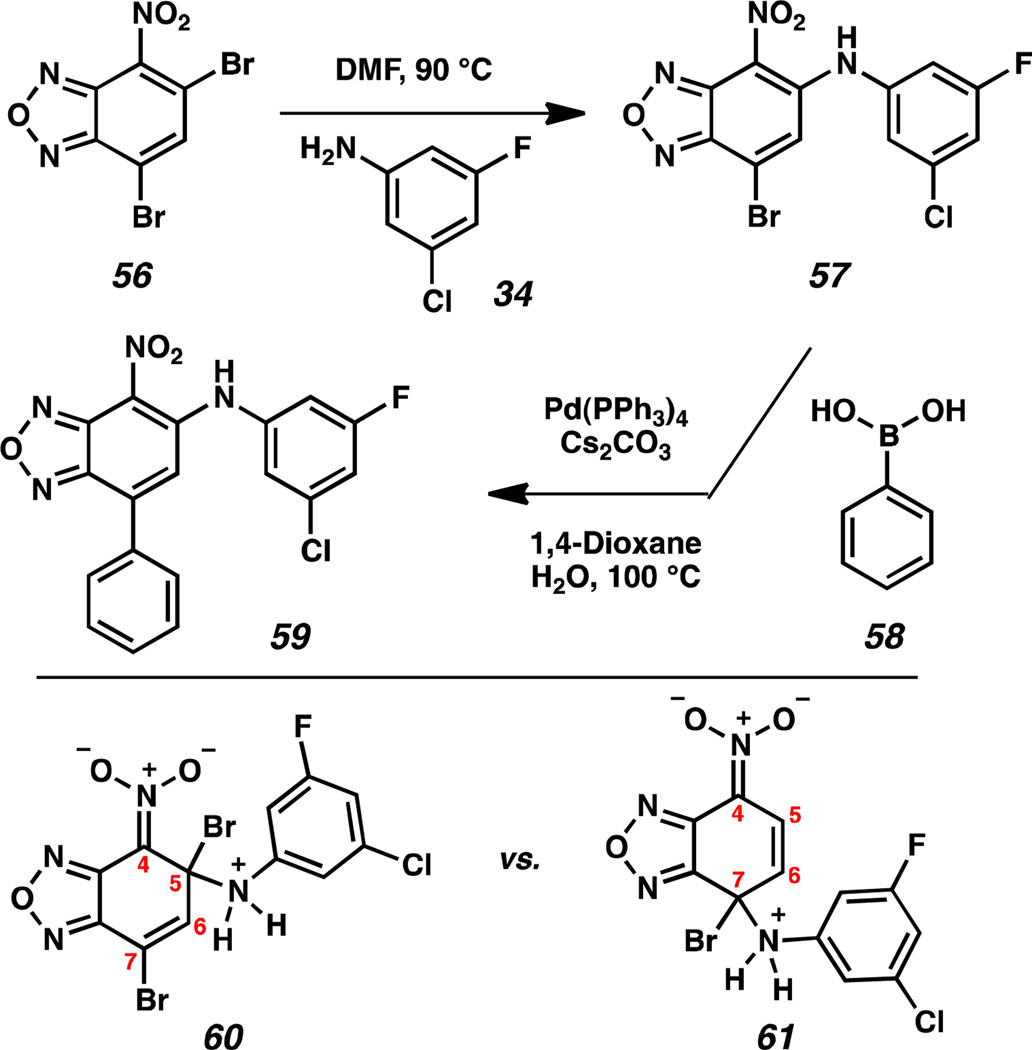
Functionalization of the 7-position of the benzoxadiazole.
References
-
- Xia X, Lemieux ME, Li W, Carroll JS, Brown M, Liu XS, Kun AL. Integrative analysis of HIF binding and transactivation reveals its role in maintaining histone methylation homeostasis. Proc. Natl. Acad. Sci. U.S.A. 2009;106:4260–4265. - PMC - PubMed
- Schodel J, Oikonomopoulos S, Ragoussis J, Pugh CW, Ratcliffe PJ, Mole DR. High-resolution genome-wide mapping of HIF-binding sites by ChIP-seq. Blood. 2011;117:e207–e217. - PMC - PubMed
-
- Bos R, van der Groep P, Greijer AE, Shvarts A, Meijer S, Pinedo HM, Semenza GL, van Diest PJ, van der Wall E. Levels of hypoxia-inducible factor-1alpha independently predict prognosis in patients with lymph node negative breast carcinoma. Cancer. 2003;97:1573–1581. - PubMed
- Zagzag D, Zhong H, Scalzitti JM, Laughner E, Simons JW, Semenza GL. Expression of hypoxia-inducible factor 1alpha in brain tumors: association with angiogenesis, invasion, and progression. Cancer. 2000;88:2606–2618. - PubMed
-
- Semenza GL. Targeting HIF-1 for cancer therapy. Nat. Rev. Cancer. 2003;10:721–732. - PubMed
Publication types
MeSH terms
Substances
Associated data
- Actions
Grants and funding
LinkOut - more resources
Full Text Sources
Other Literature Sources
Chemical Information
