


1p/19q testing has no significance in the workup of glioblastomas
- PMID: 23363074
- PMCID: PMC4095883
- DOI: 10.1111/nan.12031
1p/19q testing has no significance in the workup of glioblastomas
Abstract
Aims: To determine whether testing for isolated 1p or 19q losses, or as a codeletion, has any significance in the workup of glioblastomas (GBMs).
Methods: Upfront 1p/19q testing by fluorescence in situ hybridization (FISH) and/or polymerase chain reaction (PCR)-based loss of heterozygosity (LOH) was done in 491 gliomas that were histologically diagnosed as GBMs. Outcomes were determined and measured against 1p/19q results.
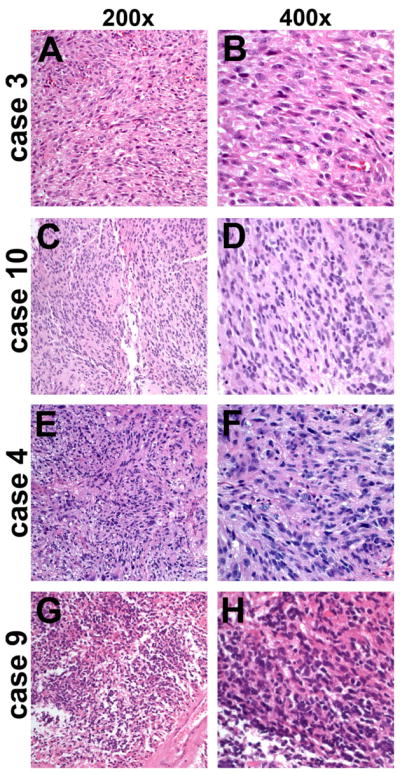
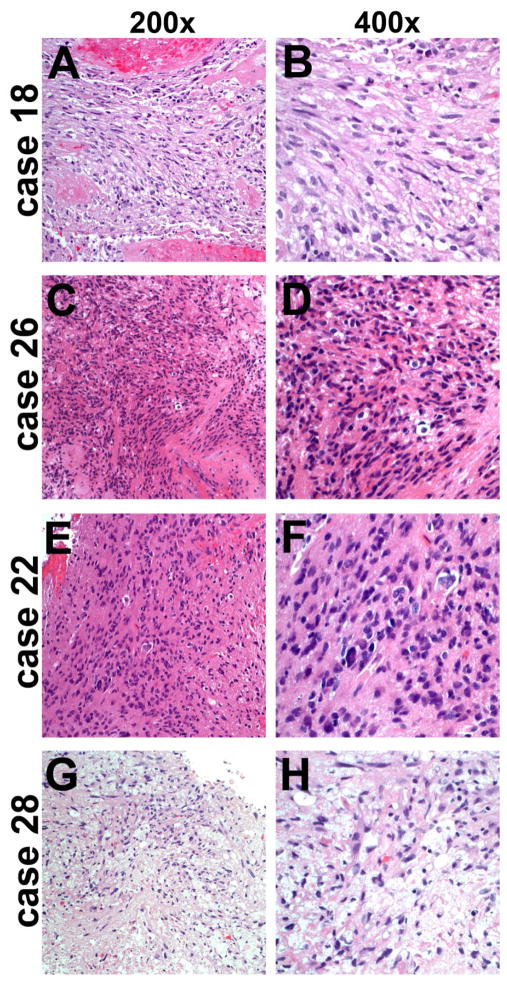
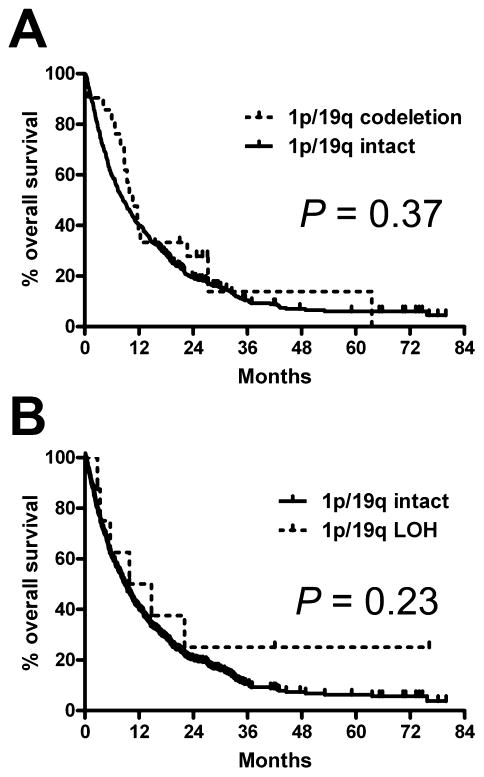
Results: Twenty-eight showed apparent 1p/19q codeletion by either FISH and/or PCR-based LOH, but only 1/26 showed codeletion by both tests. Over 90% of tumours with apparent codeletion by either FISH or LOH also had 10q LOH and/or EGFR amplification, features inversely related to true whole-arm 1p/19q codeletion. Furthermore, only 1/28 tumours demonstrated an R132H IDH1 mutation. Neither 1p/19q codeletion by FISH nor LOH had an impact on GBM survival. Isolated losses of 1p or 19q also had no impact on survival.
Conclusions: These data suggest that (i) 1p/19q testing is not useful on gliomas that are histologically GBMs; (ii) codeletion testing should be reserved only for cases with compatible morphology; and (iii) EGFR, 10q, and IDH1 testing can help act as safeguards against a false-positive 1p/19q result.
Keywords: 1p/19q; FISH; LOH; glioblastoma.
© 2013 The Authors. Neuropathology and Applied Neurobiology © 2013 British Neuropathological Society.
Figures
References
-
- Kraus JA, Koopmann J, Kaskel P, Maintz D, Brandner S, Schramm J, Louis DN, Wiestler OD, von Deimling A. Shared allelic losses on chromosomes 1p and 19q suggest a common origin of oligodendroglioma and oligoastrocytoma. J Neuropathol Exp Neurol. 1995;54:91–5. - PubMed
-
- Jenkins RB, Blair H, Ballman KV, Giannini C, Arusell RM, Law M, Flynn H, Passe S, Felten S, Brown PD, Shaw EG, Buckner JC. A t(1;19)(q10;p10) mediates the combined deletions of 1p and 19q and predicts a better prognosis of patients with oligodendroglioma. Cancer Res. 2006;66:9852–61. - PubMed
-
- Griffin CA, Burger P, Morsberger L, Yonescu R, Swierczynski S, Weingart JD, Murphy KM. Identification of der(1;19)(q10;p10) in five oligodendrogliomas suggests mechanism of concurrent 1p and 19q loss. J Neuropathol Exp Neurol. 2006;65:988–94. - PubMed
-
- Jeuken JW, von Deimling A, Wesseling P. Molecular pathogenesis of oligodendroglial tumors. J Neurooncol. 2004;70:161–81. - PubMed
Publication types
MeSH terms
Grants and funding
LinkOut - more resources
Full Text Sources
Other Literature Sources
Medical
Research Materials
Miscellaneous
