


Identification of small RNA pathway genes using patterns of phylogenetic conservation and divergence
- PMID: 23364702
- PMCID: PMC3762460
- DOI: 10.1038/nature11779
Identification of small RNA pathway genes using patterns of phylogenetic conservation and divergence
Abstract
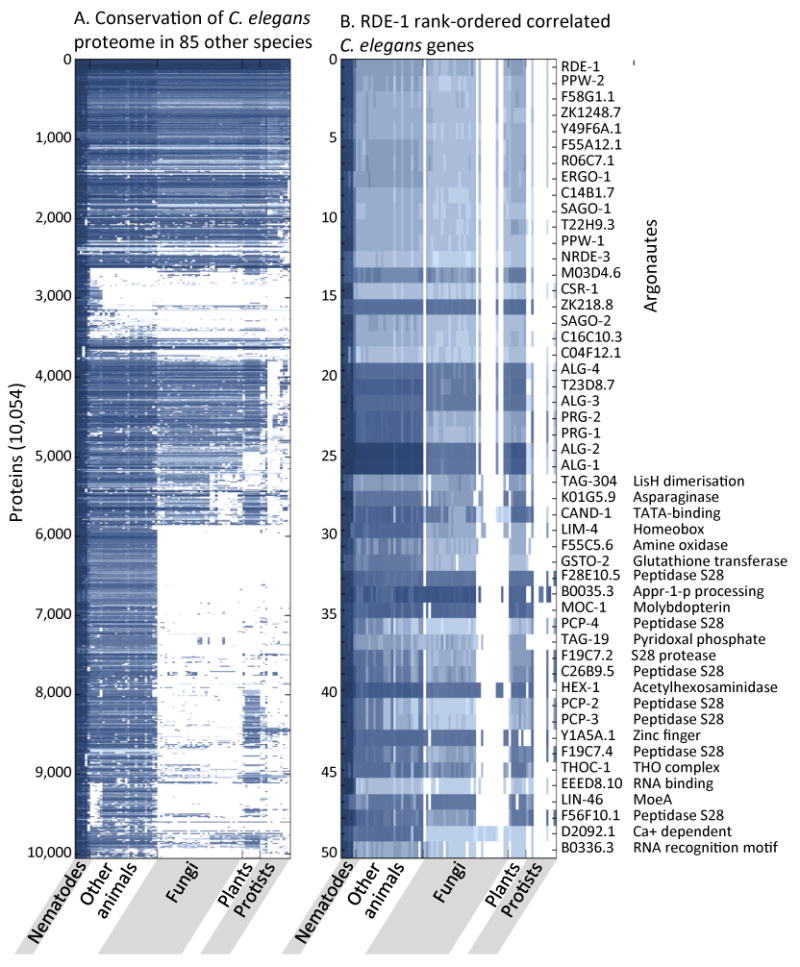
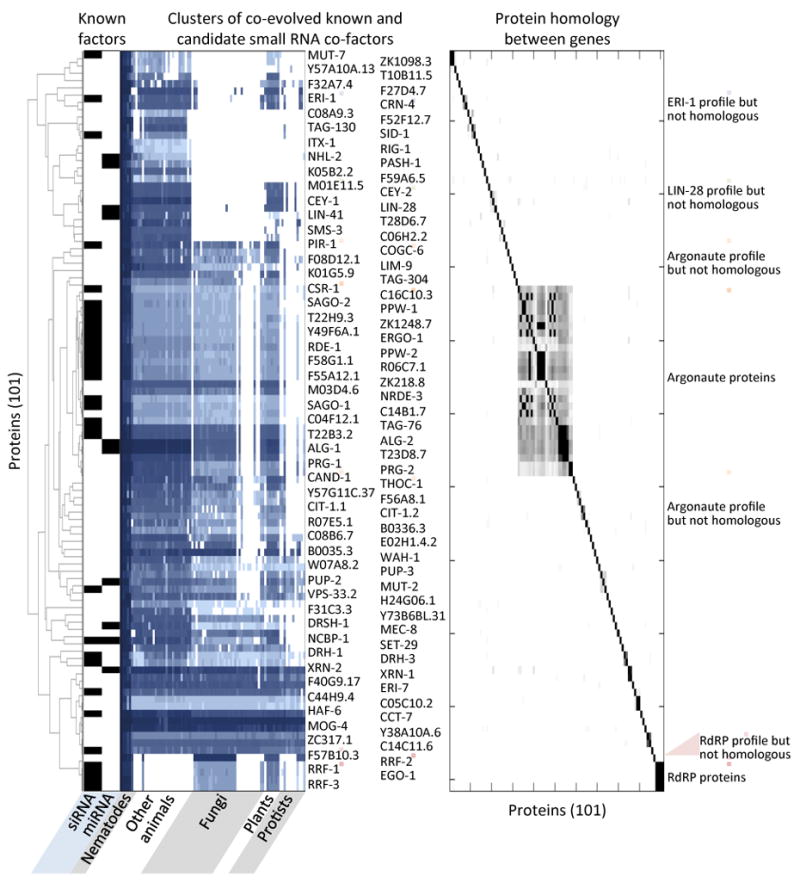
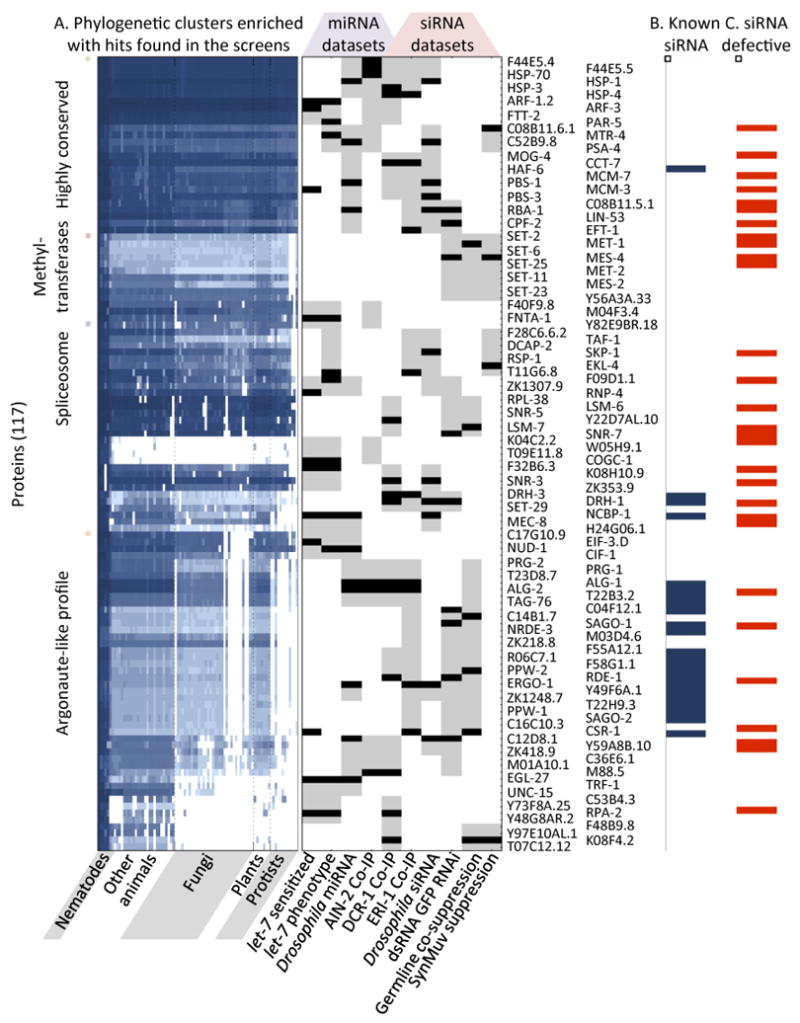
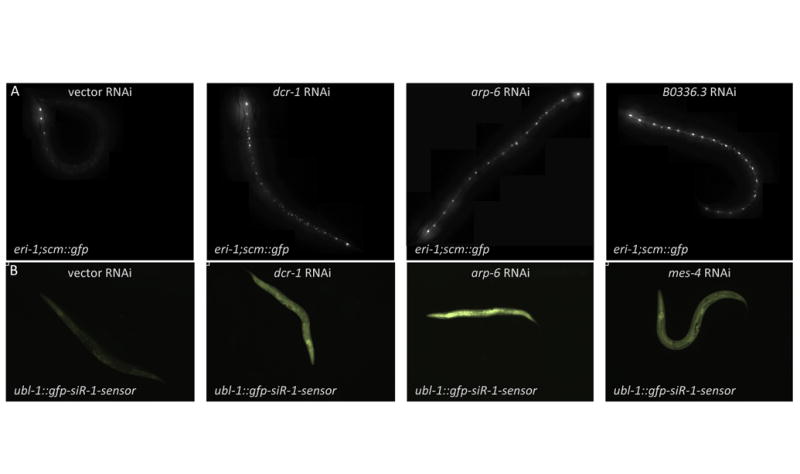
Genetic and biochemical analyses of RNA interference (RNAi) and microRNA (miRNA) pathways have revealed proteins such as Argonaute and Dicer as essential cofactors that process and present small RNAs to their targets. Well-validated small RNA pathway cofactors such as these show distinctive patterns of conservation or divergence in particular animal, plant, fungal and protist species. We compared 86 divergent eukaryotic genome sequences to discern sets of proteins that show similar phylogenetic profiles with known small RNA cofactors. A large set of additional candidate small RNA cofactors have emerged from functional genomic screens for defects in miRNA- or short interfering RNA (siRNA)-mediated repression in Caenorhabditis elegans and Drosophila melanogaster, and from proteomic analyses of proteins co-purifying with validated small RNA pathway proteins. The phylogenetic profiles of many of these candidate small RNA pathway proteins are similar to those of known small RNA cofactor proteins. We used a Bayesian approach to integrate the phylogenetic profile analysis with predictions from diverse transcriptional coregulation and proteome interaction data sets to assign a probability for each protein for a role in a small RNA pathway. Testing high-confidence candidates from this analysis for defects in RNAi silencing, we found that about one-half of the predicted small RNA cofactors are required for RNAi silencing. Many of the newly identified small RNA pathway proteins are orthologues of proteins implicated in RNA splicing. In support of a deep connection between the mechanism of RNA splicing and small-RNA-mediated gene silencing, the presence of the Argonaute proteins and other small RNA components in the many species analysed strongly correlates with the number of introns in those species.
Figures
References
-
- Kim JK, et al. Functional genomic analysis of RNA interference in C. elegans. Science. 2005;308:1164–1167. 1109267. 10.1126/science.1109267. - PubMed
-
- Meister G, et al. Identification of novel argonaute-associated proteins. Current biology : CB. 2005;15:2149–2155. 10.1016/j.cub.2005.10.048. - PubMed
-
- Duchaine TF, et al. Functional proteomics reveals the biochemical niche of C. elegans DCR-1 in multiple small-RNA-mediated pathways. Cell. 2006;124:343–354. S0092-8674(05)01394-2. 10.1016/j.cell.2005.11.036 . - PubMed
Publication types
MeSH terms
Substances
Grants and funding
LinkOut - more resources
Full Text Sources
