


Oxysterol-binding protein family I is the target of minor enviroxime-like compounds
- PMID: 23365445
- PMCID: PMC3624399
- DOI: 10.1128/JVI.03546-12
Oxysterol-binding protein family I is the target of minor enviroxime-like compounds
Abstract
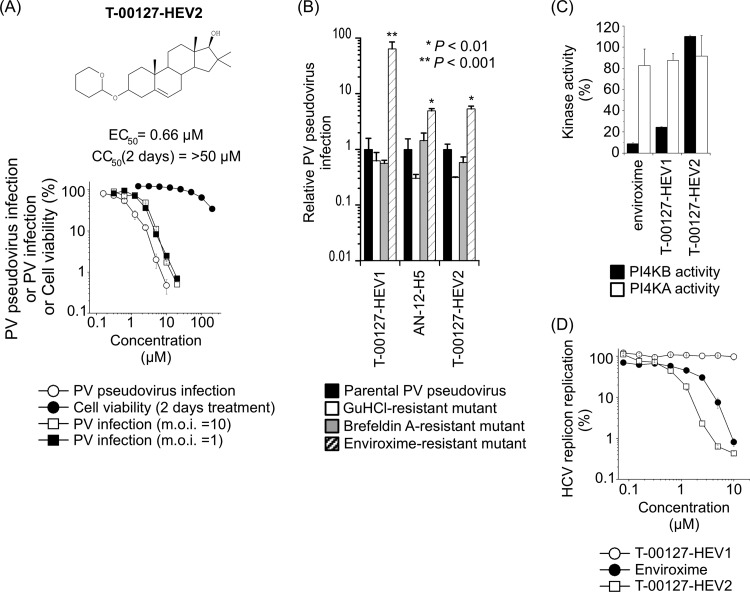
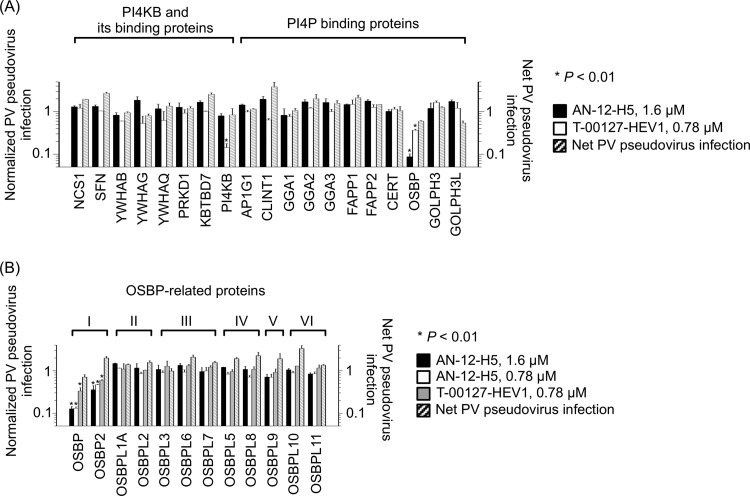
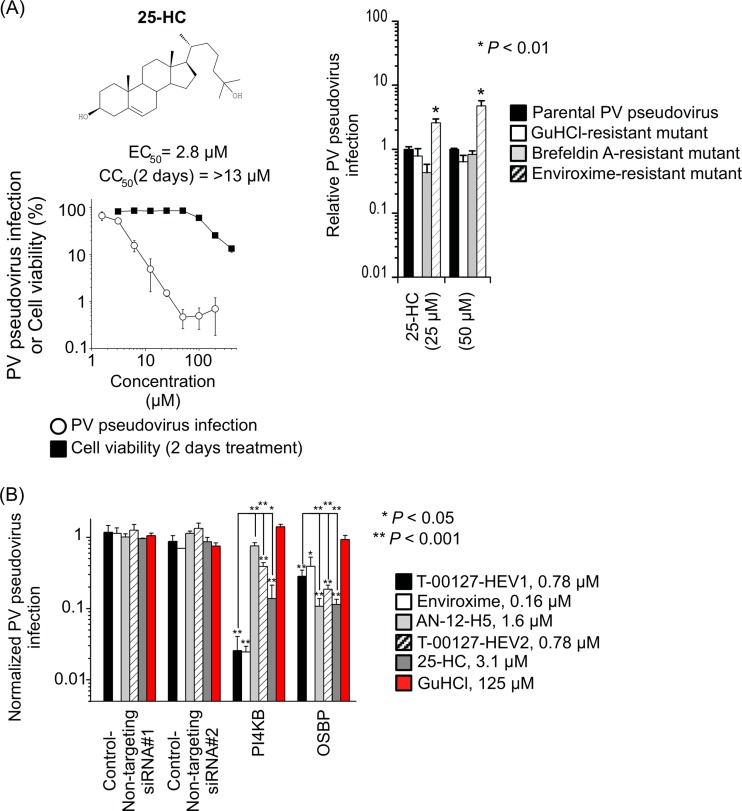
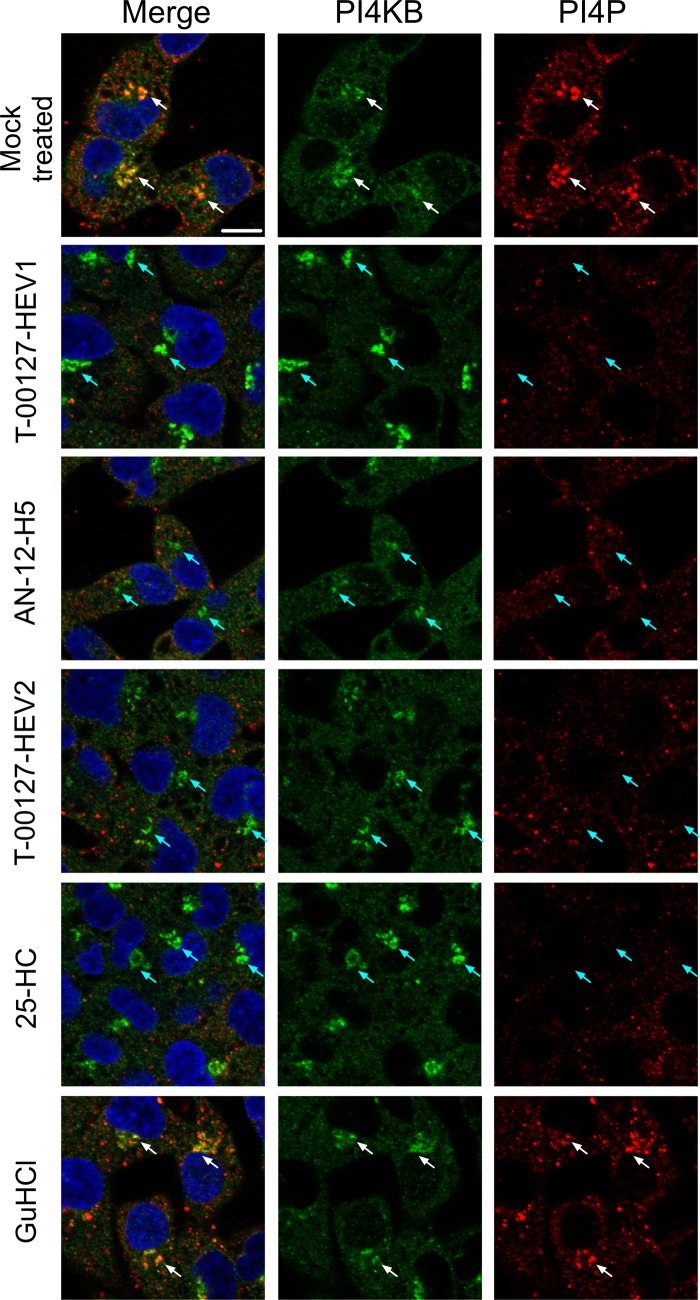
Enviroxime is an antipicornavirus compound that targets host phosphatidylinositol 4-kinase III beta (PI4KB) activity for its antipicornavirus activity. To date, several antipoliovirus (PV) compounds similar to enviroxime that are associated with a common resistance mutation in viral protein 3A (a G5318A [3A-Ala70Thr] mutation in PV) have been identified. Most of these compounds have a direct inhibitory effect on PI4KB activity, as well as enviroxime (designated major enviroxime-like compounds). However, one of the compounds, AN-12-H5, showed no inhibitory effect on PI4KB and was considered to belong to another group of enviroxime-like compounds (designated minor enviroxime-like compounds). In the present study, we performed a small interfering RNA (siRNA) sensitization assay targeting PI4KB-related genes and identified oxysterol-binding protein (OSBP) as a target of minor enviroxime-like compounds. Knockdown of OSBP and OSBP2 increased the anti-PV activities of AN-12-H5 and a newly identified minor enviroxime-like compound, T-00127-HEV2, and also to T-00127-HEV1 to a minor extent, in the cells. A ligand of OSBP, 25-hydroxycholesterol (25-HC), acted as a minor enviroxime-like compound. Minor enviroxime-like compounds induced relocalization of OSBP to the Golgi apparatus in cells. Treatment of the cells with major or minor enviroxime-like compounds suppressed the expression of genes (HMGCS1 and SQLE) in the SREBP/SCAP regulatory pathway and diminished endogenous phosphatidylinositol 4-phosphate (PI4P) at the Golgi apparatus. Our results suggested that minor enviroxime-like compounds are phenotypically identical to 25-HC and that major and minor enviroxime-like compounds suppress the production and/or accumulation of PI4P in PV-infected cells by targeting PI4KB and OSBP family I activities, respectively.
Figures

References
-
- Bodian D. 1949. Histopathologic basis of clinical findings in poliomyelitis. Am. J. Med. 6:563–578 - PubMed
-
- Couderc T, Christodoulou C, Kopecka H, Marsden S, Taffs LF, Crainic R, Horaud F. 1989. Molecular pathogenesis of neural lesions induced by poliovirus type 1. J. Gen. Virol. 70:2907–2918 - PubMed
-
- Sabin AB. 1965. Oral poliovirus vaccine. History of its development and prospects for eradication of poliomyelitis. JAMA 194:872–876 - PubMed
-
- Collett MS, Neyts J, Modlin JF. 2008. A case for developing antiviral drugs against polio. Antiviral Res. 79:179–187 - PubMed
Publication types
MeSH terms
Substances
LinkOut - more resources
Full Text Sources
Other Literature Sources
