


The effects of whole-body vibration on the cross-transfer of strength
- PMID: 23365521
- PMCID: PMC3529861
- DOI: 10.1100/2012/504837
The effects of whole-body vibration on the cross-transfer of strength
Abstract
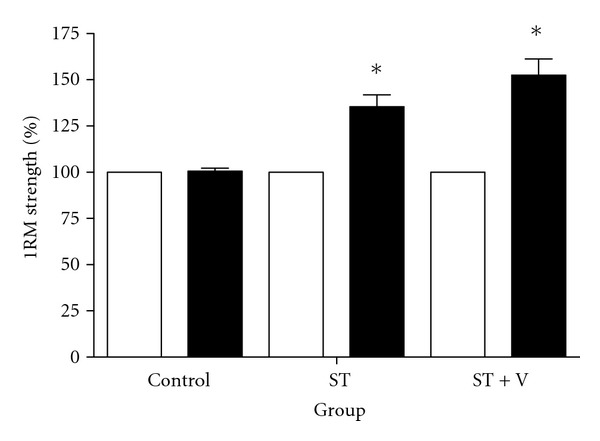
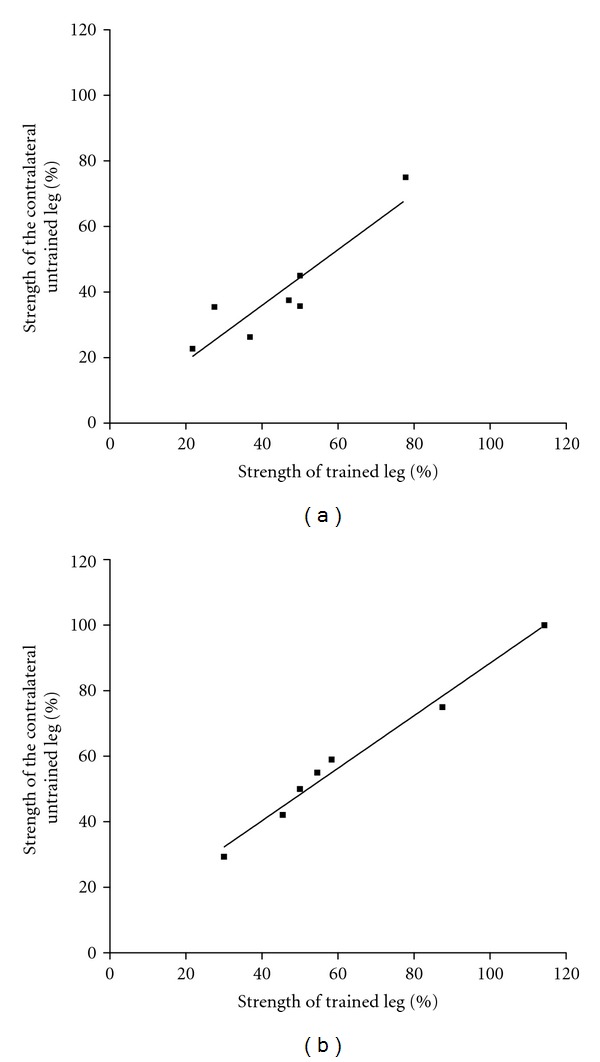
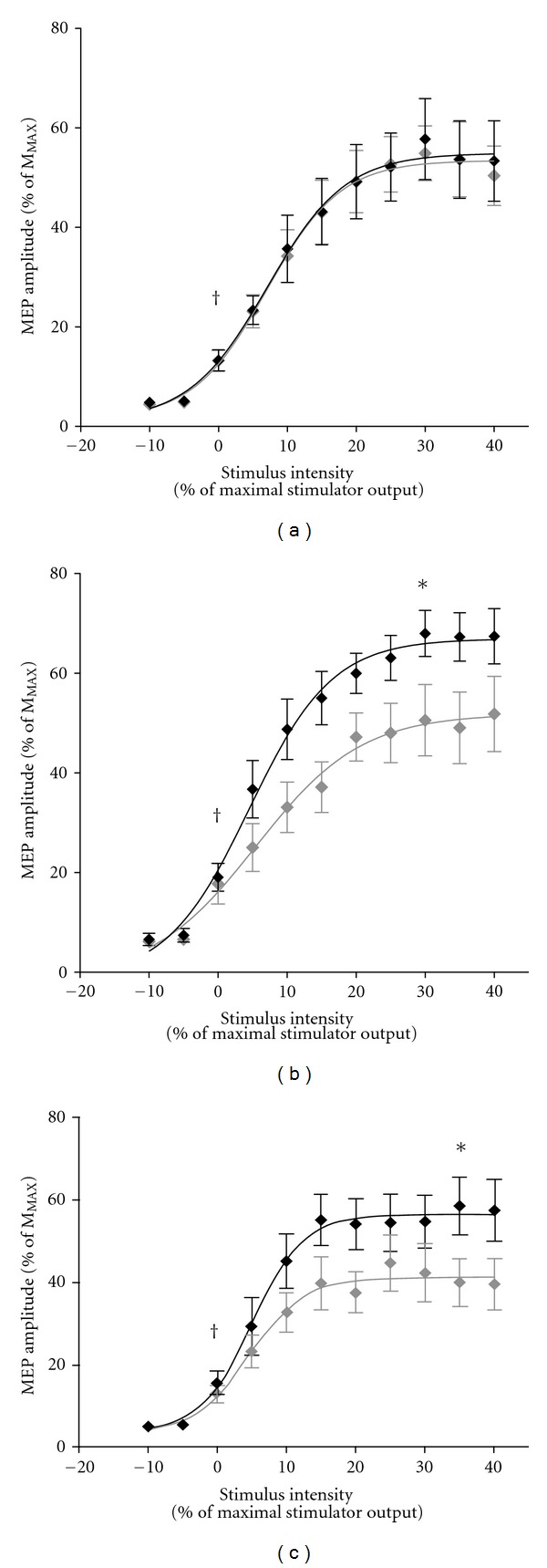
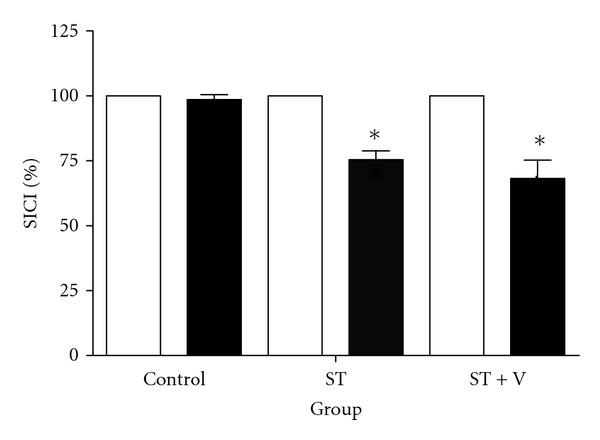
This study investigated whether the use of superimposed whole-body vibration (WBV) during cross-education strength training would optimise strength transfer compared to conventional cross-education strength training. Twenty-one healthy, dominant right leg volunteers (21 ± 3 years) were allocated to a strength training (ST, m = 3, f = 4), a strength training with WBV (ST + V, m = 3, f = 4), or a control group (no training, m = 3, f = 4). Training groups performed 9 sessions over 3 weeks, involving unilateral squats for the right leg, with or without WBV (35 Hz; 2.5 mm amplitude). All groups underwent dynamic single leg maximum strength testing (1RM) and single and paired pulse transcranial magnetic stimulation (TMS) prior to and following training. Strength increased in the trained limb for the ST (41%; ES = 1.14) and ST + V (55%; ES = 1.03) groups, which resulted in a 35% (ES = 0.99) strength transfer to the untrained left leg for the ST group and a 52% (ES = 0.97) strength transfer to the untrained leg for the ST + V group, when compared to the control group. No differences in strength transfer between training groups were observed (P = 0.15). For the untrained leg, no differences in the peak height of recruitment curves or SICI were observed between ST and ST + V groups (P = 1.00). Strength training with WBV does not appear to modulate the cross-transfer of strength to a greater magnitude when compared to conventional cross-education strength training.
Figures
References
-
- Scripture EW, Smith TL, Brown EM. On the education of muscular control and power. Studies From the Yale Psychological Laboratory. 1894;2:114–119.
-
- Hellebrandt FA. Cross education; ipsilateral and contralateral effects of unimanual training. Journal of Applied Physiology. 1951;4(2):136–144. - PubMed
-
- Hortobágyi T. Cross education and the human central nervous system. IEEE Engineering in Medicine and Biology Magazine. 2005;24(1):22–28. - PubMed
-
- Lee M, Gandevia SC, Carroll TJ. Unilateral strength training increases voluntary activation of the opposite untrained limb. Clinical Neurophysiology. 2009;120(4):802–808. - PubMed
-
- Carroll TJ, Herbert RD, Munn J, Lee M, Gandevia SC. Contralateral effects of unilateral strength training: evidence and possible mechanisms. Journal of Applied Physiology. 2006;101(5):1514–1522. - PubMed
Publication types
MeSH terms
LinkOut - more resources
Full Text Sources
