


Dealing with the surgical and medical challenges of penetrating brain injuries
- PMID: 23365777
- PMCID: PMC3556865
- DOI: 10.1155/2013/209750
Dealing with the surgical and medical challenges of penetrating brain injuries
Abstract
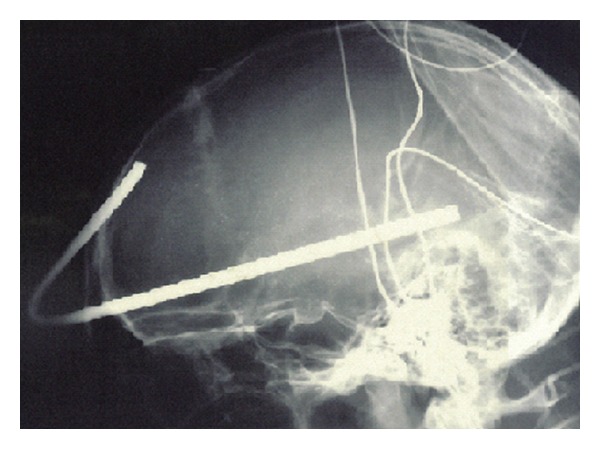
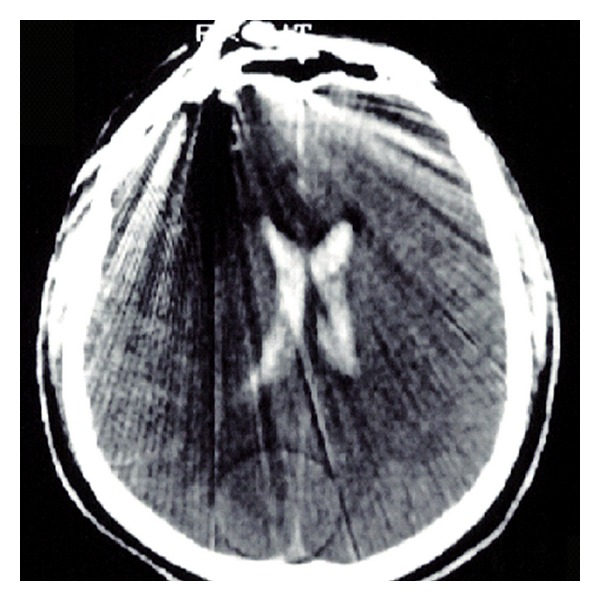
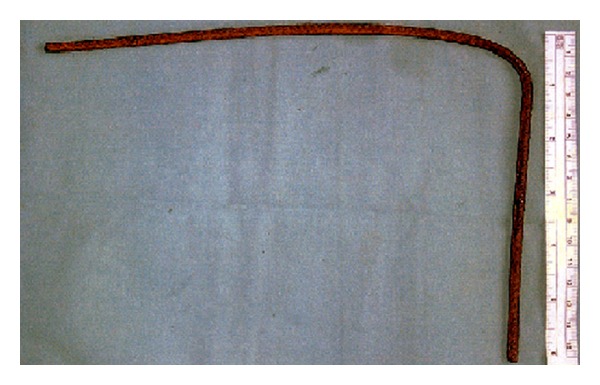
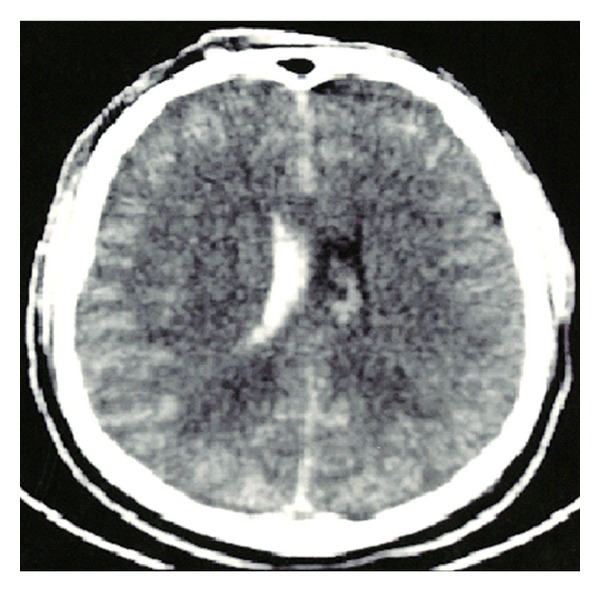
Peacetime has reduced the overall incidence of penetrating brain injuries (PBI), and those related to missile penetration are not common anymore at least in western countries. Nevertheless, PBI still occur, and car crashes or work accidents are their main causes. The management of such cases is characterized by many challenges, not only from a surgical and medical point of view, but also for the different and sometimes bizarre dynamics by which they present. Herein we report an unusual deep penetrating brain injury, due to a high-energy crash against a metallic rod in a construction site, with a good surgical outcome despite dramatic clinical conditions on admission. A discussion of the surgical results and functional outcome related to PBI, as found in the English medical literature, is provided. Moreover the most common postoperative complications along with the diagnostic flow charts and therapeutic options useful to prevent inappropriate treatment are highlighted.
Figures
References
-
- Pascual JM, Navas M, Carrasco R. Penetrating ballistic-like frontal brain injury caused by a metallic rod. Acta Neurochirurgica. 2009;151(6):689–691. - PubMed
-
- Gutiérrez-González R, Boto GR, Rivero-Garvía M, Pérez-Zamarrón A, Gómez G. Penetrating brain injury by drill bit. Clinical Neurology and Neurosurgery. 2008;110:207–210. - PubMed
-
- Selvanathan S, Goldschlager T, McMillen J, Campbell S. Penetrating craniocerebral injuries from nail-gun use. Journal of Clinical Neuroscience. 2007;14(7):678–683. - PubMed
-
- Khoshyomn S, Penar PL, Nagle K, Braff SP. Survival after severe penetrating non-missile brainstem injury: case report. The Journal of Trauma. 2004;56(5):1131–1134. - PubMed
LinkOut - more resources
Full Text Sources
Other Literature Sources
