


A physiologically motivated sparse, compact, and smooth (SCS) approach to EEG source localization
- PMID: 23366198
- PMCID: PMC4139402
- DOI: 10.1109/EMBC.2012.6346237
A physiologically motivated sparse, compact, and smooth (SCS) approach to EEG source localization
Abstract
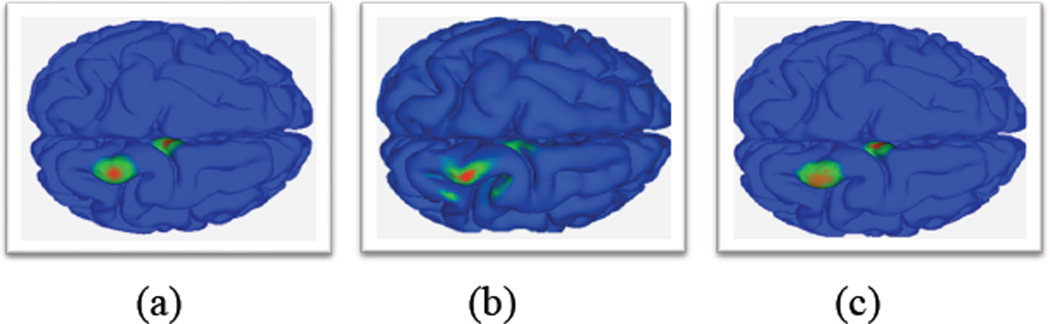
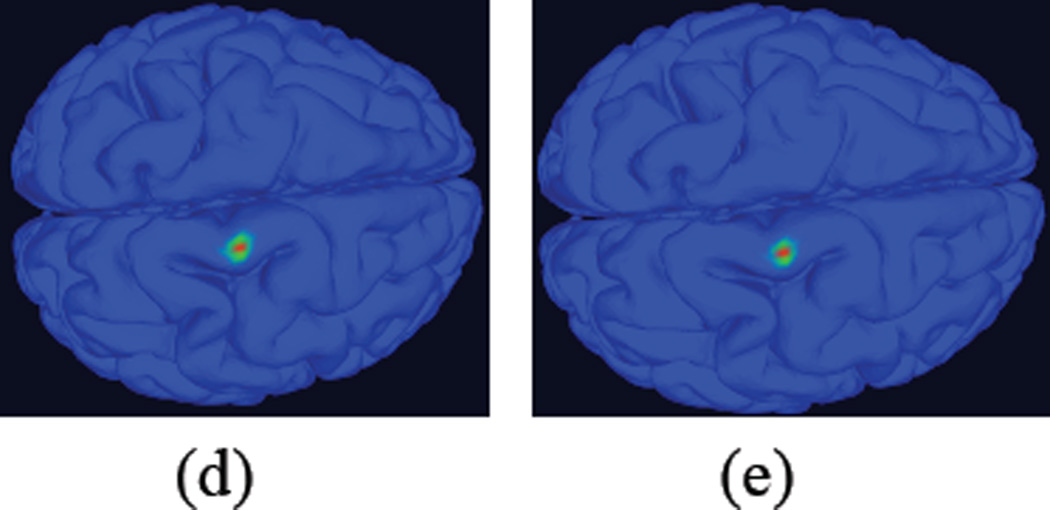
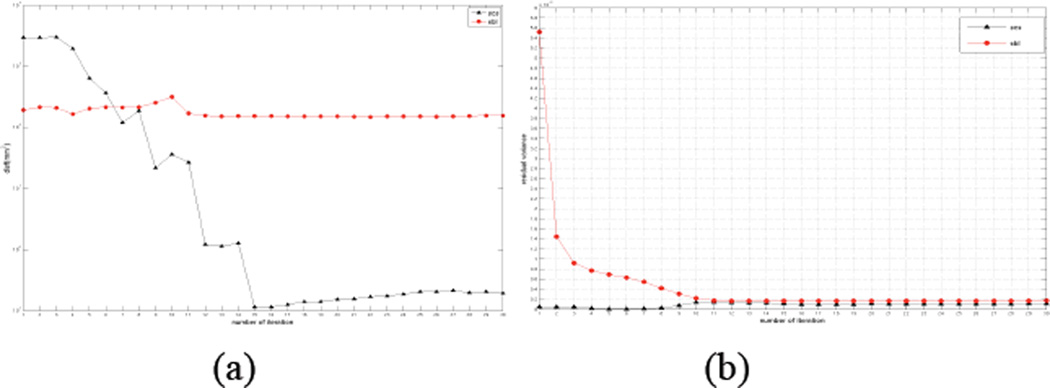
Here, we introduce a novel approach to the EEG inverse problem based on the assumption that principal cortical sources of multi-channel EEG recordings may be assumed to be spatially sparse, compact, and smooth (SCS). To enforce these characteristics of solutions to the EEG inverse problem, we propose a correlation-variance model which factors a cortical source space covariance matrix into the multiplication of a pre-given correlation coefficient matrix and the square root of the diagonal variance matrix learned from the data under a Bayesian learning framework. We tested the SCS method using simulated EEG data with various SNR and applied it to a real ECOG data set. We compare the results of SCS to those of an established SBL algorithm.
Figures


References
-
- Huang M, Dale A, Song T, Halgren E, Harrington D, Podgorny I, Carnive J, Lewis S, Lee R. Vector-based spatial-temporal minimum l1-norm solution for MEG. NeuroImage. 2006;31(3):1025–1037. - PubMed
-
- Pascual-Marqui D, Esslen M, Kochi K, Lehmann D. Functional imaging with low resolution brain electromagnetic tomography (LORETA): a review. Methods & Findings in Experimental & Clinical Pharmacology. 2002;24:91–95. - PubMed
-
- Friston K, Harrison L, Daunizeau J, Kiebel S, Phillips C, Barreto N, Henson R, Flandin G, Mattout J. Multiple sparse priors for the M/EEG inverse problem. NeuroImage. 2008;39(3):1104–1120. - PubMed
-
- Wipf D, Nagarajan S. Iterative Reweighted l1 and l2 Methods for Finding Sparse Solutions. IEEE. J. Selected Topics In Signal Processing. 2010;4(2):317–329.
Publication types
MeSH terms
Grants and funding
LinkOut - more resources
Full Text Sources