


A low-cost, reliable, high-throughput system for rodent behavioral phenotyping in a home cage environment
- PMID: 23366406
- PMCID: PMC5061112
- DOI: 10.1109/EMBC.2012.6346445
A low-cost, reliable, high-throughput system for rodent behavioral phenotyping in a home cage environment
Abstract
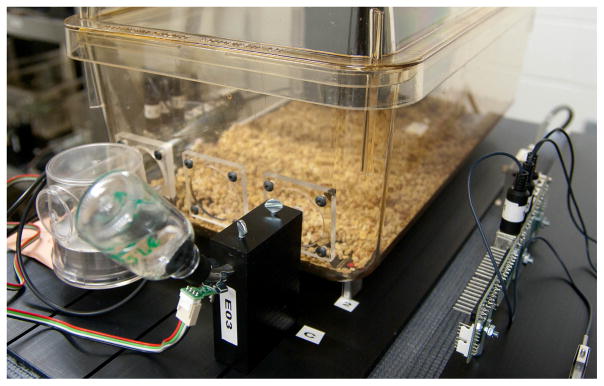
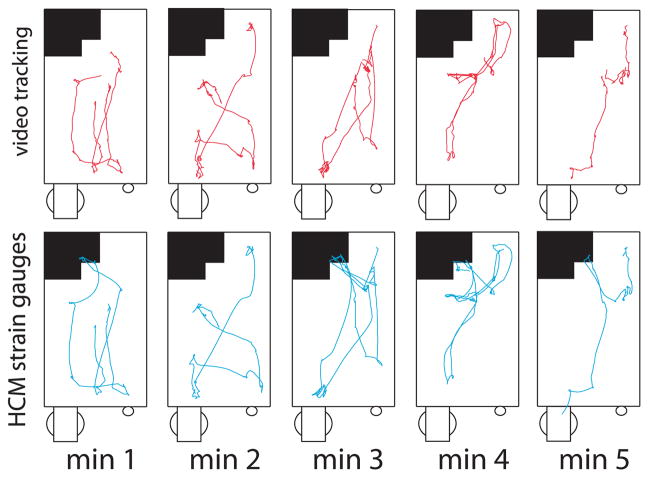
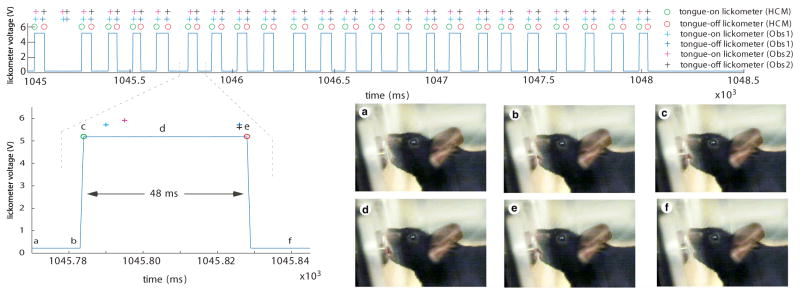
Inexpensive, high-throughput, low maintenance systems for precise temporal and spatial measurement of mouse home cage behavior (including movement, feeding, and drinking) are required to evaluate products from large scale pharmaceutical design and genetic lesion programs. These measurements are also required to interpret results from more focused behavioral assays. We describe the design and validation of a highly-scalable, reliable mouse home cage behavioral monitoring system modeled on a previously described, one-of-a-kind system. Mouse position was determined by solving static equilibrium equations describing the force and torques acting on the system strain gauges; feeding events were detected by a photobeam across the food hopper, and drinking events were detected by a capacitive lick sensor. Validation studies show excellent agreement between mouse position and drinking events measured by the system compared with video-based observation--a gold standard in neuroscience.
Figures
References
-
- Hartman R, Wozniak D, Nardi A, Olney J, Sartorius L, Holtzman D. Behavioral phenotyping of gfap-apoe3 and -apoe4 transgenic mice: Apoe4 mice show profound working memory impairments in the absence of alzheimer’s-like neuropathology. Experimental Neurology. 2001;170(2):326–344. - PubMed
-
- Tang X, Sanford LD. Home cage activity and activity-based measures of anxiety in 129p3/j, 129x1/svj and c57bl/6j mice. Physiology & Behavior. 2005;84(1):105–115. - PubMed
Publication types
MeSH terms
Grants and funding
LinkOut - more resources
Full Text Sources