


Flow-dependent vascular heat transfer during microwave thermal ablation
- PMID: 23367194
- PMCID: PMC3563104
- DOI: 10.1109/EMBC.2012.6347259
Flow-dependent vascular heat transfer during microwave thermal ablation
Abstract
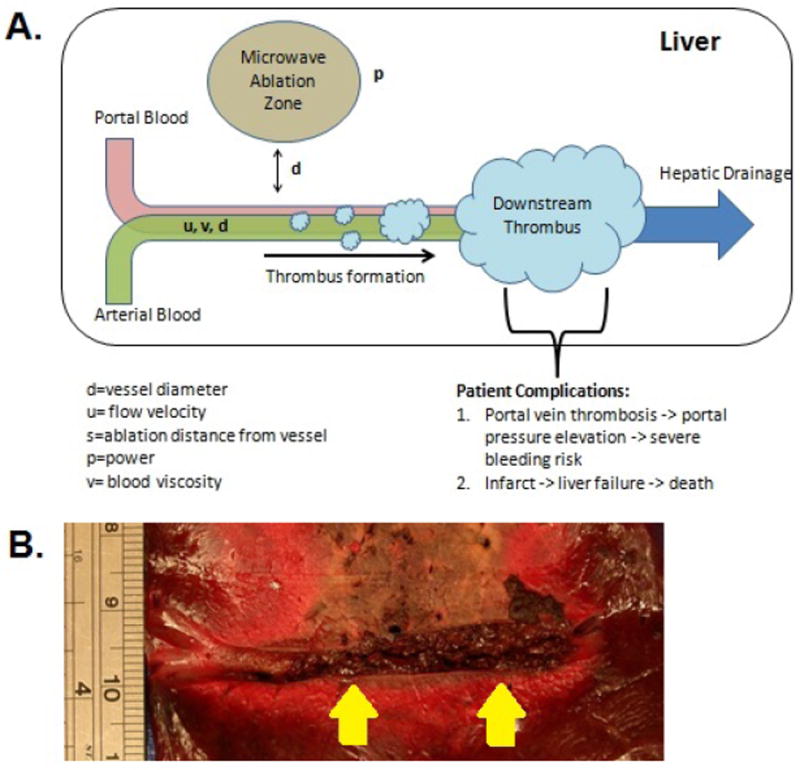
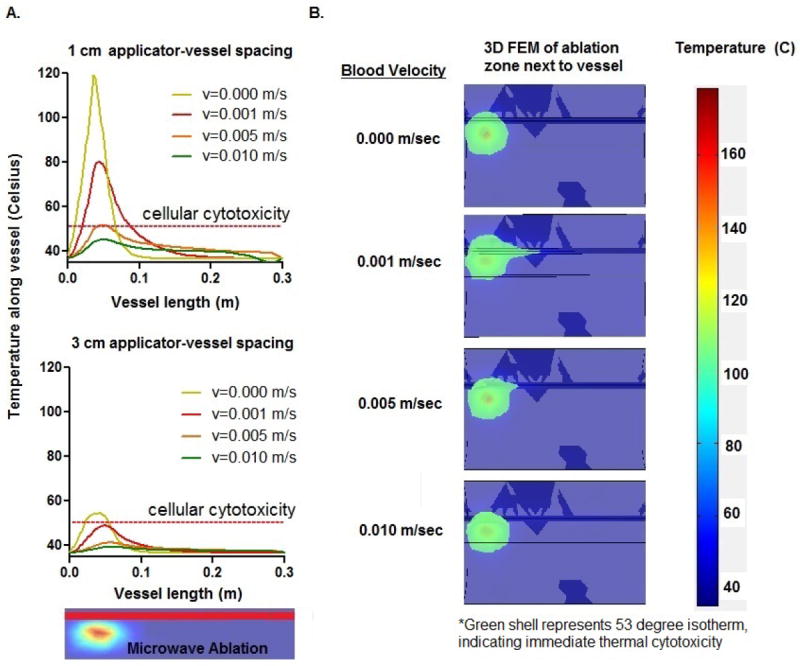
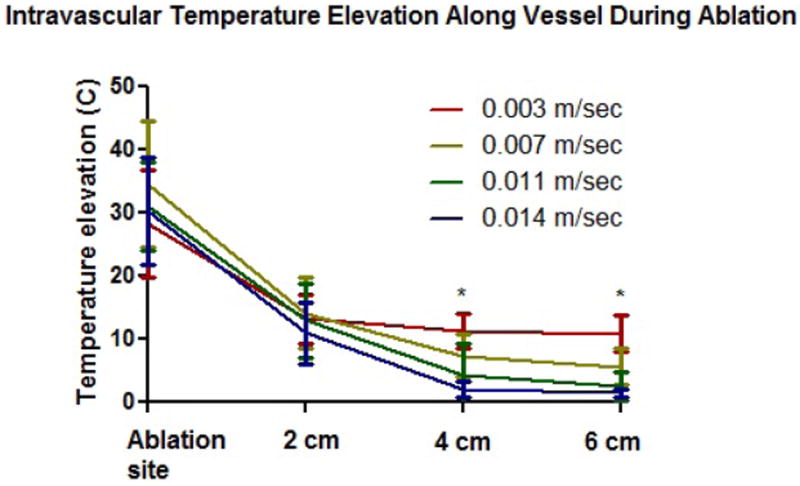
Microwave tumor ablation is an attractive option for thermal ablation because of its inherent benefits over radiofrequency ablation (RFA) in the treatment of solid tumors such as hepatocellular carcinoma (HCC). Microwave energy heats tissue to higher temperatures and at a faster rate than RFA, creating larger, more homogenous ablation zones. In this study, we investigate microwave heating near large vasculature using coupled fluid-flow and thermal analysis. Low-flow conditions are predicted to be more likely to cause cytotoxic heating and, therefore, vessel thrombosis and endothelial damage of downstream tissues. Such conditions may be more prevalent in patient with severe cirrhosis or compromised blood flow. High-flow conditions create the more familiar heat-sink effect that can protect perivascular tissues from the intended thermal damage. These results may help guide placement and use of microwave ablation technologies in future studies.
Figures
References
-
- Pisa S, Cavagnaro M, Bernardi P, Lin JC. A 915-MHz antenna for microwave thermal ablation treatment: physical design, computer modeling and experimental measurement. IEEE Trans Biomed Eng. 2001 May;48(no. 5):599–601. - PubMed
-
- Brace CL, Laeseke PF, Sampson LA, Frey TM, van der Weide DW, Lee FT. Microwave Ablation with Multiple Simultaneously Powered Small-gauge Triaxial Antennas: Results from an in Vivo Swine Liver Model1. Radiology. 2007 Jul;244(no. 1):151–156. - PubMed
-
- Lu DSK, Raman SS, Vodopich DJ, Wang M, Sayre J, Lassman C. Effect of vessel size on creation of hepatic radiofrequency lesions in pigs: assessment of the ‘heat sink’ effect. AJR Am J Roentgenol. 2002 Jan;178(no. 1):47–51. - PubMed
Publication types
MeSH terms
Grants and funding
LinkOut - more resources
Full Text Sources