Comparative Study
. 2013 Apr;22(4):708-18.
doi: 10.1158/1055-9965.EPI-12-1234-T. Epub 2013 Jan 31.

The ability of plasma cotinine to predict nicotine and carcinogen exposure is altered by differences in CYP2A6: the influence of genetics, race, and sex

Affiliations
Comparative Study

The ability of plasma cotinine to predict nicotine and carcinogen exposure is altered by differences in CYP2A6: the influence of genetics, race, and sex

Andy Z X Zhu et al. Cancer Epidemiol Biomarkers Prev. 2013 Apr.

Abstract

Background: Cotinine, a nicotine metabolite, is a biomarker of tobacco, nicotine, and carcinogen exposure. However, a given cotinine level may not represent the same tobacco exposure; for example, African-Americans have higher cotinine levels than Caucasians after controlling for exposure.

Methods: Cotinine levels are determined by the amount of cotinine formation and the rate of cotinine removal, which are both mediated by the enzyme CYP2A6. Because CYP2A6 activity differs by sex (estrogen induces CYP2A6) and genotype, their effect on cotinine formation and removal was measured in nonsmoking Caucasians (Study 1, n = 181) infused with labeled nicotine and cotinine. The findings were then extended to ad libitum smokers (Study 2, n = 163).

Results: Study 1: Reduced CYP2A6 activity altered cotinine formation less than cotinine removal resulting in ratios of formation to removal of 1.31 and 1.12 in CYP2A6 reduced and normal metabolizers (P = 0.01), or 1.39 and 1.12 in males and females (P = 0.001), suggesting an overestimation of tobacco exposure in slower metabolizers. Study 2: Cotinine again overestimated tobacco and carcinogen exposure by 25% or more in CYP2A6 reduced metabolizers (≈2-fold between some genotypes) and in males.

Conclusions: In people with slower relative to faster CYP2A6 activity, cotinine accumulates resulting in substantial differences in cotinine levels for a given tobacco exposure.

Impact: Cotinine levels may be misleading when comparing those with differing CYP2A6 genotypes within a race, between races with differing frequencies of CYP2A6 gene variants (i.e., African-Americans have higher frequencies of reduced function variants contributing to their higher cotinine levels), or between the sexes.


Conflict of interest statement

Conflict of Interest

NLB has been a paid consultant to pharmaceutical companies that market medications for smoking cessation treatment, and has served as a paid expert witness in litigation against tobacco companies. RFT has participated in one day advisory meetings for Novartis and McNeil. DKH has received grant funding from Nabi Biopharmaceuticals to conduct a clinical trial. GES participated in a one-day advisory meeting for Pfizer in 2008.

Figures
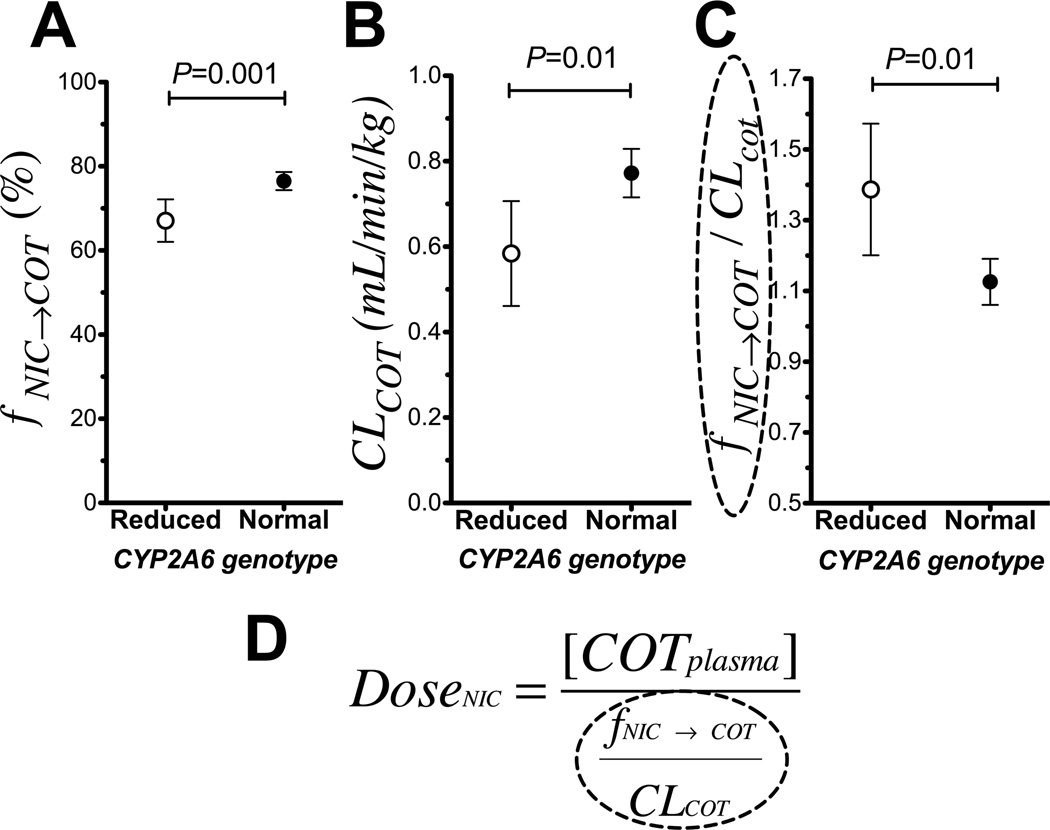
Figure 1
Figure 1
Reduced CYP2A6 activity had a greater impact on cotinine removal than cotinine formation (Study 1), which would result in the accumulation of cotinine and higher cotinine levels at a given tobacco exposure. A. CYP2A6 reduced metabolizers metabolized (n=33) a significantly lower amount of nicotine to cotinine compared to CYP2A6 normal metabolizers (n=148). B. CYP2A6 reduced metabolizers (n=33) had lower cotinine clearance (CLCOT) compared to CYP2A6 normal metabolizers (n=148). C. The fNIC→COT/CLCOT ratio was higher in CYP2A6 reduced metabolizers (n=33) compared to CYP2A6 normal metabolizers (n=148). Data presented as mean ± 95% confidence interval. D. The fNICCOT/CLCOT ratio is the conversion factor between plasma cotinine levels and the actual nicotine dose.
Figure 2
Figure 2
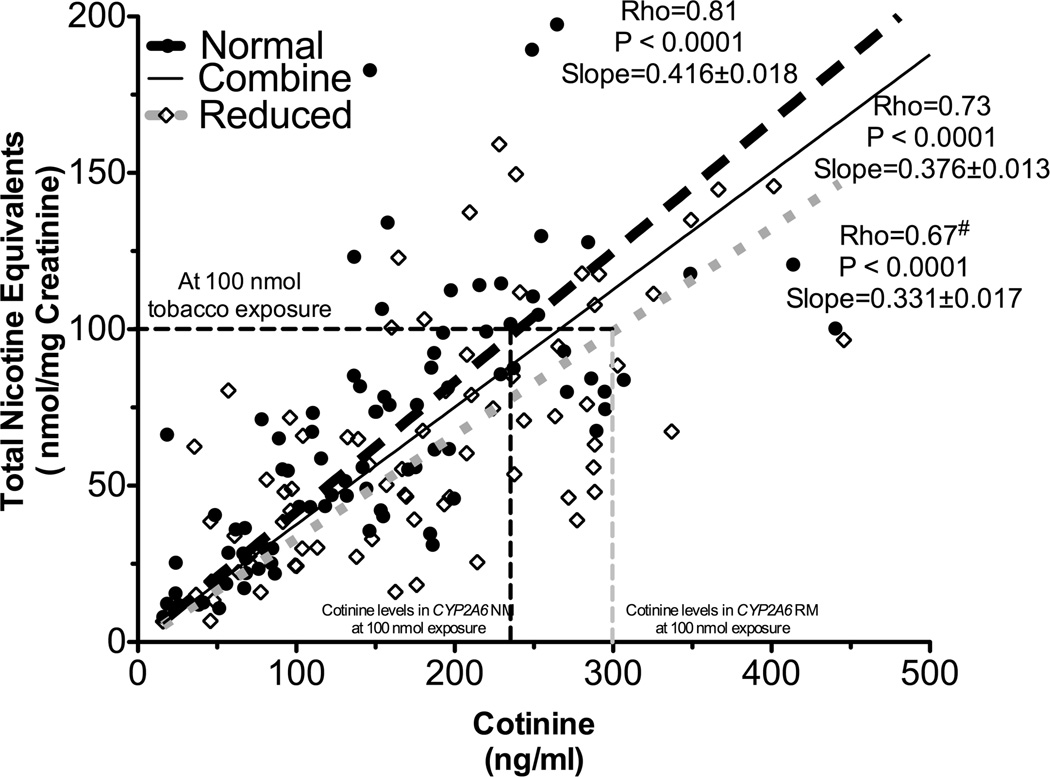
Cotinine’s ability to predict tobacco exposure was different between CYP2A6 genotypes (Study 2). The slope between urinary TNE and plasma cotinine was significantly lower in CYP2A6 reduced metabolizers (n=74) compared to that of CYP2A6 normal metabolizers (n=89, supplementary table 2A), suggesting the quantitative relationship between cotinine and tobacco exposure (i.e. TNE) differed between CYP2A6 genotypes. # indicates statistical significant difference in Spearman’s Rho compared to the CYP2A6 normal metabolizers. The numbers after the slopes are standard error. Of note, the strength of correlations between plasma cotinine and urinary TNE in the CYP2A6 RM was significantly weaker than in CYP2A6 NM (Fisher’s r to Z transformation: P<0.01).
Figure 3
Figure 3
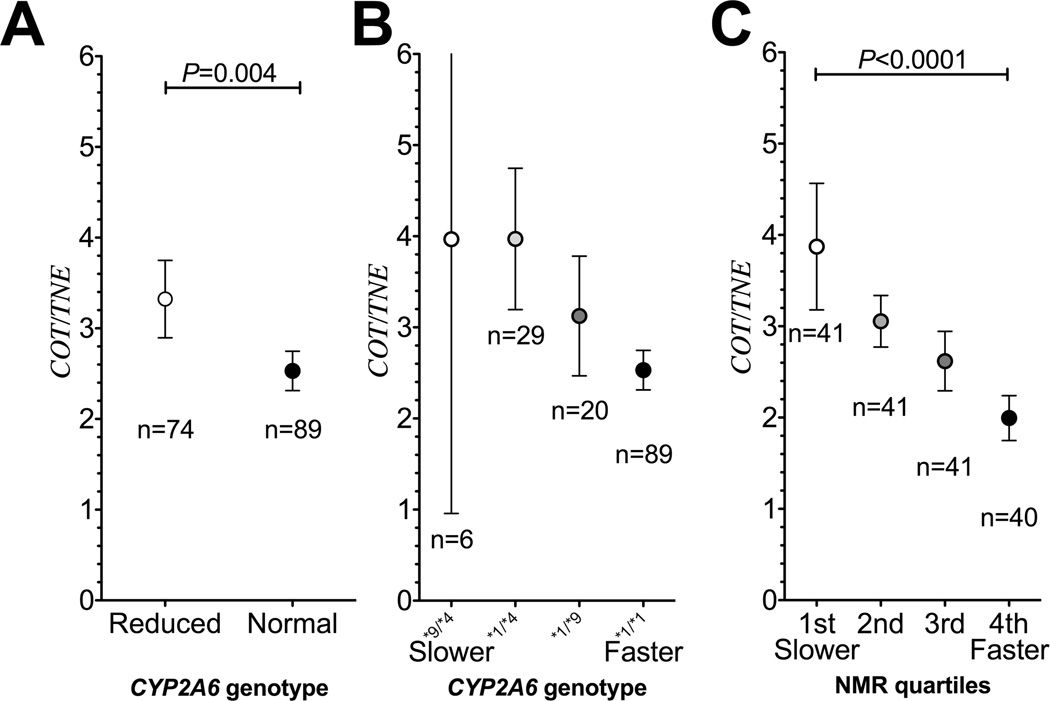
A. The cotinine to TNE ratio (i.e. cotinine levels per nicotine intake) was significantly lower in CYP2A6 NM compared to the CYP2A6 RM. (Study 2) B. The cotinine to TNE ratio decreased with CYP2A6 genotypes with increasing activity (Study 2). As illustrated using some different CYP2A6 genotypes, containing reduced function (*9) or loss of function (*4) allele compared to the wild type individuals (*1/*1). Of note, individuals who are fully null for CYP2A6 (i.e. these with two copies of gene deletions, CYP2A6*4/*4) had unexpectedly lower COT to TNE ratio compared to the wild-type individuals (*1/*1, data not shown), suggesting the minor remaining cotinine formation pathway (likely CYP2B6 or CYP2A13) is considerably slower than the low affinity cotinine removal pathway (likely UGT2B10 glucuronidation or renal clearance). C. The cotinine to TNE ratio decreased by NMR quartiles (Study 2). Data presented as mean ± 95% confident intervals. Statistical comparisons were performed by Mann Whitney or Kruskal-Wallis tests.
Figure 4
Figure 4
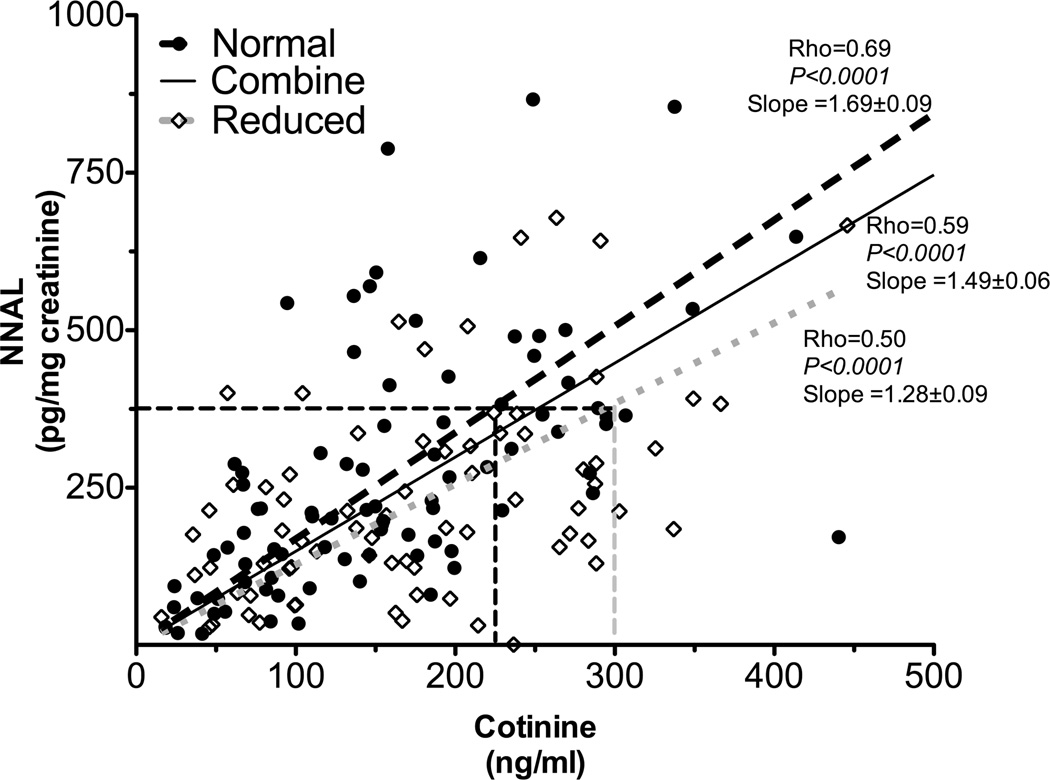
Cotinine’s ability to predict tobacco specific nitrosamines exposure (as indicated by NNAL levels) was different between CYP2A6 genotypes (Study 2). The slope between urinary NNAL levels and plasma cotinine was significantly lower in CYP2A6 reduced metabolizers (n=74) compared to that of CYP2A6 normal metabolizers (n=89, supplementary table 2B). This suggested the quantitative relationship between cotinine and tobacco specific nitrosamines exposure differed between CYP2A6 genotypes. The numbers after the slopes are standard error.
Figure 5
Figure 5
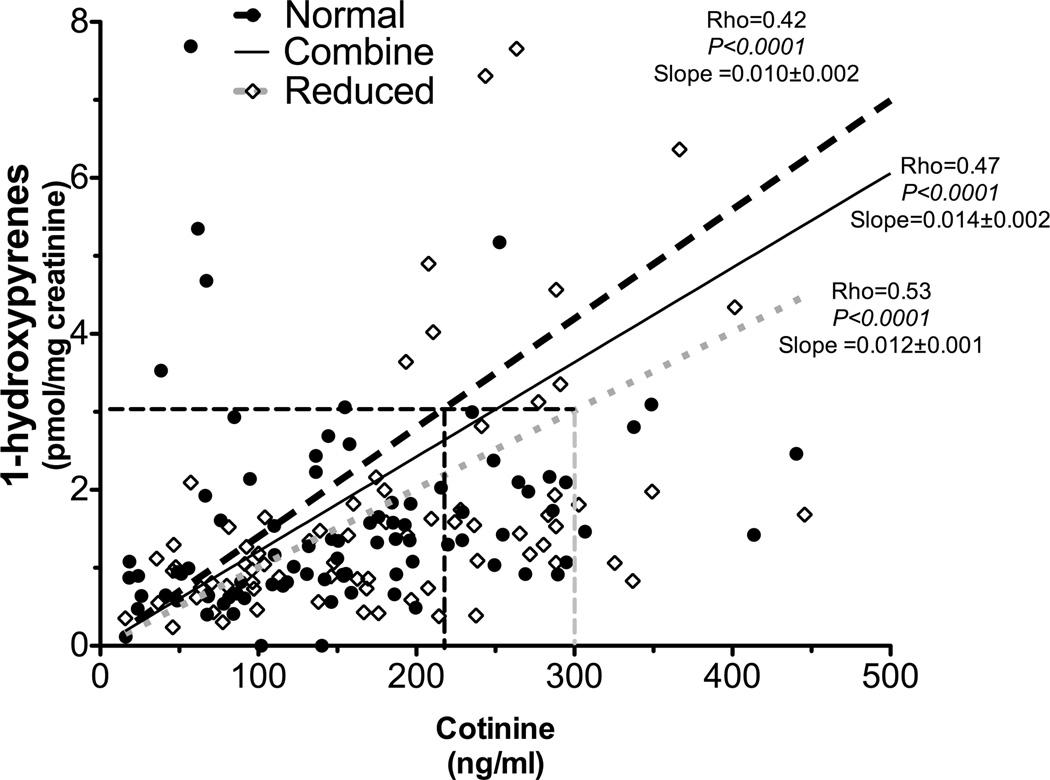
Cotinine’s ability to predict polycyclic aromatic hydrocarbon exposure (as indicated by 1-hydroxypyrene) was different between CYP2A6 genotypes (Study 2). The slope between 1-hydroxypyrene levels and plasma cotinine was lower in CYP2A6 reduced metabolizers (n=74) compared to that of CYP2A6 normal metabolizers (n=89, supplementary table 2E). The numbers after the slopes are standard error.
Figure 6
Figure 6
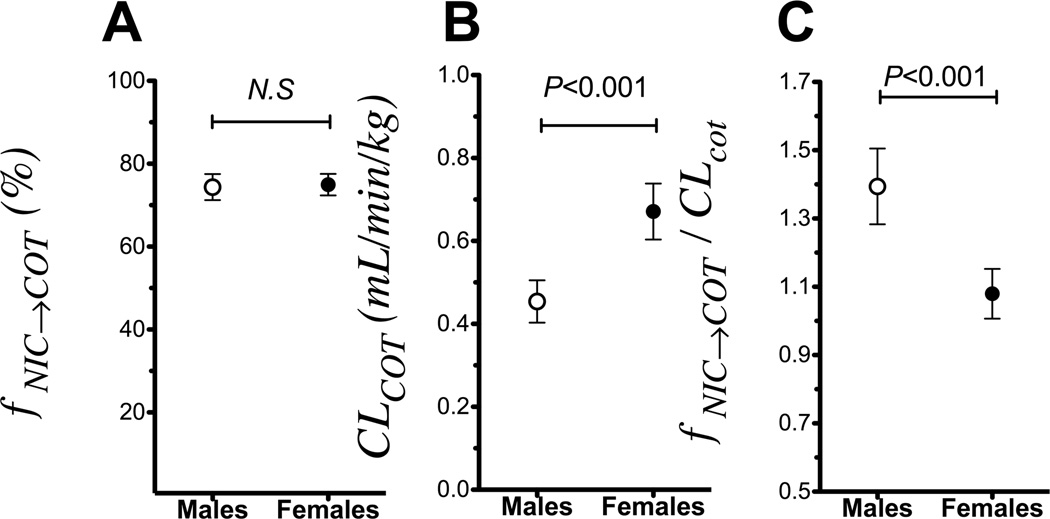
Males (n=54), who have reduced CYP2A6 activity compared to females (n=127), had a greater ratio of cotinine formation over cotinine removal, which would result in the accumulation of cotinine and higher cotinine levels at a given tobacco exposure in male smokers (Study 1). A. The fNICCOT did not differ between the sexes. B. Males had significantly lower ClCOT compared to the females. C. Males had a higher fNIC→COT/CLCOT compared to females indicating an over-estimation of nicotine dose for their cotinine levels (see Fig 1D). Data presented as mean ± 95% confidence interval.
Figure 7
Figure 7
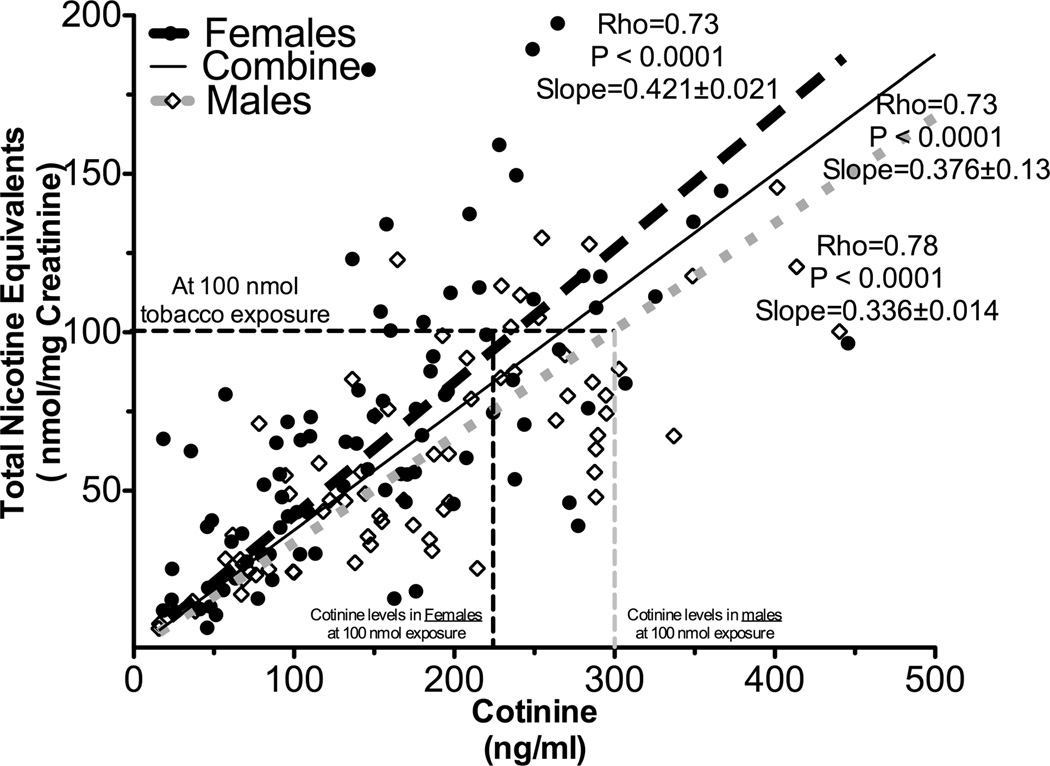
Cotinine’s ability to predict tobacco exposure was different between the sexes. The slope between urinary TNE and plasma cotinine was significantly lower in males (n=71) compared to that of females (n=92, supplementary table 2F), suggesting cotinine over-estimates tobacco exposure (i.e. TNE) in males compared to females (Study 2). The numbers after the slopes are standard error.

References

    1. Nakajima M, Yamamoto T, Nunoya K, Yokoi T, Nagashima K, Inoue K, et al. Role of human cytochrome P4502A6 in C-oxidation of nicotine. Drug Metab Dispos. 1996;24:1212–1217. - PubMed
    1. Nakajima M, Yamamoto T, Nunoya K, Yokoi T, Nagashima K, Inoue K, et al. Characterization of CYP2A6 involved in 3'-hydroxylation of cotinine in human liver microsomes. J Pharmacol Exp Ther. 1996;277:1010–1015. - PubMed
    1. Benowitz NL, Dains KM, Dempsey D, Wilson M, Jacob P. Racial differences in the relationship between number of cigarettes smoked and nicotine and carcinogen exposure. Nicotine Tob Res. 2011;13:772–783. - PMC - PubMed
    1. Boffetta P, Clark S, Shen M, Gislefoss R, Peto R, Andersen A. Serum cotinine level as predictor of lung cancer risk. Cancer Epidemiol Biomarkers Prev. 2006;15:1184–1188. - PubMed
    1. Munafo MR, Timofeeva MN, Morris RW, Prieto-Merino D, Sattar N, Brennan P, et al. Association between genetic variants on chromosome 15q25 locus and objective measures of tobacco exposure. J Natl Cancer Inst. 2012;104:740–748. - PMC - PubMed

Publication types

MeSH terms

LinkOut - more resources