


Prognostic value of patient-reported symptom interference in patients with late-stage lung cancer
- PMID: 23371797
- PMCID: PMC3724766
- DOI: 10.1007/s11136-013-0356-2
Prognostic value of patient-reported symptom interference in patients with late-stage lung cancer
Abstract
Purpose: Patient-reported outcomes (PROs) have been found to be significant predictors of clinical outcomes such as overall survival (OS), but the effect of demographic and clinical factors on the prognostic ability of PROs is less understood. Several PROs derived from the 12-item Short-Form Health Survey (SF-12) and M. D. Anderson Symptom Inventory (MDASI) were investigated for association with OS, with adjustments for other factors, including performance status.
Methods: A retrospective analysis was performed on data from 90 patients with stage IV non-small cell lung cancer. Several baseline PROs were added to a base Cox proportional hazards model to examine the marginal significance and improvement in model fit attributable to the PRO: mean MDASI symptom interference level; mean MDASI symptom severity level for five selected symptoms; SF-12 physical and mental component summaries; and the SF-12 general health item. Bootstrap resampling was used to assess the robustness of the findings.
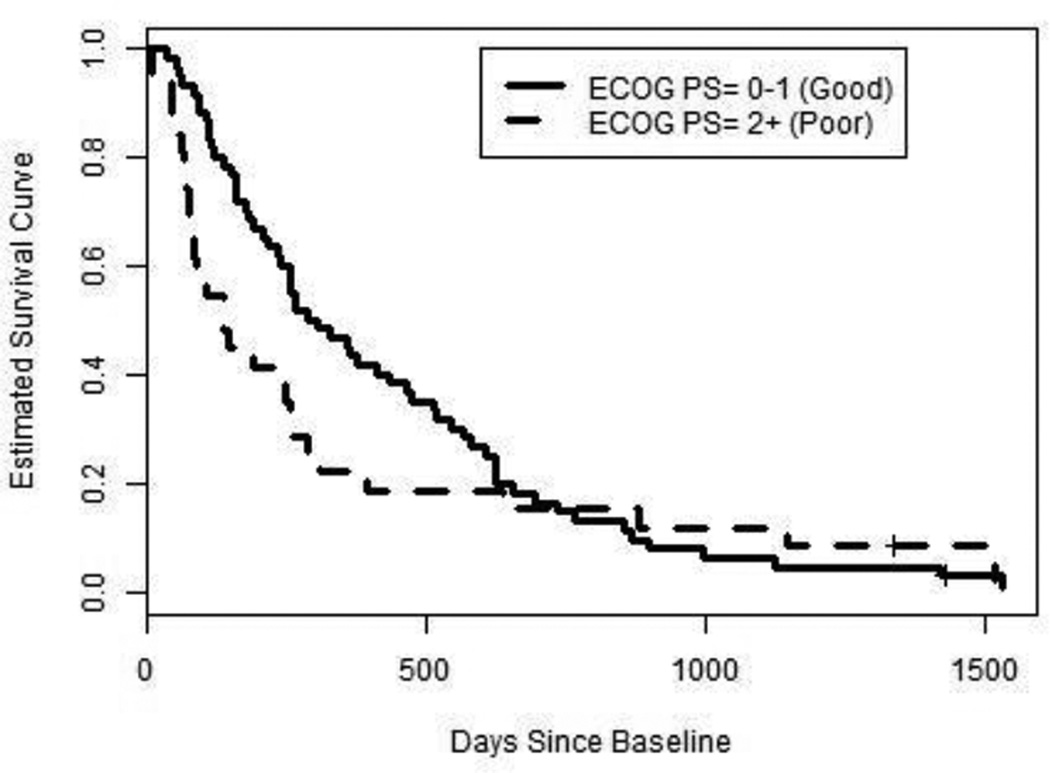
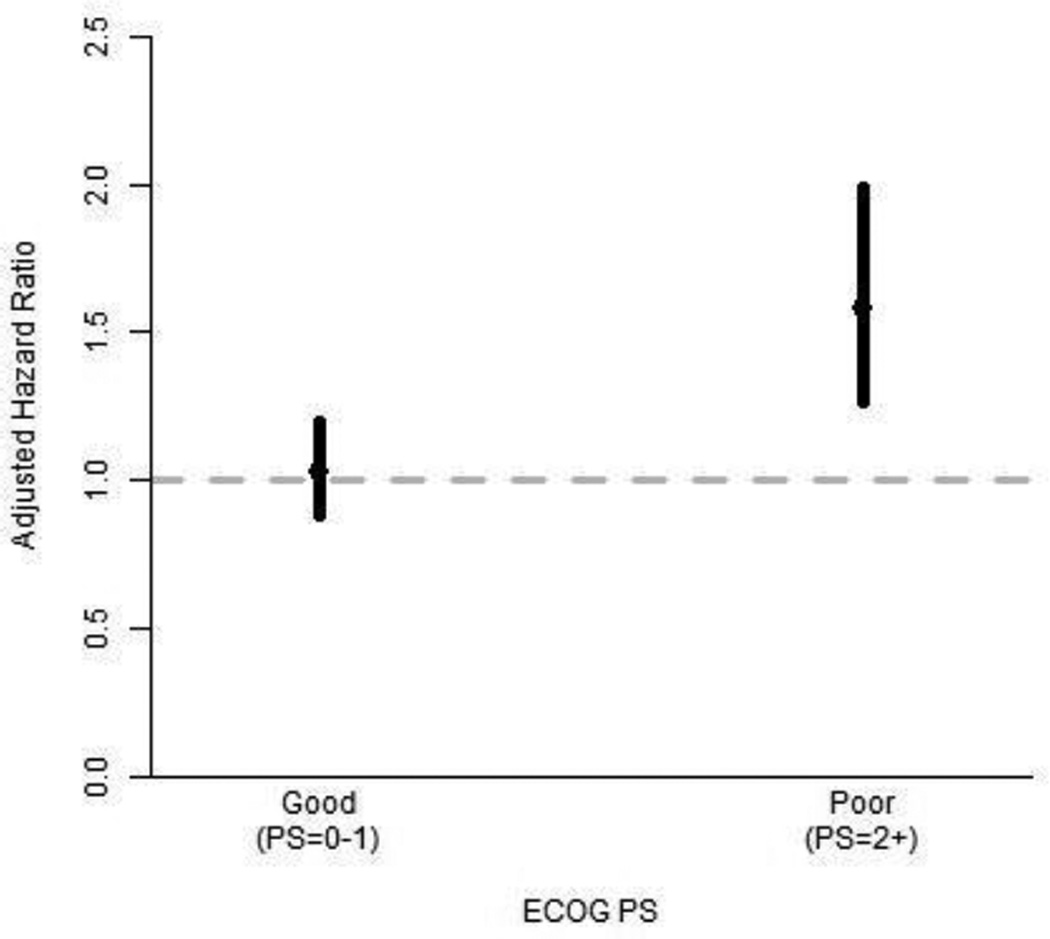
Results: The MDASI mean interference level had a significant effect on OS (p = 0.007) when the model was not adjusted for interactions with other prognostic factors. Further exploration suggested the significance was due to an interaction with performance status (p = 0.001). The MDASI mean symptom severity level and the SF-12 physical component summary, mental component summary, and general health item did not have a significant effect on OS.
Conclusions: Symptom interference adds prognostic information for OS in advanced lung cancer patients with poor performance status, even when demographic and clinical prognostic factors are accounted for.
Figures
References
-
- Cella D, Riley W, Stone A, Rothrock N, Reeve B, Yount S, et al. The Patient- Reported Outcomes Measurement Information System (PROMIS) developed and tested its first wave of adult self-reported health outcome item banks: 2005–2008. Journal of Clinical Epidemiology. 2010;63(11):1179–1194. - PMC - PubMed
-
- US Food and Drug Administration. Guidance for industry. Patient-reported outcome measures: use in medical product development to support labeling claims. U.S. Department of Health and Human Services; 2009. [Accessed 31 July 2012]. http://www.fda.gov/downloads/Drugs/GuidanceComplianceRegulatoryInformati....
-
- Cleeland CS, Mendoza TR, Wang XS, Chou C, Harle MT, Morrissey M, et al. Assessing symptom distress in cancer patients: the MDAnderson Symptom Inventory. Cancer. 2000;89(7):1634–1646. - PubMed
-
- Cella DF, Tulsky DS, Gray G, Sarafian B, Linn E, Bonomi A, et al. The Functional Assessment of Cancer Therapy scale: development and validation of the general measure. Journal of Clinical Oncology. 1993;11(3):570–579. - PubMed
Publication types
MeSH terms
Grants and funding
LinkOut - more resources
Full Text Sources
Other Literature Sources
Miscellaneous
