


Functional genomics approach for identification of molecular processes underlying neurodegenerative disorders in prion diseases
- PMID: 23372423
- PMCID: PMC3401894
- DOI: 10.2174/138920212801619223
Functional genomics approach for identification of molecular processes underlying neurodegenerative disorders in prion diseases
Abstract
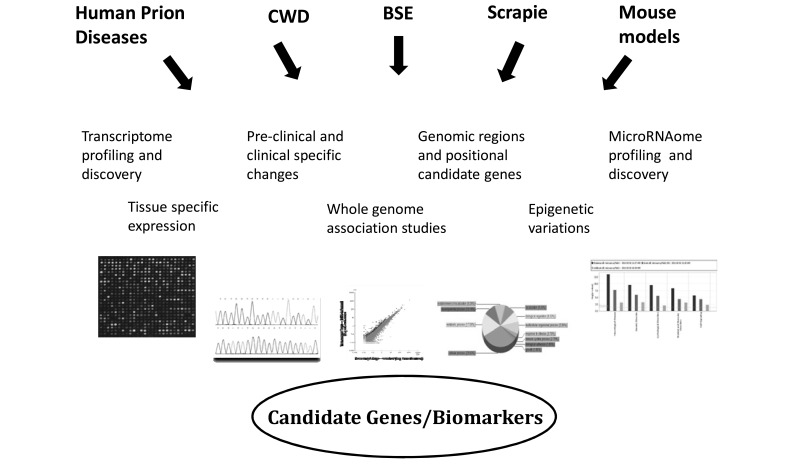
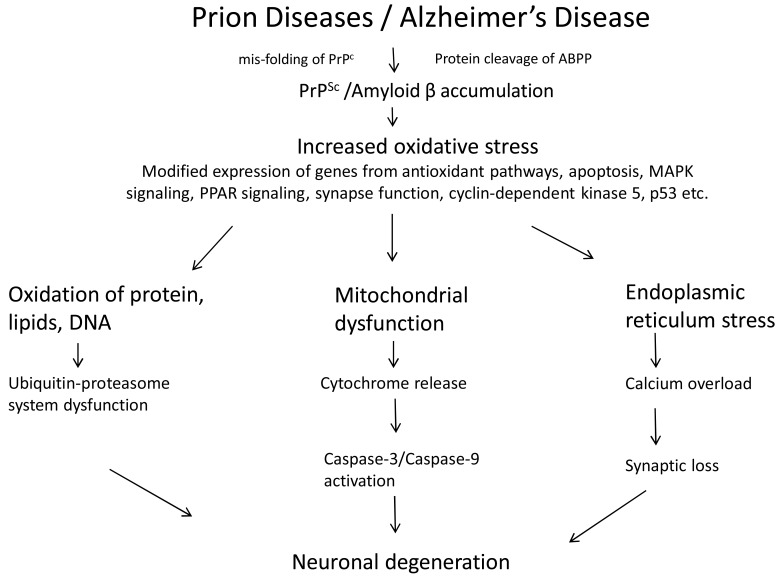
Prion diseases or transmissible spongiform encephalopathies (TSEs) are infectious neurodegenerative disorders leading to death. These include Cresutzfeldt-Jakob disease (CJD), familial, sporadic and variant CJD and kuru in humans; and animal TSEs include scrapie in sheep, bovine spongiform encephalopathy (BSE) in cattle, chronic wasting disease (CWD) of mule deer and elk, and transmissible mink encephalopathy. All these TSEs share common pathological features such as accumulation of mis-folded prion proteins in the central nervous system leading to cellular dysfunction and cell death. It is important to characterize the molecular pathways and events leading to prion induced neurodegeneration. Here we discuss the impact of the functional genomics approaches including microarrays, subtractive hybridization and microRNA profiling in elucidating transcriptional cascades at different stages of disease. Many of these transcriptional changes have been observed in multiple neurodegenerative diseases which may aid in identification of biomarkers for disease. A comprehensive characterization of expression profiles implicated in neurodegenerative disorders will undoubtedly advance our understanding on neuropathology and dysfunction during prion disease and other neurodegenerative disorders. We also present an outlook on the future work which may focus on analysis of structural genetic variation, genome and transcriptome sequencing using next generation sequencing with an integrated approach on animal and human TSE related studies.
Keywords: PRNP; Prion; TSEs; functional candiate genes; gene expression; microarray..
Figures
References
-
- Johnson RT. Prion diseases. Lancet Neurol. 2005;4:635–642. - PubMed
-
- Aguzzi A, Heikenwalder M. Pathogenesis of prion diseases: current status and future outlook. Nat. Rev. Microbiol. 2006;4:765–775. - PubMed
-
- Aguzzi A, Heikenwalder M. Prion diseases: cannibals and garbage piles. Nature. 2003;423:127–129. - PubMed
LinkOut - more resources
Full Text Sources