Histone modifications and DNA double-strand break repair after exposure to ionizing radiations
- PMID: 23373901
- PMCID: PMC4133051
- DOI: 10.1667/RR3308.2
Histone modifications and DNA double-strand break repair after exposure to ionizing radiations
Abstract
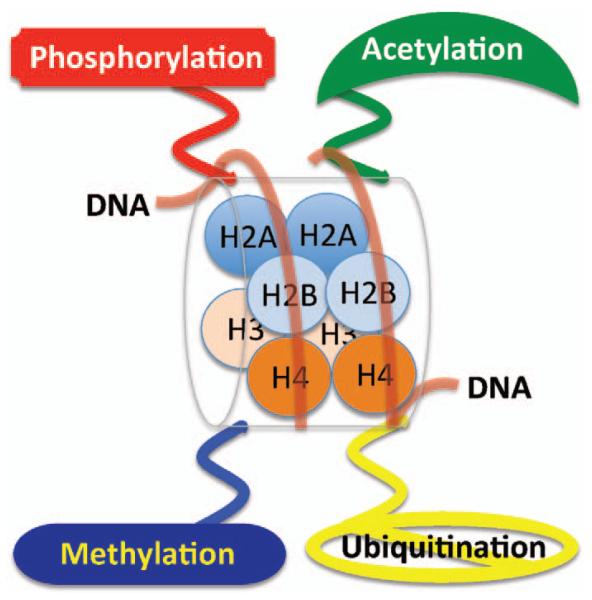
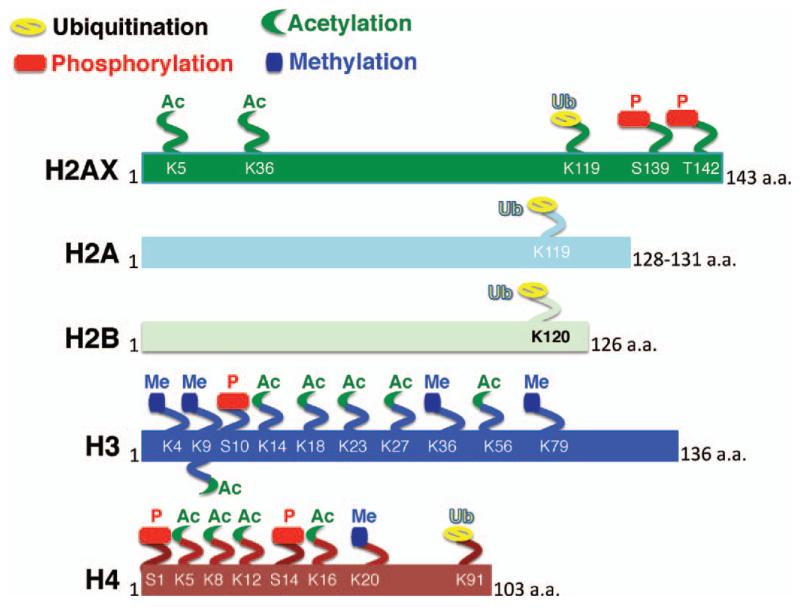
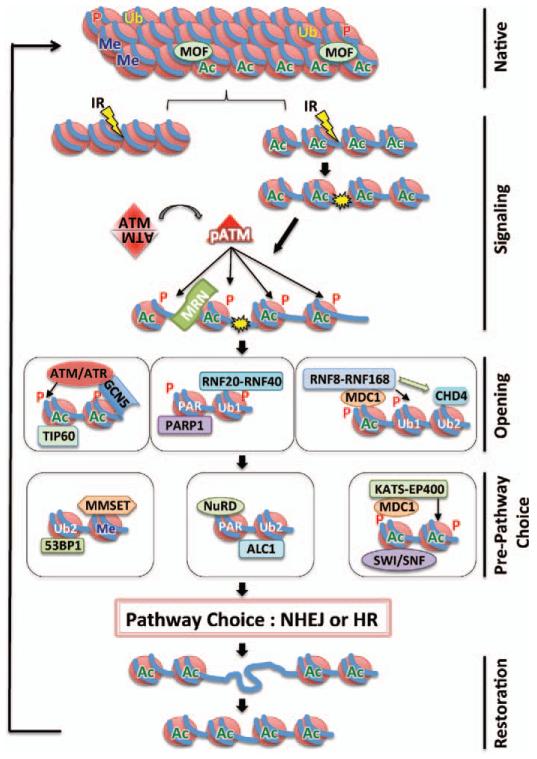
Ionizing radiation exposure induces highly lethal DNA double-strand breaks (DSBs) in all phases of the cell cycle. After DSBs are detected by the cellular machinery, these breaks are repaired by either of two mechanisms: (1) nonhomologous end joining (NHEJ), which re-ligates the broken ends of the DNA and (2) homologous recombination (HR), that makes use of an undamaged identical DNA sequence as a template to maintain the fidelity of DNA repair. DNA DSB repair must occur within the context of the natural cellular DNA structure. Among the major factors influencing DNA organization are specific histone and nonhistone proteins that form chromatin. The overall chromatin structure regulates DNA damage responses since chromatin status can impede DNA damage site access by repair proteins. During the process of DNA DSB repair, several chromatin alterations are required to sense damage and facilitate accessibility of the repair machinery. The DNA DSB response is also facilitated by hierarchical signaling networks that orchestrate chromatin structural changes that may coordinate cell-cycle checkpoints involving multiple enzymatic activities to repair broken DNA ends. During DNA damage sensing and repair, histones undergo posttranslational modifications (PTMs) including phosphorylation, acetylation, methylation and ubiquitylation. Such histone modifications represent a histone code that directs the recruitment of proteins involved in DNA damage sensing and repair processes. In this review, we summarize histone modifications that occur during DNA DSB repair processes.
Figures
References
Publication types
MeSH terms
Substances
Grants and funding
LinkOut - more resources
Full Text Sources
Other Literature Sources
Miscellaneous