CD317/tetherin is an organiser of membrane microdomains
- PMID: 23378022
- PMCID: PMC3647434
- DOI: 10.1242/jcs.112953
CD317/tetherin is an organiser of membrane microdomains
Abstract
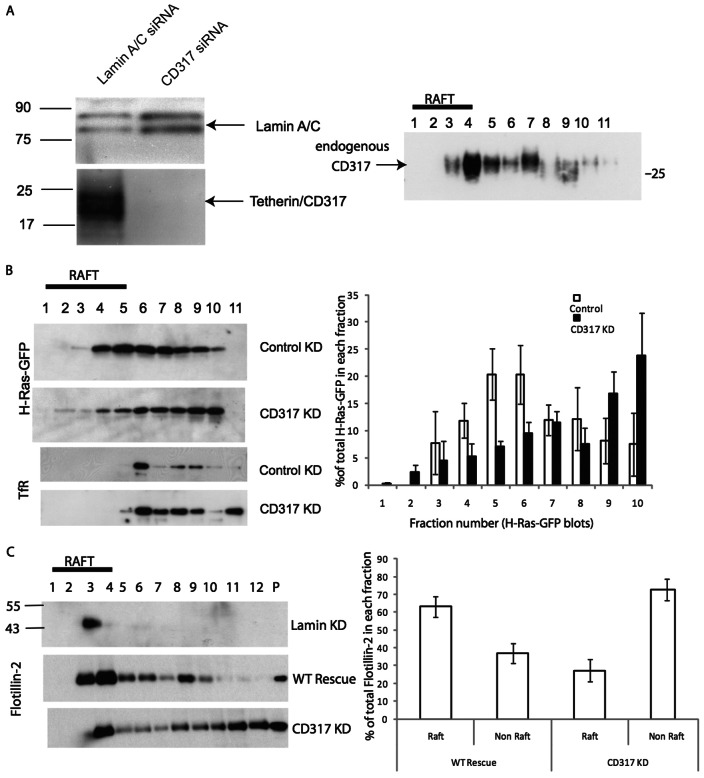
The integral membrane protein tetherin has been associated with an eclectic mix of cellular processes, including restricting the release of a range of enveloped viruses from infected cells. The unusual topology of tetherin (it possesses both a conventional transmembrane domain and a glycosylphosphatidylinositol anchor), its localisation to membrane microdomains (lipid rafts) and the fact that its cytosolic domain can be linked (indirectly) to the actin cytoskeleton, led us to speculate that tetherin might form a 'tethered picket fence' and thereby play a role in the organisation of lipid rafts. We now show that knocking down expression of tetherin leads to changes in the distribution of lipid raft-localised proteins and changes in the organisation of lipids in the plasma membrane. These changes can be reversed by re-expression of wild-type tetherin, but not by any of a range of tetherin-based constructs, indicating that no individual feature of the tetherin sequence is dispensable in the context of its lipid raft organising function.
Keywords: Laurdan; Lipid raft; Membrane; Tetherin.
Figures


References
-
- Aranda J. F., Reglero-Real N., Kremer L., Marcos-Ramiro B., Ruiz-Sáenz A., Calvo M., Enrich C., Correas I., Millán J., Alonso M. A. (2011). MYADM regulates Rac1 targeting to ordered membranes required for cell spreading and migration. Mol. Biol. Cell 22, 1252–1262 10.1091/mbc.E10-11-0910 - DOI - PMC - PubMed
-
- Becker M., Sommer A., Krätzschmar J. R., Seidel H., Pohlenz H. D., Fichtner I. (2005). Distinct gene expression patterns in a tamoxifen-sensitive human mammary carcinoma xenograft and its tamoxifen-resistant subline MaCa 3366/TAM. Mol. Cancer Ther. 4, 151–168 - PubMed
-
- Blasius A. L., Giurisato E., Cella M., Schreiber R. D., Shaw A. S., Colonna M. (2006). Bone marrow stromal cell antigen 2 is a specific marker of type I IFN-producing cells in the naive mouse, but a promiscuous cell surface antigen following IFN stimulation. J. Immunol. 177, 3260–3265 - PubMed
Publication types
MeSH terms
Substances
Grants and funding
LinkOut - more resources
Full Text Sources
Other Literature Sources