


Left ventricular assist devices and gastrointestinal bleeding: a narrative review of case reports and case series
- PMID: 23378047
- PMCID: PMC6649512
- DOI: 10.1002/clc.22096
Left ventricular assist devices and gastrointestinal bleeding: a narrative review of case reports and case series
Abstract
Background: The use of left ventricular assist devices (LVADs) has become a state-of-the-art therapy for advanced cardiac heart failure; however, multiple reports in the literature describe an increased risk for gastrointestinal (GI) bleeding in these patients. We characterized this association by reviewing recent studies on this topic.
Hypothesis: GI bleeding occurs frequently in patients with LVADs, especially with devices with nonpulsatile flow patterns.
Methods: We performed a comprehensive literature review to identify articles that reported GI bleeding in patients with LVADs. Databases used included PubMed, EMBASE, Scopus, Web of Knowledge, and Ovid. Baseline and outcome data were then ed from these reports.
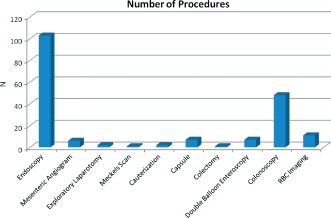
Results: We identified 10 case reports and 22 case series with 1543 patients. The mean age was 54.2 years. Most patients had nonpulsatile LVADs (1316, 85.3%). Three hundred and seventeen patients (20.5%) developed GI bleeding; this occurred more frequently in patients with nonpulsatile LVADs. Multiple procedures were performed without complications but often did not identify a definite bleeding site. Suspect lesions occurred throughout the GI tract but were more frequent in the upper GI tract. Many patients had arteriovenous malformations. All patients received medical therapy. None of the patients had their LVAD replaced. The use of anticoagulation did not appear to predispose these patients to more GI bleeding episodes.
Conclusions: Patients with LVADs have frequent GI bleeds, especially from arteriovenous malformations, which can occur throughout the GI tract. Most diagnostic and therapeutic interventions can be used safely in these patients. The pathogenesis of the GI bleeding in these patients may involve the use of anticoagulant medications, the formation of arteriovenous malformations, loss of von Willebrand factor activity, and mucosal ischemia.
© 2013 Wiley Periodicals, Inc.
Figures
References
-
- American Heart Association. Heart failure. http://www.heart.org/HEARTORG/Conditions/HeartFailure/Heart‐Failure_UCM_.... Accessed January 18, 2011..
-
- Lloyd‐Jones DM, Wang TJ, Leip EP, et al. Lifetime risk for developing congestive heart failure: the Framingham heart study. Circulation. 2002;106:3068–3072. - PubMed
-
- Crow S, John R, Boyle A, et al. Gastrointestinal bleeding rates in recipients of nonpulsatile and pulsatile left ventricular assist devices. J Thorac Cardiovasc Surg. 2009;137: 208–215. - PubMed
-
- Rose EA, Gelijns AC, Moskowitz AJ, et al. Long‐term mechanical left ventricular assistance for end‐stage heart failure. N Engl J Med. 2001;345:1435–1443. - PubMed
-
- Feller ED, Sorensen EN, Haddad M, et al. Clinical outcomes are similar in pulsatile and nonpulsatile left ventricular assist device recipients. Ann Thorac Surg. 2007;83:1082–1088. - PubMed
Publication types
MeSH terms
Substances
LinkOut - more resources
Full Text Sources
Other Literature Sources
Medical
