


Modulation of the unfolded protein response during hepatocyte and cardiomyocyte apoptosis in trauma/hemorrhagic shock
- PMID: 23378918
- PMCID: PMC3561621
- DOI: 10.1038/srep01187
Modulation of the unfolded protein response during hepatocyte and cardiomyocyte apoptosis in trauma/hemorrhagic shock
Abstract
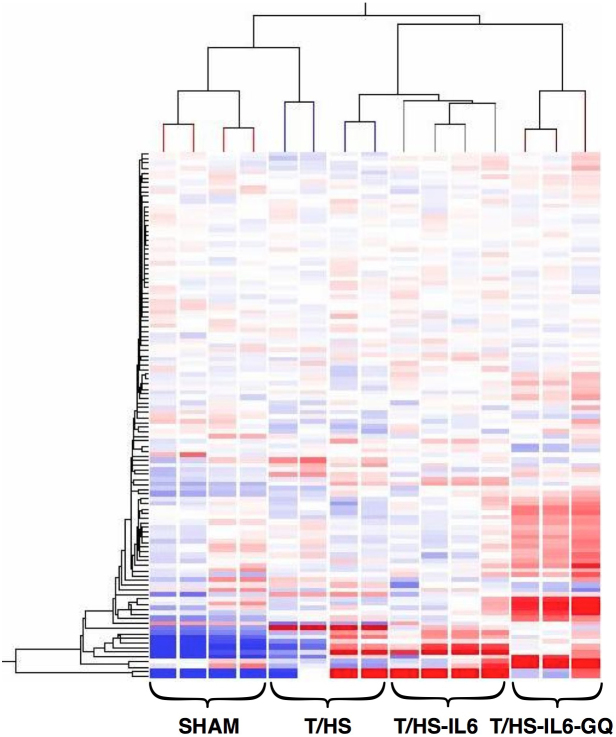
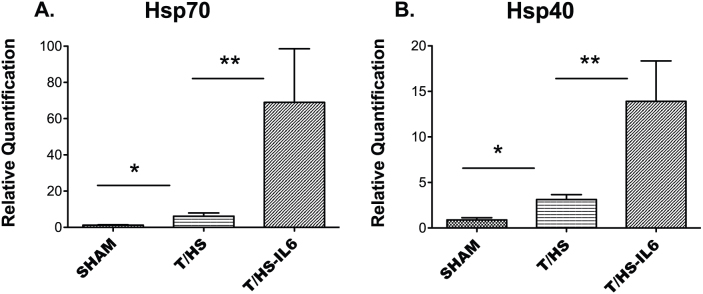
Trauma with hemorrhagic shock (T/HS), has been shown to result in liver injury marked by hepatocyte apoptosis and heart failure marked by cardiomyocyte apoptosis, both of which we have shown to be prevented by IL-6 administration at resuscitation, and Stat3 largely mediated this. As specific mediators have not been delineated, we investigated the unfolded protein response (UPR), which, with marked activation, can lead to apoptosis. Prior studies of hepatic and cardiac injury examined limited repertoires of UPR elements, making it difficult to assess the role of the UPR in T/HS. This study describes the first global examination of the UPR transcriptome in the liver and heart following T/HS, demonstrating organ-specific UPR transcriptome changes. The non-canonical UPR chaperone, Hsp70, was most dysregulated following T/HS and may contribute to hepatocyte protection via an IL-6-mediated pathway, identifying a potential new therapeutic strategy to prevent hepatocyte death and organ dysfunction in T/HS.
Figures
References
-
- Minino A., Anderson R., Fingerhut L., Boudreault M. & Warner M. Deaths: injuries, 2002. Natl Vital Stat Rep 54, 1–124 (2006). - PubMed
-
- Dewar D., Moore F. A., Moore E. E. & Balogh Z. Postinjury multiple organ failure. Injury 40, 912–918 (2009). - PubMed
-
- Guan J., Jin D.-D., Jin L.-J. & Lu Q. Apoptosis in organs of rats in early stage after polytrauma combined with shock. J Trauma 52, 104–111 (2002). - PubMed
-
- Jaskille A. et al. Hepatic apoptosis after hemorrhagic shock in rats can be reduced through modifications of conventional Ringer&'s solution. Journal of the American College of Surgeons 202, 25–35 (2006). - PubMed
Publication types
MeSH terms
Substances
Grants and funding
LinkOut - more resources
Full Text Sources
Other Literature Sources
Research Materials
Miscellaneous
