. 2013 Mar 12;52(10):1828-37.
doi: 10.1021/bi4000244. Epub 2013 Feb 27.

A versatile platform for single- and multiple-unnatural amino acid mutagenesis in Escherichia coli

Affiliations

A versatile platform for single- and multiple-unnatural amino acid mutagenesis in Escherichia coli

Abhishek Chatterjee et al. Biochemistry. .

Abstract

To site-specifically incorporate an unnatural amino acid (UAA) into target proteins in Escherichia coli, we use a suppressor plasmid that provides an engineered suppressor tRNA and an aminoacyl-tRNA synthetase (aaRS) specific for the UAA of interest. The continuous drive to further improve UAA incorporation efficiency in E. coli has resulted in several generations of suppressor plasmids. Here we describe a new, highly efficient suppressor plasmid, pUltra, harboring a single copy each of the tRNA and aaRS expression cassettes that exhibits higher suppression activity than its predecessors. This system is able to efficiently incorporate up to three UAAs within the same protein at levels up to 30% of the level of wild-type protein expression. Its unique origin of replication (CloDF13) and antibiotic resistance marker (spectinomycin) allow pUltra to be used in conjunction with the previously reported pEVOL suppressor plasmid, each encoding a distinct tRNA/aaRS pair, to simultaneously insert two different UAAs into the same protein. We demonstrate the utility of this system by efficiently incorporating two bio-orthogonal UAAs containing keto and azido side chains into ketosteroid isomerase and subsequently derivatizing these amino acid residues with two distinct fluorophores, capable of Förster resonance energy transfer interaction. Finally, because of its minimal composition, two different tRNA/aaRS pairs were encoded in pUltra, allowing the generation of a single plasmid capable of dual suppression. The high suppression efficiency and the ability to harbor multiple tRNA/aaRS pairs make pUltra a useful system for conducting single- and multiple-UAA mutagenesis in E. coli.


Figures
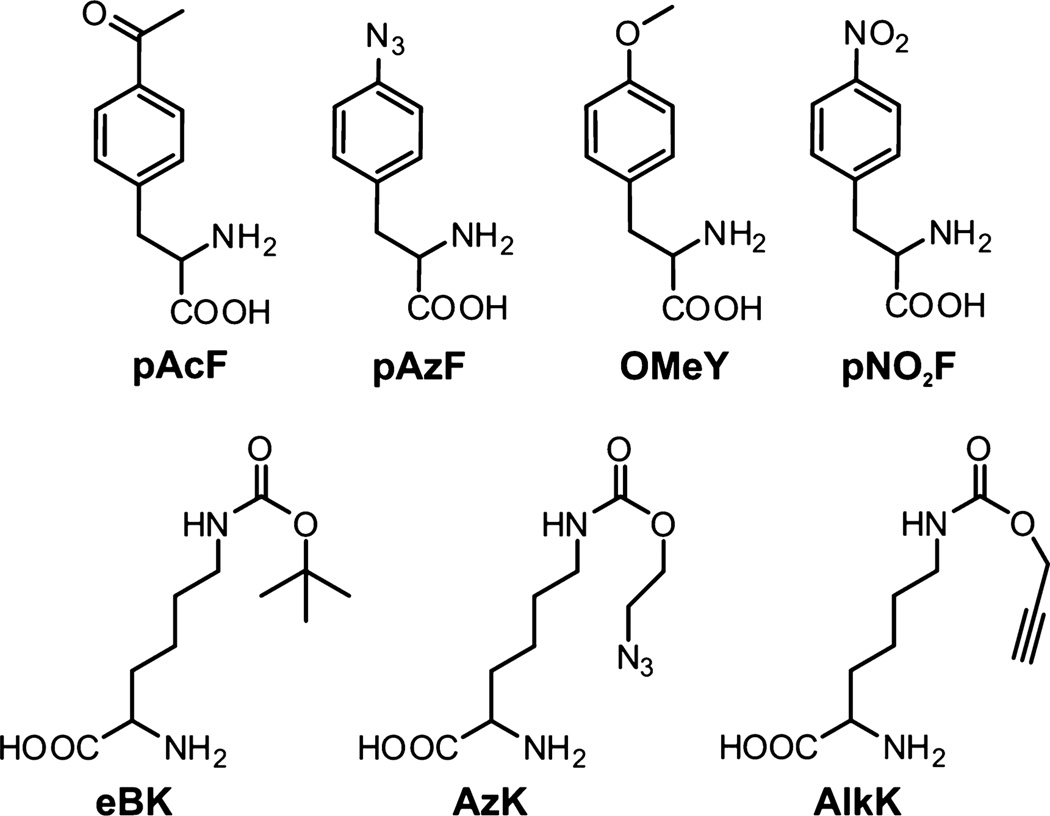
Figure 1
Figure 1
UAAs used in this study.
Figure 2
Figure 2
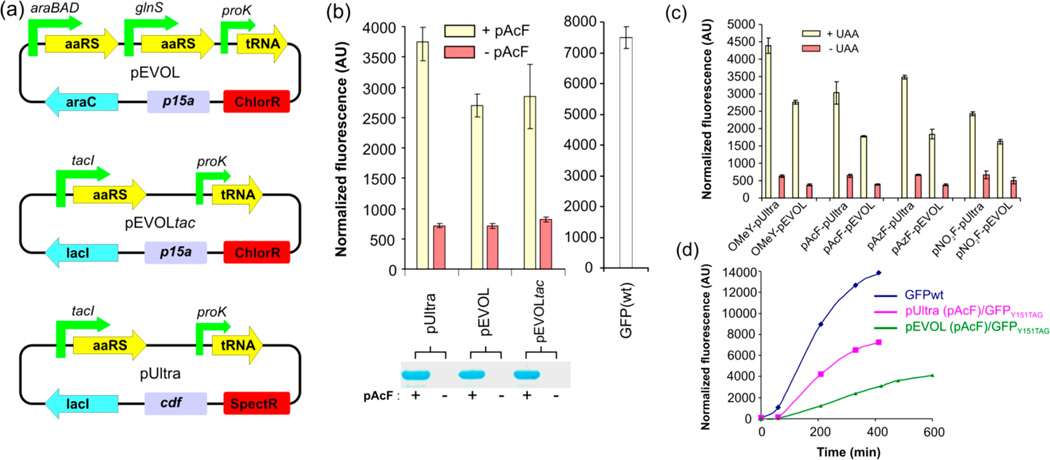
Vector construction and evaluation of suppression efficiency. (a) Vector maps for pEVOL, pEVOLtac, and pUltra. (b) Comparison of suppression efficiencies of pUltra, pEVOL, and pEVOLtac (all harboring the pAcF-specific MjTyr-tRNA/aaRS pair) as measured by their ability to support expression of full-length GFP from expression vector pET101-GFP(Tyr151TAG). The top panel shows normalized fluorescence in the presence (yellow) or absence (red) of pAcF; the bottom panel shows the SDS–PAGE analysis of the isolated protein from each expression experiment. wtGFP expression (without amber suppression) is shown for reference. (c) Comparison of suppression efficiencies of pUltra and pEVOL, both harboring the polyspecific MjTyr-tRNA/aaRS pair, as measured by the normalized fluorescence of full-length GFP expressed from GFP(Tyr151TAG), in the presence or absence of four different UAAs. (d) Time-dependent, postinduction expression of full-length GFP, measured as normalized fluorescence, from pET-GFP [wild type, without amber suppression (blue)] or from GFP(Y151TAG) using pUltra-pAcF (magenta) or pEVOL-pAcF (green) to suppress the amber stop codon.
Figure 3
Figure 3
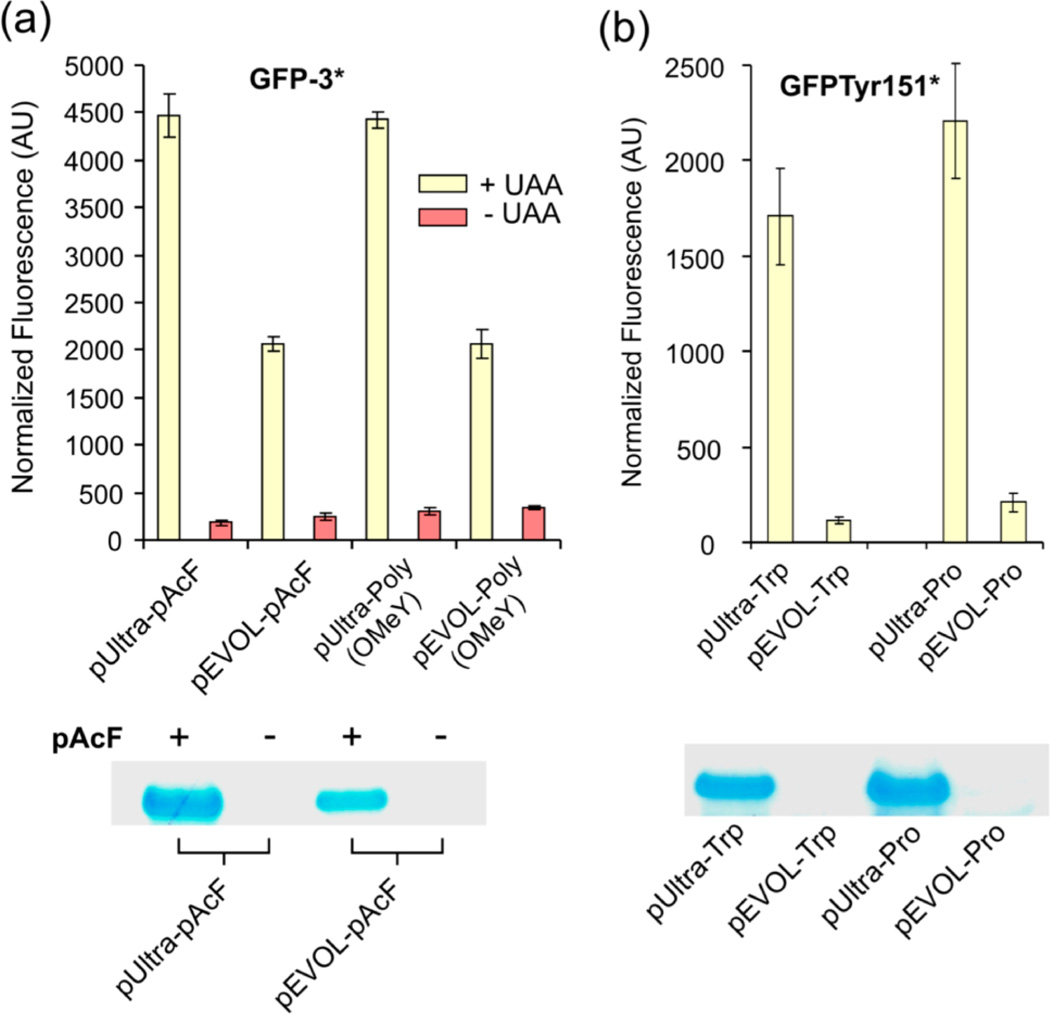
Comparison of suppression efficiencies of pUltra and pEVOL for GFP-3* using the MjTyr pair or for GFP-151TAG using the less efficient tRNA/aaRS pairs. (a) Expression of full-length GFP from pET-GFP-3* with three in-frame amber stop codons, using pUltra or pEVOL (encoding either a pAcF-specific or a polyspecific MjTyr tRNA/aaRS pair). The top panel shows GFP expression as normalized fluorescence, in the presence or absence of the corresponding UAA (OMeY was used for the polyspecific synthetase). The bottom panel shows the SDS-PAGE analysis of isolated protein expressed using the pAcF-specific pEVOL or pUltra in the presence (+) or absence (−) of pAcF. (b) Expression levels of GFP from pET-GFP(Y151TAG) using the pUltra or pEVOL vector encoding the engineered tryptophanyl or prolyl suppressor tRNA/aaRS pairs (charging tryptophan or proline, respectively). The top panel shows normalized fluorescence and the bottom panel SDS–PAGE analysis of the isolated protein from each expression experiment.
Figure 4
Figure 4
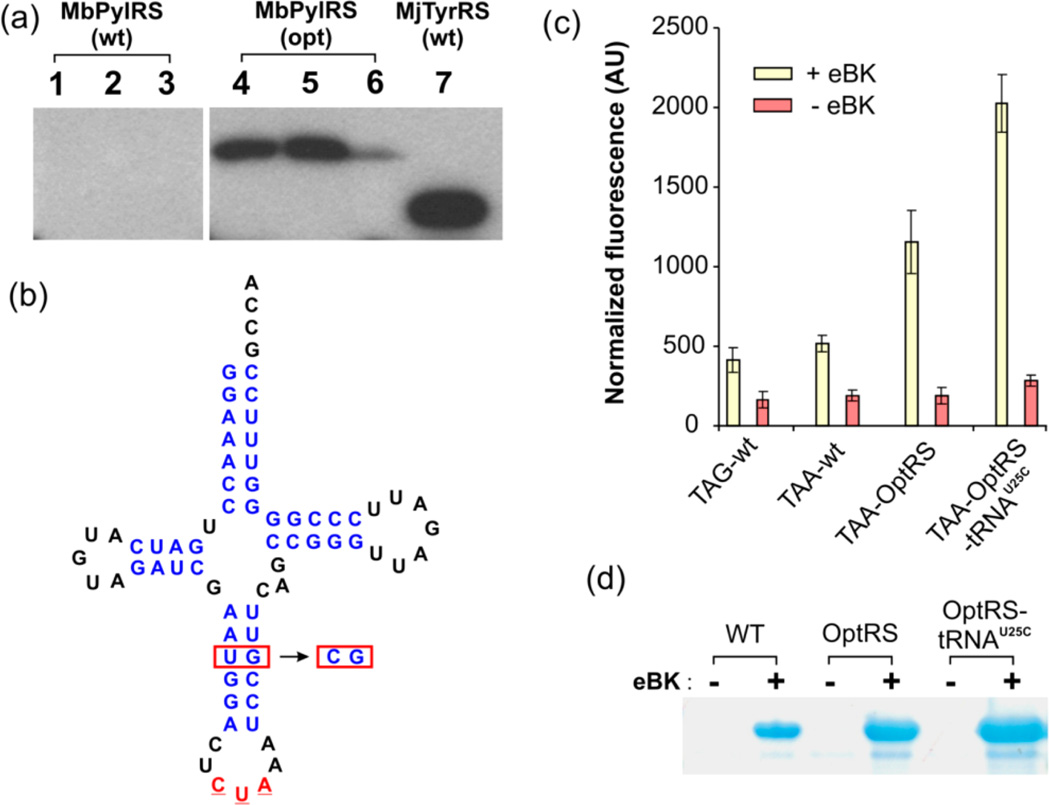
Optimization of the pyrrolysyl pair. (a) Codon optimization improves the expression level of MbPylRS. The His6-tagged aaRS gene under the tacI promoter is expressed in E. coli, and protein in the lysate is detected by Western blotting. In lanes 1–3, for the wild-type MbPylRS gene, the abundance of synthetase in the crude lysate, the insoluble fraction, and the soluble fraction, respectively, is shown. In lanes 4–6, for the codon-optimized MbPylRS gene, the abundance of synthetase in the crude lysate, the insoluble fraction, and the soluble fraction, respectively, is shown. Lane 7 shows the expression level of the wild-type His6-tagged MjTyrRS in a similar experiment for reference. (b) Pyrrolysyl-tRNA contains an unfavorable U:G wobble pair in the anticodon stem, which was mutated to a C:G pair to improve suppression efficiency. (c) Suppression efficiencies of different pyrrolysyl-tRNA/aaRS pairs (in pUltra), measured as the expression level of GFP (normalized fluorescence) from pET-GFP(Y151TAG) or pET-GFP(Y151TAA) in the presence (yellow) or absence (red) of eBK. TAG-wt and TAA-wt represent pUltra vectors harboring amber- and ochre-suppressing wild-type pyrrolysine pairs, respectively. TAA-OptRS represents the combination of wild-type ochre suppressor tRNA and codon-optimized MbPylRS, while TAA-OptRS-tRNAU25C represents the combination of the U25C mutant of the ochre suppressor tRNA and codon-optimized MbPylRS. (d) Isolated protein samples expressed from pET-GFP(Y151TAA) using pUltra vectors, encoding the three different combinations of ochre-suppressing pyrrolysyl pairs described above, in the presence (+) or absence (−) of eBK.
Figure 5
Figure 5
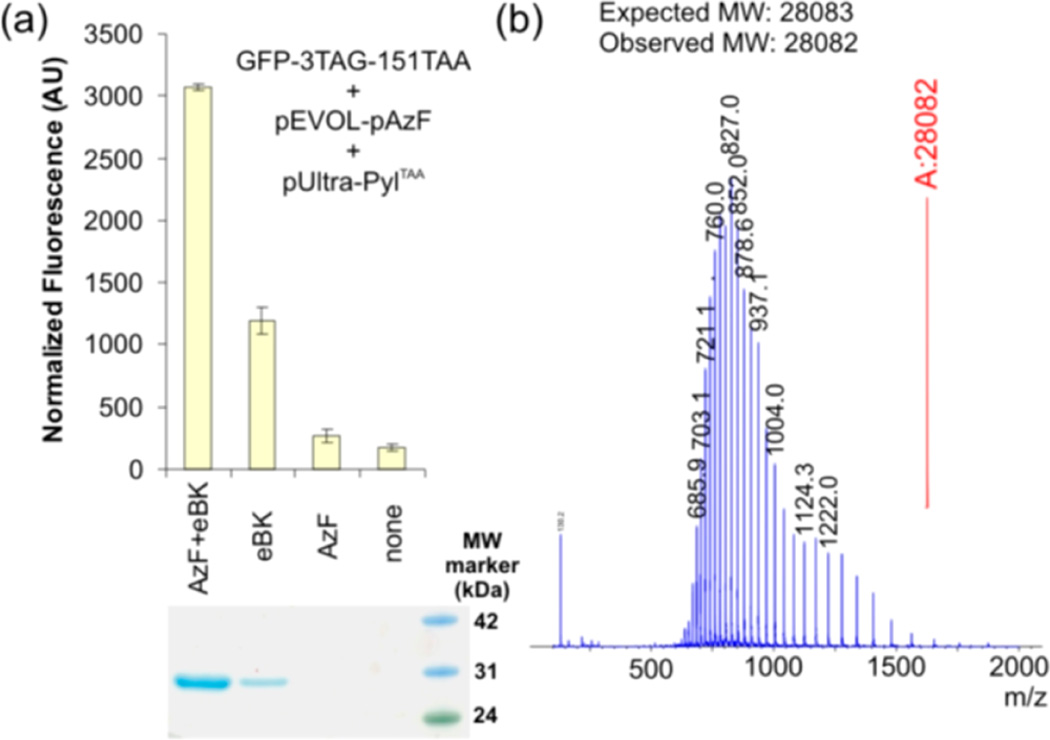
Simultaneous incorporation of two different UAAs into GFP. Full-length GFP was produced from pET-GFP-3TAG-151TAA using pEVOL-pAzF to suppress TAG with pAzF and pUltra-PylTAA to suppress TAA with eBK. (a) Normalized fluorescence (top) and isolated protein by SDS–PAGE analysis (bottom) in the presence of both UAAs (AzF and eBK), eBK alone, or pAzF alone or in the absence of both UAAs (none). (b) ESI-MS analysis of the purified protein reveals a homogeneous species with the correct molecular weight.
Figure 6
Figure 6
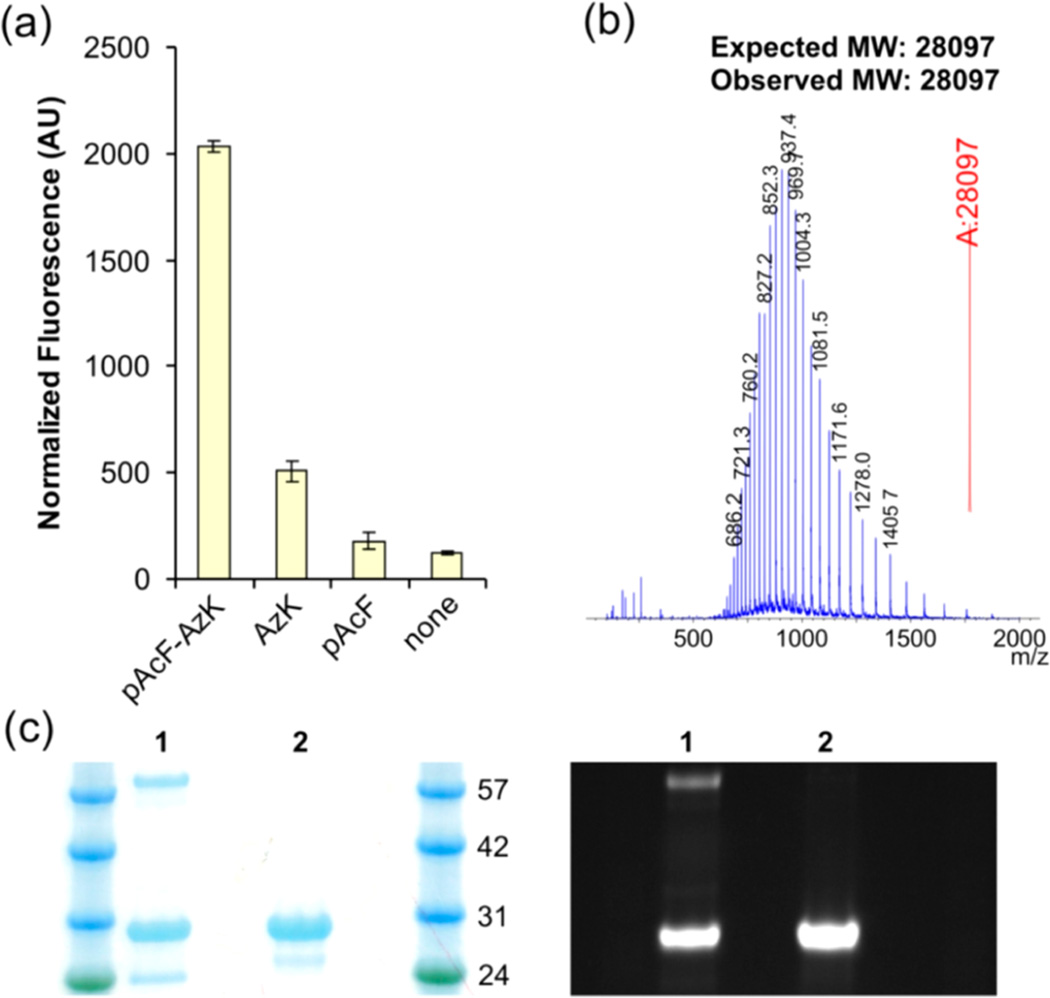
Incorporation and subsequent modification of two different bio-orthogonal UAAs in GFP. Full-length GFP was produced from pET-GFP-3TAG-151TAA using pEVOL-pAcF to suppress TAG and pUltra-PylTAA to suppress TAA with pAcF and AzK, respectively. (a) Normalized fluorescence in the presence of both UAAs (pAcF and AzK), AzK alone, or pAcF alone or in the absence of both UAAs (none). (b) ESI-MS analysis of the purified protein reveals a homogeneous species with the expected molecular weight. (c) Conjugation of Alexa Fluor 488-hydroxylamine (lane 1) and Alexa Fluor 488-cyclooctyne (lane 2) to the ketone and azide groups of the resulting GFP, respectively, and their subsequent analysis by Coomassie staining (left) and UV transillumination (right), following the resolution of the samples by SDS–PAGE.
Figure 7
Figure 7
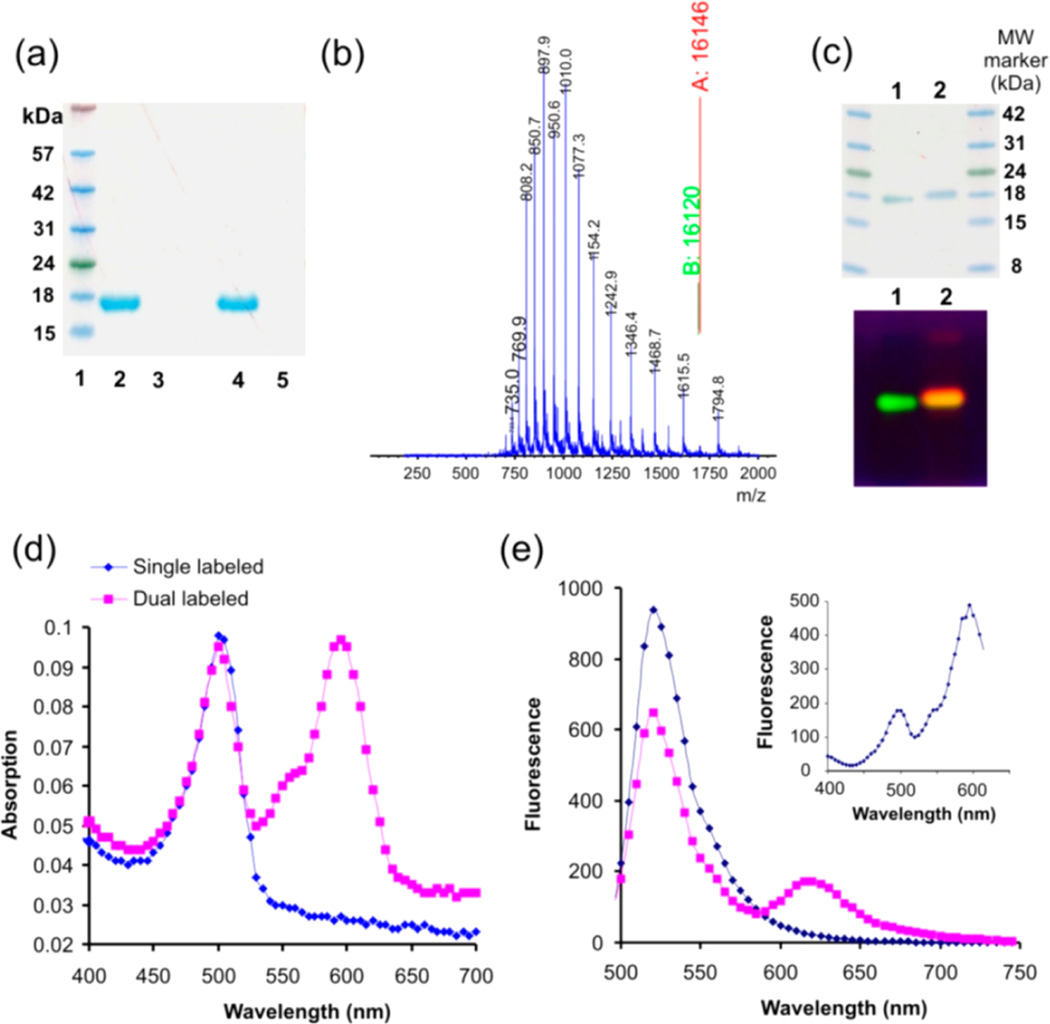
Incorporation and subsequent labeling of two distinct bio-orthogonal UAAs in KSI-7TAA-78TAG. (a) SDS–PAGE analysis of KSI-7TAA-78TAG expression incorporating eBK and pAcF, or AzK and pAcF: lane 1, molecular weight markers; lanes 2 and 3, expression in the presence or absence of eBK and pAcF (1 mM each), respectively; lanes 4 and 5, expression in the presence or absence of AzK and pAcF (1 mM each), respectively. (b) MS analysis of purified KSI-AzK7-pAcF78. The deconvoluted spectrum is shown in the inset and reveals the expected species (molecular weight of 16146) with a minor species (<20%), where the azide functionality of AzK is reduced to an amine (−26 molecular weight units). (c) SDS–PAGE analysis followed by Coomassie staining (top) or fluorescence imaging (bottom) of KSI-AzK7-pAcF78 labeled with Alexa Fluor 488 C5-aminooxyacetamide alone (lane 1) or together with Alexa Fluor 594-DIBO alkyne (lane 2). Absorption (d) and fluorescence (e) (excitation wavelength of 480 nm) spectra of KSI-AzK7-pAcF78 labeled with Alexa Fluor 488 C5-aminooxyacetamide alone (magenta) or together with Alexa Fluor 594-DIBO alkyne (blue). Shown in the inset of panel e is a plot of the fluorescence intensity of the 620 nm peak as a function of excitation wavelength, which shows absorption maxima at 590 nm (Alexa Fluor 594; self) and 490 nm (FRET from Alexa Fluor 488 fluorophore). The labeled protein concentration used for all these experiments was 25 µM.
Figure 8
Figure 8
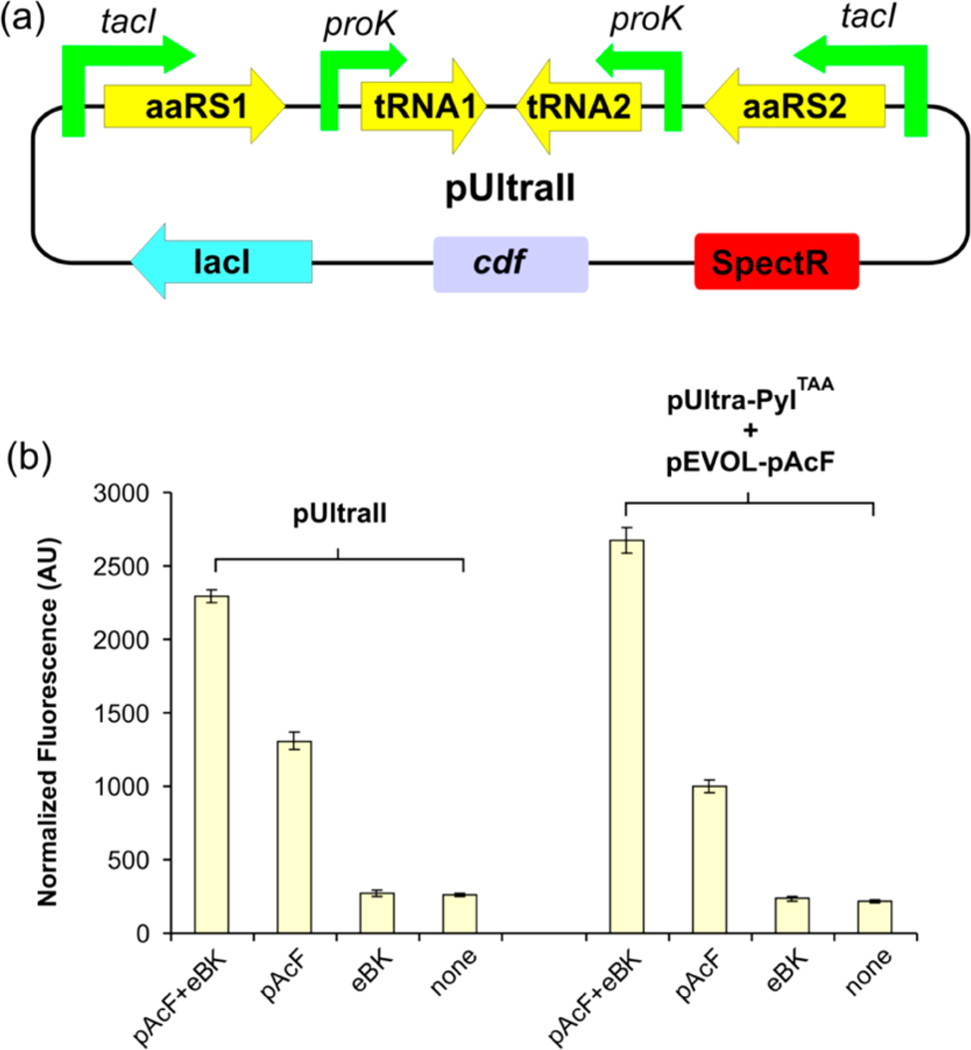
Construction and evaluation of pUltraII. (a) Vector map of pUltraII. aaRS1, tRNA1, aaRS2, and tRNA2 represent MbPylRS(opt), Mm-tRNAUUAPyl (U25C), MjTyrRS (pAcF-specific), and Mj-tRNACUATyr, respectively. (b) Evaluation of the dual-suppression efficiency of pUltraII by monitoring GFP expression levels (normalized fluorescence) from pET-GFP-3TAG-151TAA in the presence of pAcF and eBK, pAcF alone, or eBK alone or in the absence of both UAAs. For comparison, the expression profile from the three-component dual-suppression system (pEVOL-pAcF, pUltra-PylTAA, and pET-GFP-3TAG-151TAA) is also shown.

References

    1. Liu CC, Schultz PG. Adding new chemistries to the genetic code. Annu. Rev. Biochem. 2010;79:413–444. - PubMed
    1. Chen S, Schultz PG, Brock A. An improved system for the generation and analysis of mutant proteins containing unnatural amino acids in Saccharomyces cerevisiae . J. Mol. Biol. 2007;71:112–122. - PubMed
    1. Young TS, Ahmad I, Brock A, Schultz PG. Expanding the genetic repertoire of the methylotrophic yeast Pichia pastoris . Biochemistry. 2009;48:2643–2653. - PubMed
    1. Liu W, Brock A, Chen S, Schultz PG. Genetic incorporation of unnatural amino acids into proteins in mammalian cells. Nat. Methods. 2007;4:239–244. - PubMed
    1. Sakamoto K, Hayashi A, Sakamoto A, Kiga D, Nakayama H, Soma A, et al. Site-specific incorporation of an unnatural amino acid into proteins in mammalian cells. Nucleic Acids Res. 2002;30:4692–4699. - PMC - PubMed

Publication types