. 2013 Mar;131(3):752-62.
doi: 10.1016/j.jaci.2012.11.053. Epub 2013 Feb 4.

A new short-term mouse model of chronic obstructive pulmonary disease identifies a role for mast cell tryptase in pathogenesis

Affiliations

A new short-term mouse model of chronic obstructive pulmonary disease identifies a role for mast cell tryptase in pathogenesis

Emma L Beckett et al. J Allergy Clin Immunol. 2013 Mar.

Abstract

Background: Cigarette smoke-induced chronic obstructive pulmonary disease (COPD) is a life-threatening inflammatory disorder of the lung. The development of effective therapies for COPD has been hampered by the lack of an animal model that mimics the human disease in a short timeframe.

Objectives: We sought to create an early-onset mouse model of cigarette smoke-induced COPD that develops the hallmark features of the human condition in a short time-frame. We also sought to use this model to better understand pathogenesis and the roles of macrophages and mast cells (MCs) in patients with COPD.

Methods: Tightly controlled amounts of cigarette smoke were delivered to the airways of mice, and the development of the pathologic features of COPD was assessed. The roles of macrophages and MC tryptase in pathogenesis were evaluated by using depletion and in vitro studies and MC protease 6-deficient mice.

Results: After just 8 weeks of smoke exposure, wild-type mice had chronic inflammation, mucus hypersecretion, airway remodeling, emphysema, and reduced lung function. These characteristic features of COPD were glucocorticoid resistant and did not spontaneously resolve. Systemic effects on skeletal muscle and the heart and increased susceptibility to respiratory tract infections also were observed. Macrophages and tryptase-expressing MCs were required for the development of COPD. Recombinant MC tryptase induced proinflammatory responses from cultured macrophages.

Conclusion: A short-term mouse model of cigarette smoke-induced COPD was developed in which the characteristic features of the disease were induced more rapidly than in existing models. The model can be used to better understand COPD pathogenesis, and we show a requirement for macrophages and tryptase-expressing MCs.


Conflict of interest statement

Disclosure of potential conflict of interest: The authors declare that they have no relevant conflicts of interests.

Figures

FIG 1
FIG 1
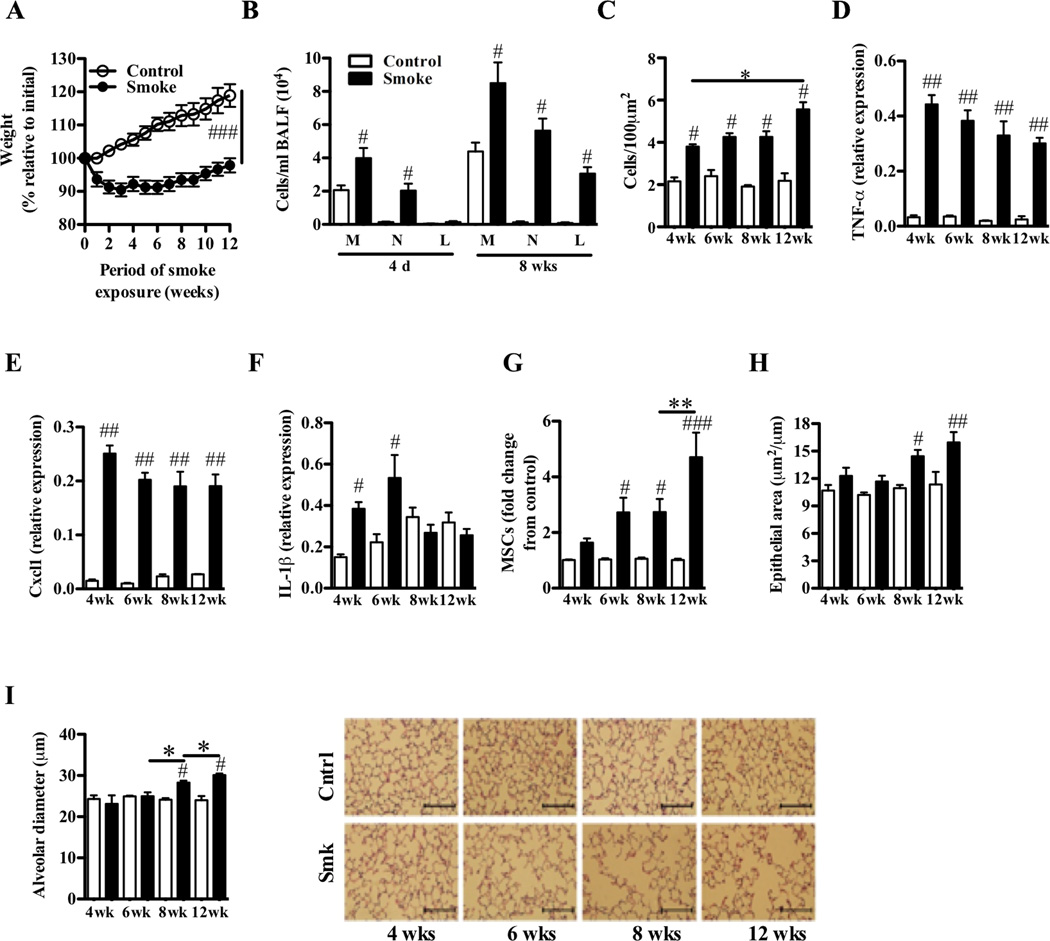
Nose-only exposure of the lungs of BALB/c mice to cigarette smoke induces the hallmark features of human COPD. A–I, WT BALB/c mice were exposed to cigarette smoke or normal air for 1–12 weeks. Relative to control mice, smoke-exposed mice had (A) reduced weight-gain relative to initial weight; (B) acute (after 4 days) and chronic (after 8 weeks) increases in the numbers of macrophages (M), neutrophils (N) and lymphocytes (L) in BALF; (C) increased cellular infiltrates in the parenchyma; increased levels of the transcripts that encode (D) TNF-α, (E) Cxcl1, and (F) IL-1β in lung homogenates; (G) increased number of mucus-secreting goblet cells (MSCs) in the airways; (H) airway epithelium thickening; and (I) alveolar enlargement (scale bar on micrographs = 100 µm). Data are means±SEM of 6–8 mice/group, # P<0.05, ## P<0.01, ### P<0.001 compared to mice that breathed normal air, * P<0.05, ** P<0.01 compared to other groups indicated. Statistical significance of the reduced weight gain is for the whole curve.
FIG 2
FIG 2
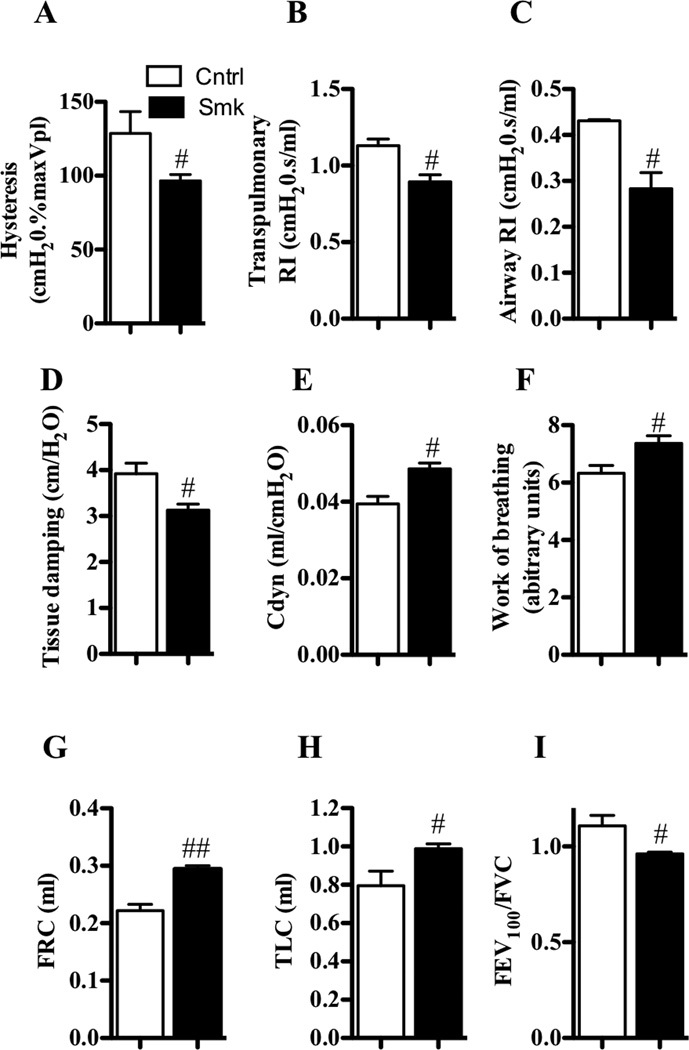
Nose-only cigarette smoke exposure leads to changes in lung function that are similar to that in humans with COPD. A–I, WT BALB/c mice were exposed to cigarette smoke or normal air for 8 weeks. Relative to control mice, smoke-exposed mice had decreased (A) hysteresis, (B) transpulmonary and (C) airway-specific resistance (RI) and (D) tissue damping, but increased (E) dynamic compliance (Cdyn), (F) work of breathing, (G) functional residual capacity (FRC), and (H) total lung capacity (TLC), and (I) reduced ratio of forced expiratory volume in 100 milliseconds/forced vital capacity (FEV100/FVC). Data are means±SEM of 6–8 mice/group, # P<0.05, compared to mice that breathed normal air.
FIG 3
FIG 3
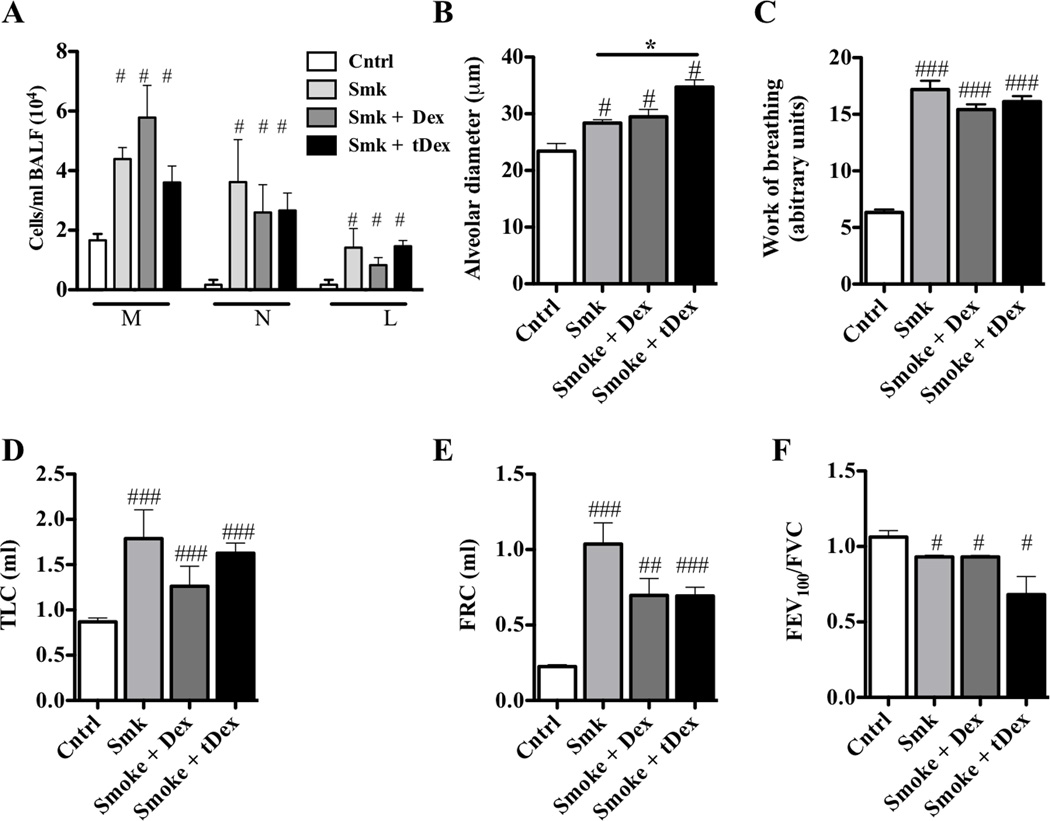
Experimental COPD is glucocorticoid-resistant. A–F, WT BALB/c mice were exposed to cigarette smoke or normal air for 12 weeks and were treated with dexamethasone or sham-treated with sterile distilled water either prophylactically throughout (Dex), or therapeutically (tDex) for the last 6 weeks, of the smoking protocol. Steroid treatment had no effect on (A) macrophage (M), neutrophil (N) and lymphocyte (L) numbers in the BALF, (B) alveolar enlargement or changes in lung function; (C) work of breathing, (D) total lung capacity (TLC), (E) functional residual capacity (FRC) or (F) forced expiratory volume in 100 milliseconds/forced vital capacity (FEV100/FVC) ratio. Data are means±SEM of 6–8 mice/group, # P<0.05, ## P<0.01, ### P<0.001 compared to mice that breathed normal air. There were no differences between other groups.
FIG 4
FIG 4
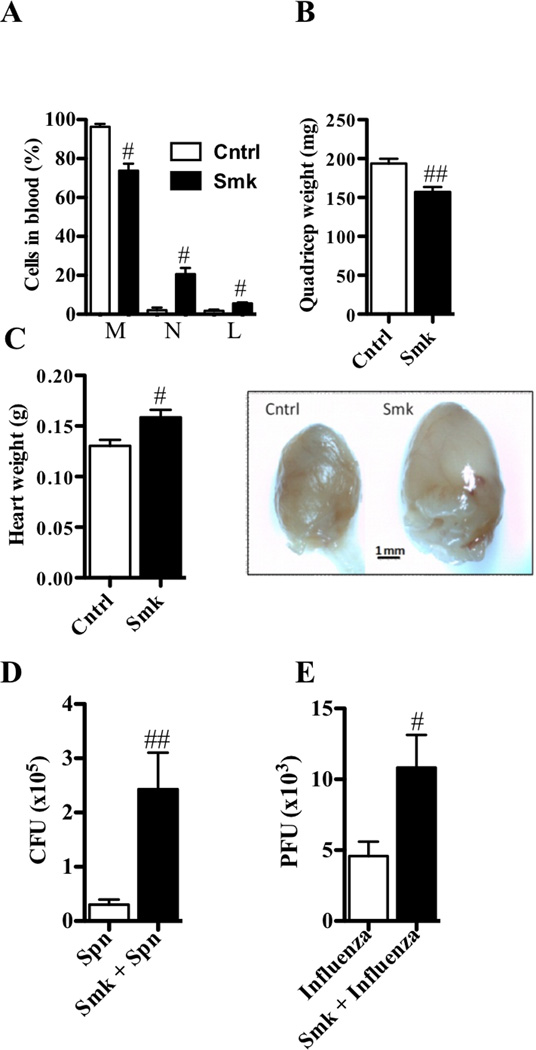
Experimental COPD has systemic involvement and exacerbates respiratory infections. A–E, WT BALB/c mice were exposed to cigarette smoke or normal air for 8 weeks. Relative to control mice, smoke-exposed mice had (A) alterations in the proportions of monocytes (M, decreased), neutrophils (N, increased), and lymphocytes (L, increased) in blood; (B) reduced quadriceps weight; (C) increased heart weight, size, and fatty deposits; and decreased (D) clearance of S. pneumoniae (after 48 hours of infection) and (E) influenza virus (after 7 days of infection). Data are means±SEM of 6–8 mice/group, # P<0.05, ## P<0.01, compared to WT mice that breathed normal air.
FIG 5
FIG 5
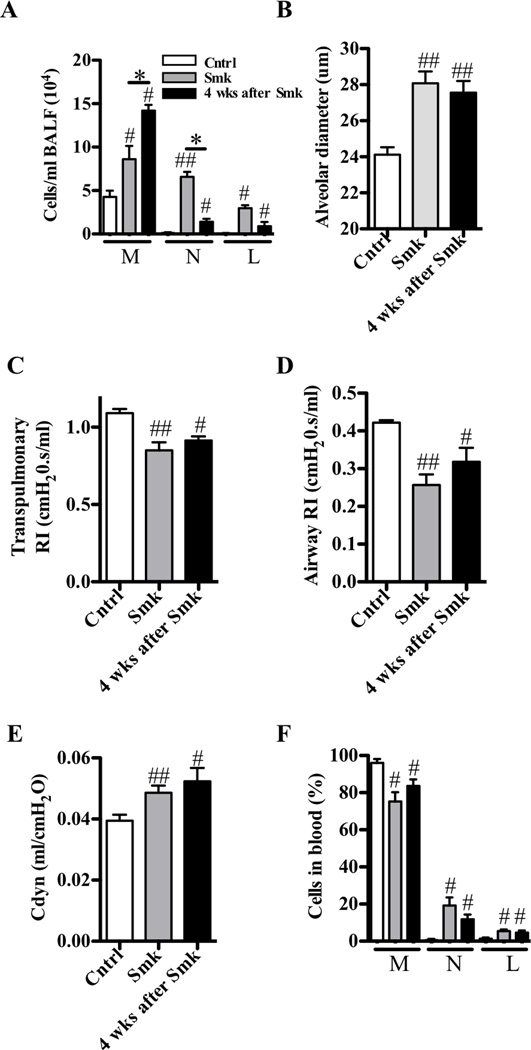
Experimental COPD does not rapidly resolve following cessation of smoke exposure. A–F, WT BALB/c mice were exposed to cigarette smoke or normal air for 8 weeks. Smoke exposed mice were evaluated immediately after the cessation of smoking or 4 weeks later. Relative to control mice, both groups of smoke-exposed mice had (A) increased airway inflammation; (B) alveolar enlargement; and changes in lung function; decreased (C) transpulmonary and (D) airway-specific resistance (RI); (E) increased dynamic compliance (Cdyn); as well as (F) altered leukocyte populations in blood. Mice that had ceased smoking 4 weeks earlier had more macrophages, but fewer neutrophils, in their BALF. Data are means±SEM of 6–8 mice/group, # P<0.05, ## P<0.01, compared to mice that breathed normal air, * P<0.05, compared to other groups indicated.
FIG 6
FIG 6
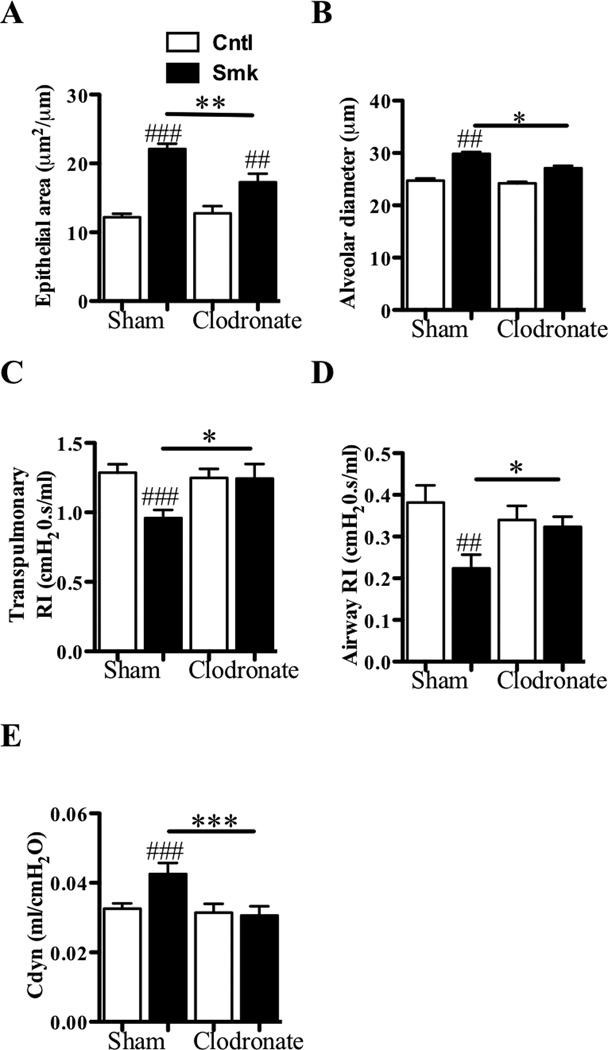
Depletion of pulmonary macrophages suppresses the development of experimental COPD. A–E, WT BALB/c mice were exposed to cigarette smoke or normal air for 8 weeks. These two groups of mice also were treated with either liposome encapsulated clodronate or empty liposomes (Sham) 3 times/week for the duration of the experiment commencing on the 1st day of smoking. Relative to smoke-exposed macrophage-sufficient mice, smoke-exposed macrophage-depleted mice had reduced (A) airway epithelium thickening; and (B) alveolar enlargement; and altered lung function; increased (C) transpulmonary and (D) increased airway-specific resistance (RI), and (E) reduced dynamic compliance (Cdyn). The smoke-exposed macrophage-depleted mice had no alveolar enlargement or changes in lung function compared to non-smoke exposed control mice. Data are means±SEM of 6–8 mice/group, ## P<0.01, ### P<0.001 compared to mice that breathed normal air, * P<0.05, ** P<0.01 *** P<0.001 compared to other groups indicated.
FIG 7
FIG 7
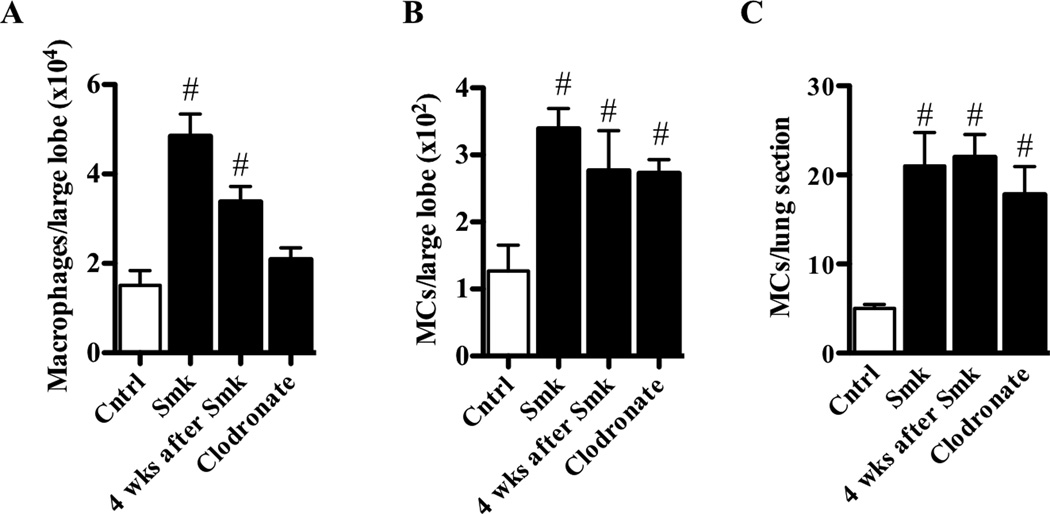
Experimental COPD increases the numbers of pulmonary macrophages and MCs. A–C, WT B6 mice were exposed to cigarette smoke or normal air for 8 weeks. Some mice were then rested for 4 weeks after smoking. Other mice were treated with clodronate. Relative to control mice, smoke-exposed mice had increased numbers of (A) F4/80+ macrophages and (B) Kit+/FcεRI+/IgE+ (by flow cytometry in the largest lobe of the multi-lobed right lung) or (C) toluidine blue+ (by histochemistry in the single-lobed left lung) MCs in the lungs. Smoking cessation did not alter macrophage or MC numbers. Clodronate specifically attenuated macrophage numbers. Data are means±SEM of 6–8 mice/group, # P<0.05, compared to mice that breathed normal air.
FIG 8
FIG 8
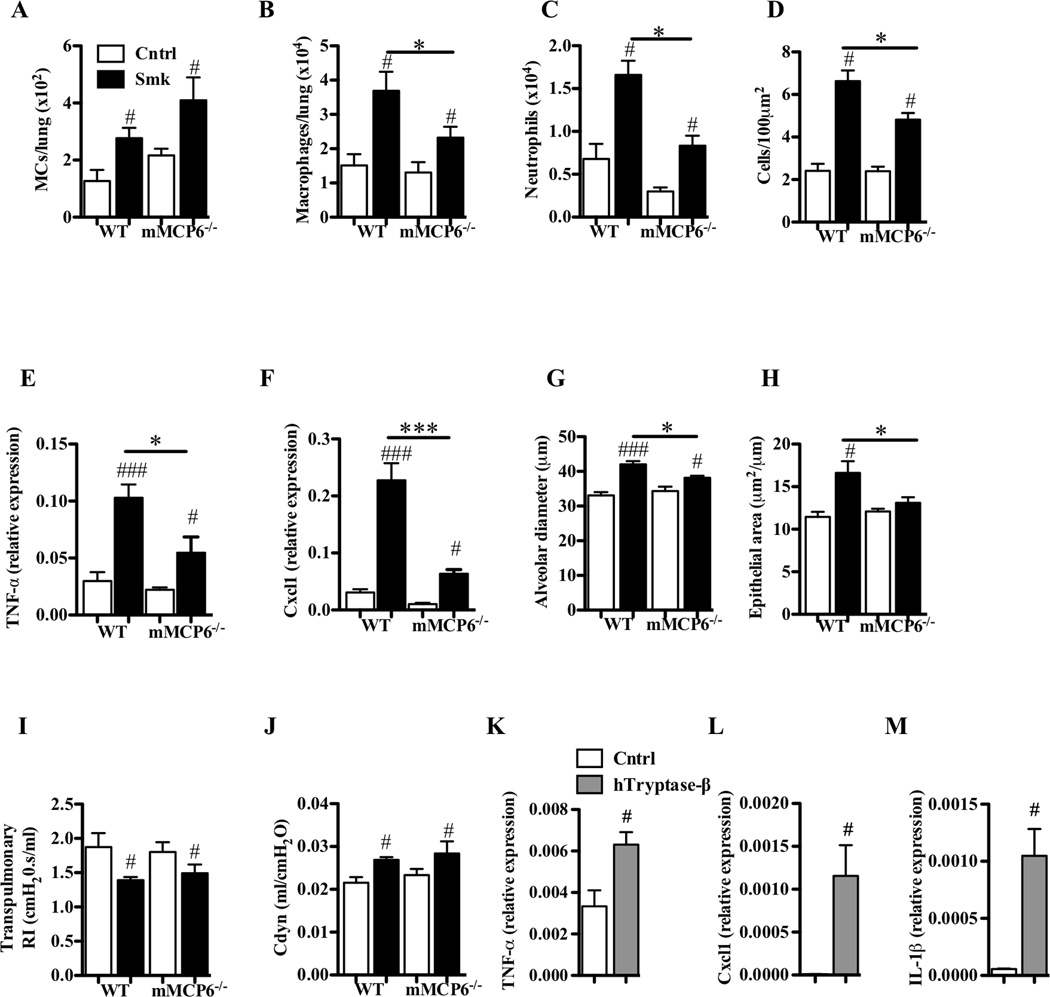
The tryptase mMCP-6 contributes to pulmonary macrophage accumulation and parenchymal inflammation, and is required for airway remodeling and alveolar enlargement in experimental COPD. A–J, WT and mMCP-6−/− B6 mice were exposed to cigarette smoke or normal air for 8 weeks. Relative to smoke-exposed WT mice, smoke-exposed mMCP-6−/− mice had (A) no change in the number of Kit+/FcεRI+/IgE+ MCs but had reduced (B) numbers of F4/80+ macrophages and (C) neutrophils in the lung, (D) less cellular infiltrates in the parenchyma, attenuated (E) TNF-α and (F) Cxcl1 mRNA levels in lung homogenates, (G) diminished alveolar enlargement, (H) no airway remodelling and no differences in lung function [e.g. (I) transpulmonary resistance (RI) or (J) dynamic compliance (Cdyn)]. K–M, B6 mouse bone marrow-derived macrophages were cultured in the absence or presence of recombinant hTryptase-β. Relative to untreated cells, hTryptae-β-treated cells had increased levels of the transcripts that encode (K) TNF-α, (L) Cxcl1 and (M) IL-1β. Data are means±SEM of 6–8 mice/group, or of 3 cell cultures in triplicate (representative of 4 repeat experiments), # P<0.05, ## P<0.01, ### P<0.001 compared to mice that breathed normal air (A–J) or compared to sham-treated macrophages (K–M), * P<0.05, compared to other groups indicated.

References

    1. WHO. Global Burden of Disease: 2004 Update. 2008
    1. Rabe KF, Hurd S, Anzueto A, Barnes PJ, Buist SA, Calverley P, et al. Global strategy for the diagnosis, management, and prevention of chronic obstructive pulmonary disease: GOLD executive summary. Am J Respir Crit Care Med. 2007;176:532–555. - PubMed
    1. Vlahos R, Bozinovski S, Gualano RC, Ernst M, Anderson GP. Modelling COPD in mice. Pulm Pharmacol Ther. 2006;19:12–17. - PubMed
    1. Bracke KR, D'hulst AI, Maes T, Moerloose KB, Demedts IK, Lebecque S, et al. Cigarette smoke-induced pulmonary inflammation and emphysema are attenuated in CCR6-deficient mice. J Immunol. 2006;177:4350–4359. - PubMed
    1. Gaschler GJ, Zavitz CCJ, Bauer CMT, Skrtic M, Lindahl M, Robbins CS, et al. Cigarette smoke exposure attenuates cytokine production by mouse alveolar macrophages. Am J Respir Cell Mol Biol. 2007;38:218–226. - PubMed

Publication types