


Epidemic of lung cancer in patients with HIV infection
- PMID: 23381313
- PMCID: PMC3619638
- DOI: 10.1378/chest.12-1699
Epidemic of lung cancer in patients with HIV infection
Abstract
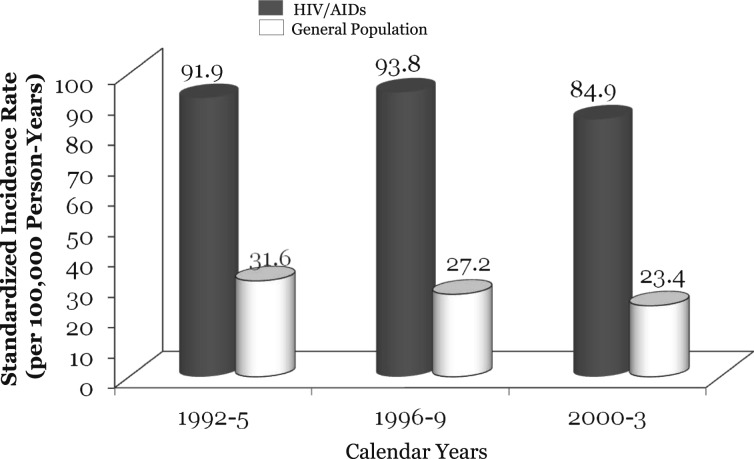
The survival of patients with HIV infection has improved dramatically over the past 20 years, largely owing to a significant reduction in opportunistic infections and AIDs-defining malignancies, such as lymphoma and Kaposi sarcoma. However, with improved survival, patients with HIV are experiencing morbidity and mortality from other (non-AIDs-defining) complications, such as solid organ malignancies. Of these, the leading cause of mortality in the HIV-infected population is lung cancer, accounting for nearly 30% of all cancer deaths and 10% of all non-HIV-related deaths. Importantly, the average age of onset of lung cancer in the HIV-infected population is 25 to 30 years earlier than that in the general population and at lower exposure to cigarette smoke. This article provides an overview of the epidemiology of lung cancer in the HIV-infected population and discusses some of the important risk factors and pathways that may enhance the risk of lung cancer in this population.
Figures
References
-
- Biggar RJ, Engels EA, Ly S, et al. Survival after cancer diagnosis in persons with AIDS. J Acquir Immune Defic Syndr. 2005;39(3):293-299 - PubMed
-
- Alshafie MT, Donaldson B, Oluwole SF. Human immunodeficiency virus and lung cancer. Br J Surg. 1997;84(8):1068-1071 - PubMed
-
- Engels EA, Pfeiffer RM, Goedert JJ, et al. ; for the HIV/AIDS Cancer Match Study Trends in cancer risk among people with AIDS in the United States 1980-2002. AIDS. 2006;20(12):1645-1654 - PubMed
-
- Patel P, Hanson DL, Sullivan PS, et al. ; Adult and Adolescent Spectrum of Disease Project and HIV Outpatient Study Investigators Incidence of types of cancer among HIV-infected persons compared with the general population in the United States, 1992-2003. Ann Intern Med. 2008;148(10):728-736 - PubMed
Publication types
MeSH terms
Grants and funding
LinkOut - more resources
Full Text Sources
Other Literature Sources
Medical
Miscellaneous
