


Systematic review of randomized controlled trials of different types of patch materials during carotid endarterectomy
- PMID: 23383053
- PMCID: PMC3561447
- DOI: 10.1371/journal.pone.0055050
Systematic review of randomized controlled trials of different types of patch materials during carotid endarterectomy
Abstract
Background and purpose: Carotid endarterectomy (CEA) with patch angioplasty produces greater results than with primary closure; however, there remains uncertainty on the optimal patch material in CEA. A systematic review of randomized controlled trials (RCTs) was performed to evaluate the effect of angioplasty using venous patch versus synthetic patch material, and Dacron patch versus polytetrafluoroethelene (PTFE) patch material during CEA.
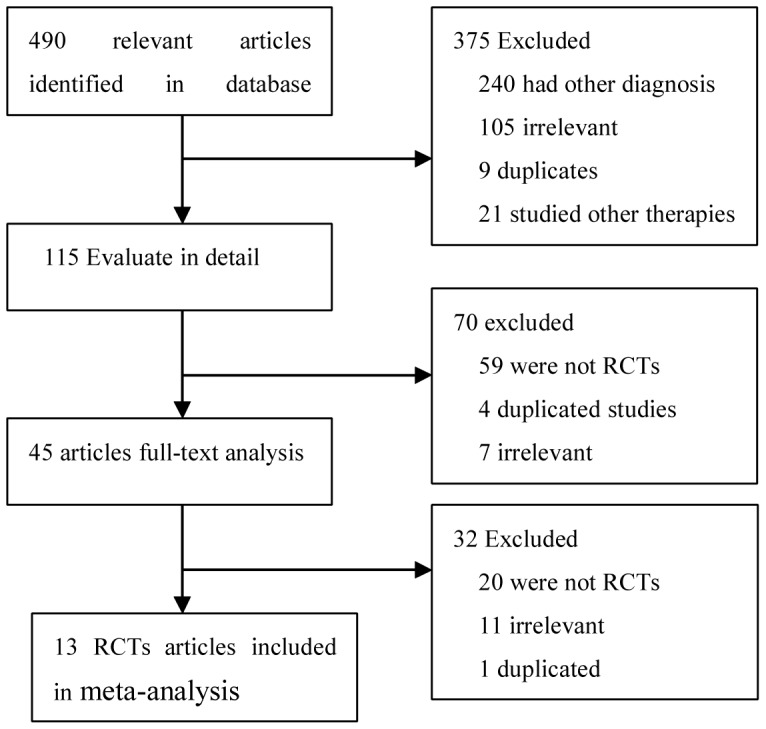
Methods: A multiple electronic health database screening was performed including the Cochrane library, Pubmed, Ovid, EMBASE and Google Scholar on all randomized controlled trials (RCTs) published before November 2012 that compared the outcomes of patients undergoing CEA with venous patch versus synthetic patch. RCTs were included if they compared carotid patch angioplasty with autologus venous patch versus synthetic patch material, or compared one type of synthetic patch with another.
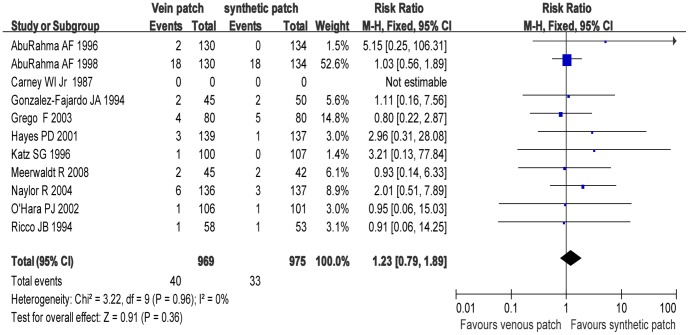
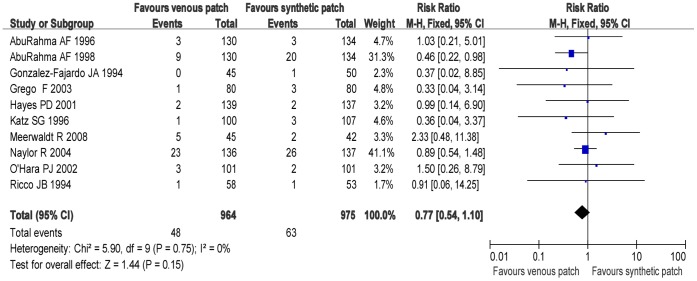
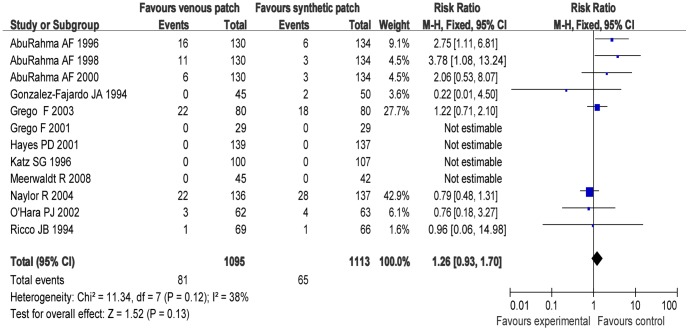
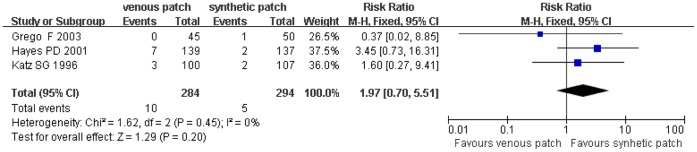
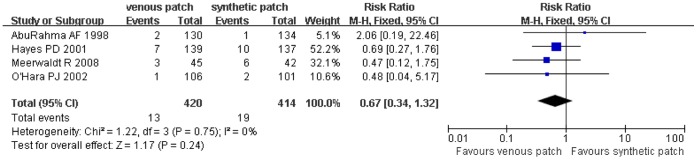
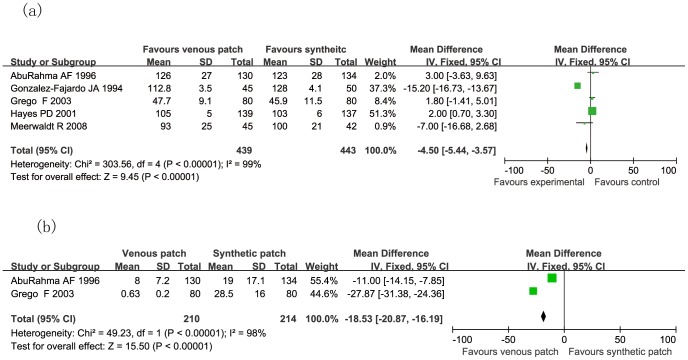
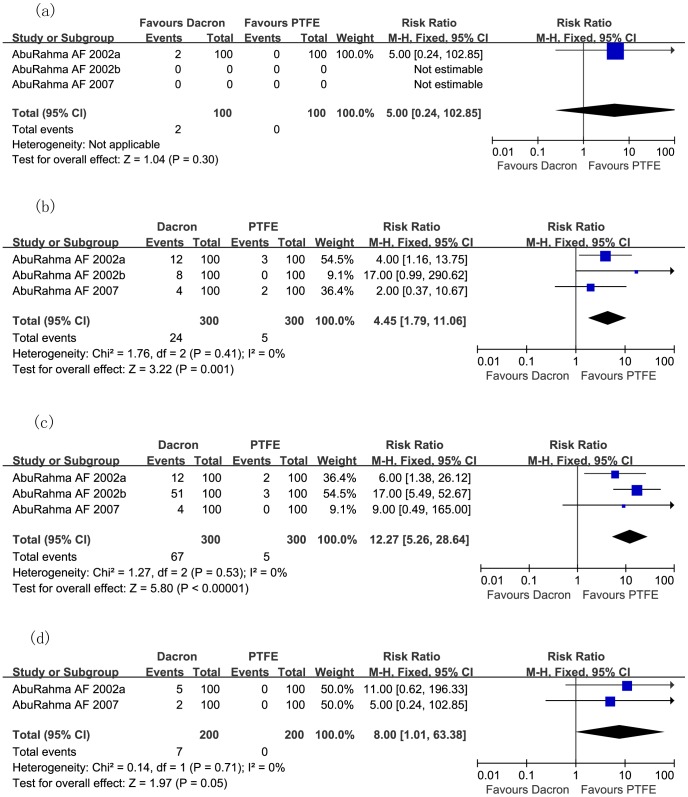
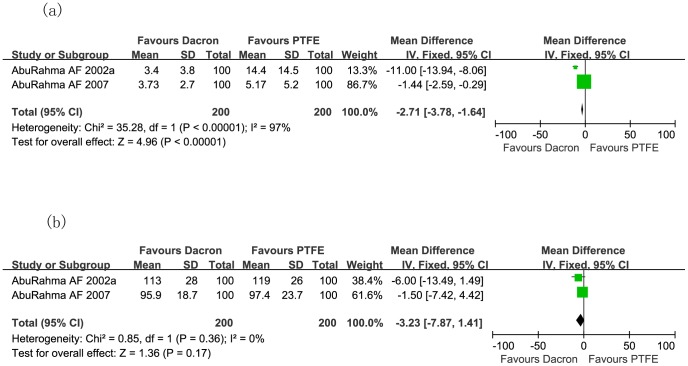
Results: Thirteen RCTs were identified. Ten trials, involving 1946 CEAs, compared venous patch with synthetic patch materials. Two trials, involving 400 CEAs in 380 patients, compared Dacron patch with PTFE patch. The hemostasis time in CEA with PTFE patch was significantly longer than with venous patch (P<0.0001), and longer than with Dacron patch (P<0.0001). There was no significant difference of mortality rate, stroke rate, restenosis, and operative time in CEA with venous patch versus synthetic patch material, or in CEA with Dacron patch versus PTFE patch (all P>0.05). One RCT of 95 CEAs in 92 patients compared bovine pericardium with Dacron patch, and demonstrated a statistically significant decrease in intraoperative suture line bleeding with bovine pericardium compared with Dacron patch (P<0.001).
Conclusions: The hemostasis time in CEA with PTFE patch was longer than with venous patch or Dacron patch. The overall perioperative and long-term mortality rate, stroke rate, restenosis, and operative time were similar when using venous patch versus synthetic patch material or Dacron patch versus PTFE patch material during CEA. More data are required to clarify differences between different patch materials.
Conflict of interest statement
Figures
References
-
- Ren S, Liu P, Ma G, Wang F, Qian S, et al. (2012) Long-term outcomes of synchronous carotid endarterectomy and coronary artery bypass grafting versus solely carotid endarterectomy. Ann Thorac Cardiovasc Surg 18: 228–35. - PubMed
-
- Counsell C, Salinas R, Warlow C, Naylor R (2000) Patch angioplasty versus primary closure for carotid endarterectomy. Cochrane Database Syst Rev CD000160. - PubMed
-
- Rerkasem K, Rothwell PM (2011) Carotid endarterectomy for symptomatic carotid stenosis. Cochrane Database Syst Rev CD001081. - PubMed
-
- Bond R, Rerkasem K, Naylor AR, Aburahma AF, Rothwell PM (2004) Patches of different types for carotid patch angioplasty. Cochrane Database Syst Rev (2): CD000071. - PubMed
Publication types
MeSH terms
LinkOut - more resources
Full Text Sources
Other Literature Sources
Medical
