


Physical activity, sedentary behaviour and metabolic control following stroke: a cross-sectional and longitudinal study
- PMID: 23383131
- PMCID: PMC3558428
- DOI: 10.1371/journal.pone.0055263
Physical activity, sedentary behaviour and metabolic control following stroke: a cross-sectional and longitudinal study
Abstract
Background: Physical activity and sedentary behaviour are key moderators of cardiovascular disease risk and metabolic control. Despite the importance of a physically active lifestyle, little is known about the effects of stroke on physical activity. We assessed physical activity and sedentary behaviour at three time points following stroke compared to a healthy control group.
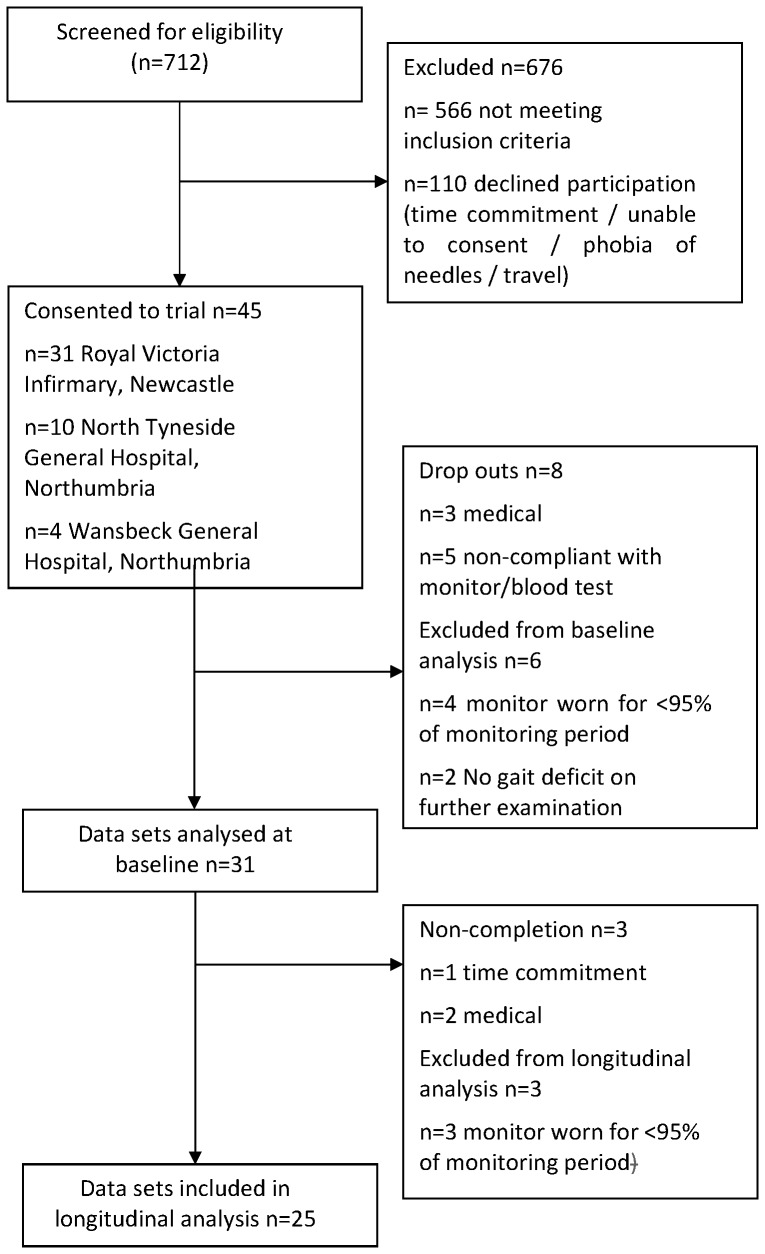
Methods: Physical activity and sedentary behaviour were objectively measured using a portable multi-sensor array in 31 stroke participants (73±9 years, National Institute of Health Stroke Scale 2±2, mobile 10 metres with/without aid) within seven days and at three and six months. Stroke data were compared with an age, sex and body mass index matched healthy control group (n = 31).
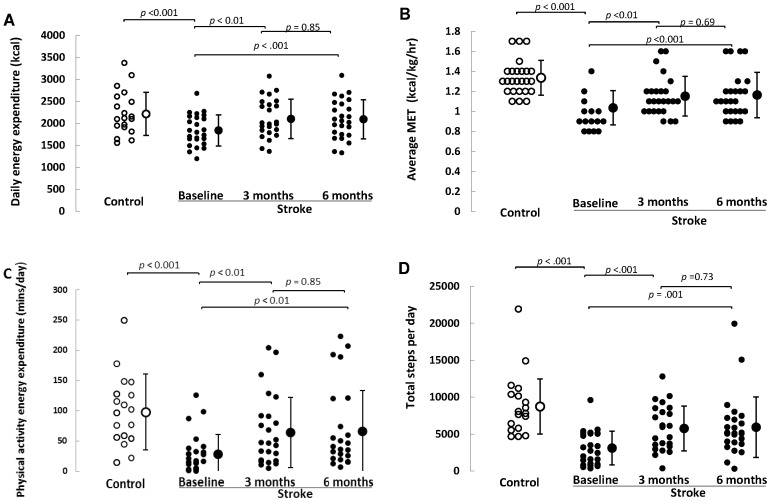
Results: Within seven days of stroke, total energy expenditure and physical activity were significantly lower and sedentary time higher in the stroke group compared to controls (total energy expenditure 1840±354 vs. 2220±489 kcal, physical activity 28±32 vs. 79±46 min/day, steps 3111±2290 vs. 7996±2649, sedentary time 1383±42 vs. 1339±44 min/day, p<0.01). At three months physical activity levels had increased (64±58 min/day) but plateaued by six months (66±68 min/day).
Conclusions: Physical activity levels are reduced immediately post-stroke and remain below recommended levels for health and wellbeing at the three and six month time points. Clinicians should explore methods to increase physical activity and reduce sedentary behaviour in both the acute and later stages following stroke.
Conflict of interest statement
Figures
References
-
- Department of Health (2011) Start active, stay active: A report on physical activity for health from the four home countries' Chief Medical Officers.
-
- Goldstein LB, Bushnell CD, Adams RJ, Appel LJ, Braun LT, et al. (2011) Guidelines for the Primary Prevention of Stroke. Stroke 42: 517–584. - PubMed
-
- Bernhardt J, Dewey H, Thrift A, Donnan G (2004) Inactive and Alone: Physical Activity Within the First 14 Days of Acute Stroke Unit Care. Stroke 35: 1005–1009. - PubMed
-
- De Wit L, Putman K, Dejaeger E, Baert I, Berman P, et al. (2005) Use of Time by Stroke Patients: A Comparison of Four European Rehabilitation Centers. Stroke 36: 1977–1983. - PubMed
Publication types
MeSH terms
Grants and funding
LinkOut - more resources
Full Text Sources
Other Literature Sources
Medical
