


Alleviating effects of morin against experimentally-induced diabetic osteopenia
- PMID: 23384060
- PMCID: PMC3582624
- DOI: 10.1186/1758-5996-5-5
Alleviating effects of morin against experimentally-induced diabetic osteopenia
Abstract
Background: Plant flavonoids are emerging as potent therapeutic drugs effective against a wide range of aging diseases particularly bone metabolic disorders. Morin (3,5,7,20,40-pentahydroxyflavone), a member of flavonols, is an important bioactive compound by interacting with nucleic acids, enzymes and protein. The present study was designed to investigate the putative beneficial effect of morin on diabetic osteopenia in rats.
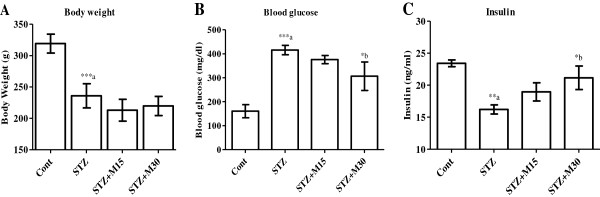
Methods: Streptozotocin (STZ)-induced diabetic model was used by considering 300 mg/dl fasting glucose level as diabetic. Morin (15 and 30 mg/kg) was treated for five consecutive weeks to diabetic rats. Serum levels of glucose, insulin, deoxypyridinoline cross links (DPD), osteocalcin (OC), bone specific alkaline phosphatase (BALP), telopeptides of collagen type I (CTX), interleukin 1 beta (IL-1β), interleukin 6 (IL-6), tumor necrosis factor alpha (TNF-α), thiobarbituric acid reactive substance (TBARS) and reduced glutathione (GSH) were estimated. Femoral bones were taken for micro CT scan to measure trabecular bone mineral density (BMD) and other morphometric parameters.
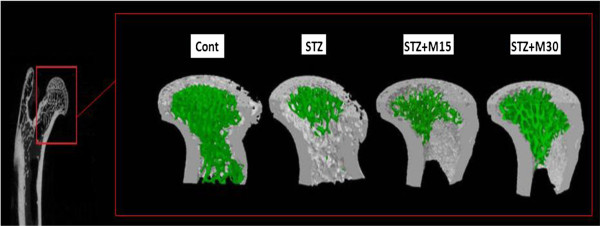
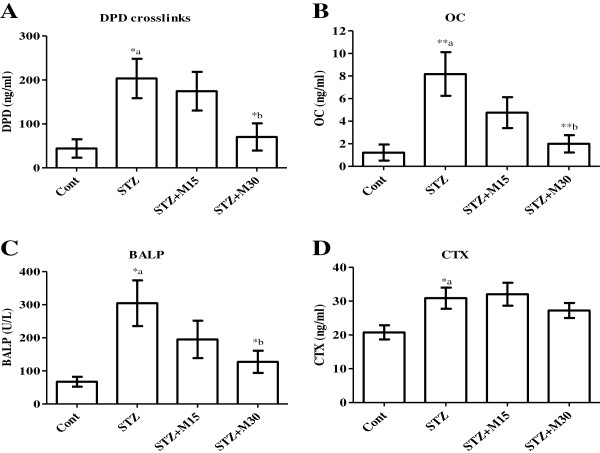
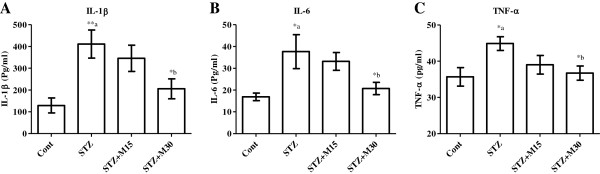
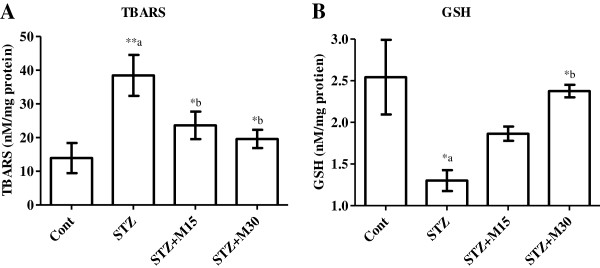
Results: Significant bone loss was documented as the level of bone turnover parameters including DPD, OC, BALP and CTX were increased in serum of diabetic rats. Morin treatment significantly attenuated these elevated levels. Bone micro-CT scan of diabetic rats showed a significant impairment in trabecular bone microarchitecture, density and other morphometric parameters. These impairments were significantly ameliorated by morin administration. Serum levels of glucose, TBARS, IL-1β, IL-6 and TNF-α were significantly elevated, while the level of insulin and GSH was decreased in diabetic rats. These serum changes in diabetic rats were bring back to normal values after 5 weeks morin treatment.
Conclusion: These findings revealed the protective effect of morin against diabetic induced osteopenia. We believed that this effect is through its both the anti-inflammatory and antioxidant properties.
Figures
References
-
- Hamada Y, Fujii H, Fukagawa M. Role of oxidative stress in diabetic bone disorder. Bone. 2009;45(Suppl 1):S35–S38. - PubMed
LinkOut - more resources
Full Text Sources
Other Literature Sources
