


Endocrine-Disrupting Chemicals (EDCs): In Vitro Mechanism of Estrogenic Activation and Differential Effects on ER Target Genes
- PMID: 23384675
- PMCID: PMC3620735
- DOI: 10.1289/ehp.1205951
Endocrine-Disrupting Chemicals (EDCs): In Vitro Mechanism of Estrogenic Activation and Differential Effects on ER Target Genes
Abstract
Background: Endocrine-disrupting chemicals (EDCs) influence the activity of estrogen receptors (ERs) and alter the function of the endocrine system. However, the diversity of EDC effects and mechanisms of action are poorly understood.
Objectives: We examined the agonistic activity of EDCs through ERα and ERβ. We also investigated the effects of EDCs on ER-mediated target genes.
Methods: HepG2 and HeLa cells were used to determine the agonistic activity of EDCs on ERα and ERβ via the luciferase reporter assay. Ishikawa cells stably expressing ERα were used to determine changes in endogenous ER target gene expression by EDCs.
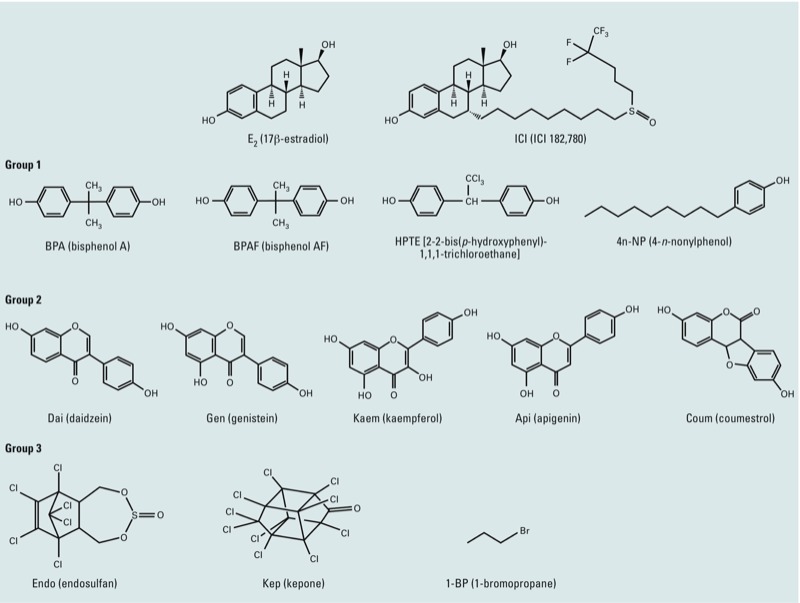
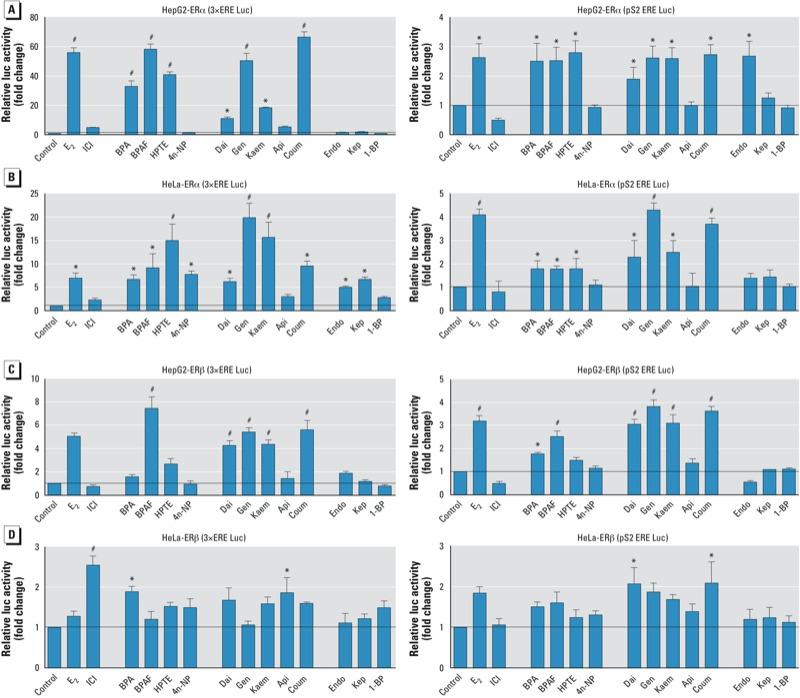
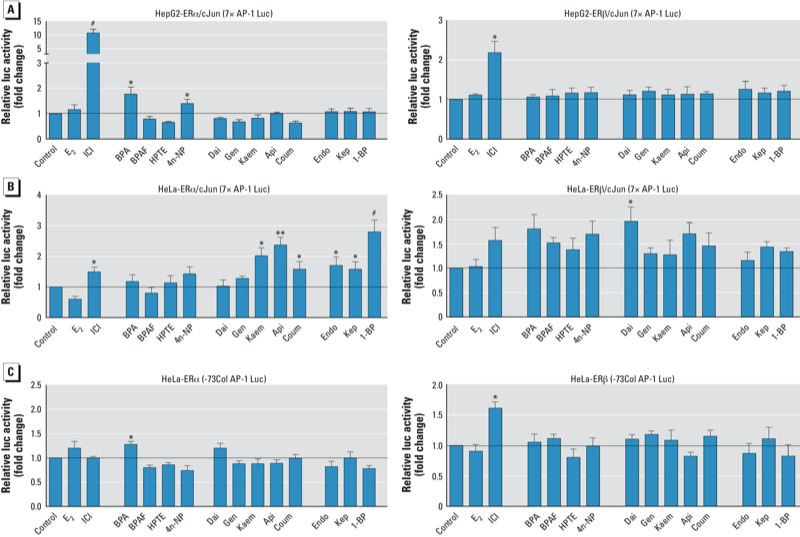
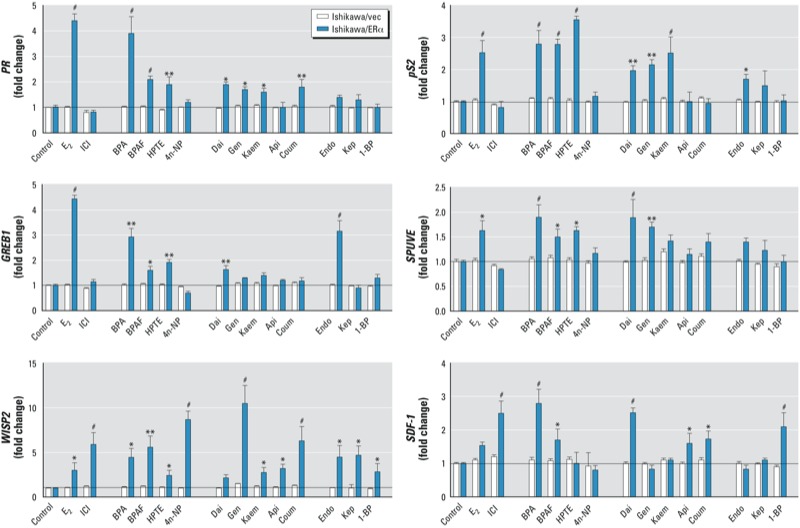
Results: Twelve EDCs were categorized into three groups on the basis of product class and similarity of chemical structure. As shown by luciferase reporter analysis, the EDCs act as ER agonists in a cell type- and promoter-specific manner. Bisphenol A, bisphenol AF, and 2-2-bis(p-hydroxyphenyl)-1,1,1-trichloroethane (group 1) strongly activated ERα estrogen responsive element (ERE)-mediated responses. Daidzein, genistein, kaempferol, and coumestrol (group 2) activated both ERα and ERβ ERE-mediated activities. Endosulfan and kepone (group 3) weakly activated ERα. Only a few EDCs significantly activated the "tethered" mechanism via ERα or ERβ. Results of real-time polymerase chain reaction indicated that bisphenol A and bisphenol AF consistently activated endogenous ER target genes, but the activities of other EDCs on changes of ER target gene expression were compound specific.
Conclusion: Although EDCs with similar chemical structures (in the same group) tended to have comparable ERα and ERβ ERE-mediated activities, similar chemical structure did not correlate with previously reported ligand binding affinities of the EDCs. Using ERα-stable cells, we observed that EDCs differentially induced activity of endogenous ER target genes.
Conflict of interest statement
The authors declare they have no actual or potential competing financial interests.
Figures
References
-
- Akahori Y, Nakai M, Yamasaki K, Takatsuki M, Shimohigashi Y, Ohtaki M. Relationship between the results of in vitro receptor binding assay to human estrogen receptor α and in vivo uterotrophic assay: comparative study with 65 selected chemicals. Toxicol In Vitro. 2008;22(1):225–231. - PubMed
-
- Björnström L, Sjöberg M. Mechanisms of estrogen receptor signaling: convergence of genomic and nongenomic actions on target genes. Mol Endocrinol. 2005;19(4):833–842. - PubMed
-
- Borgeest C, Greenfeld C, Tomic D, Flaws JA. The effects of endocrine disrupting chemicals on the ovary. Front Biosci. 2002. pp. d1941–d1948. - PubMed
Publication types
MeSH terms
Substances
Grants and funding
LinkOut - more resources
Full Text Sources
Other Literature Sources
Research Materials
Miscellaneous