The role of p21Waf1/CIP1 as a Cip/Kip type cell-cycle regulator in oral squamous cell carcinoma (Review)
- PMID: 23385498
- PMCID: PMC3613873
- DOI: 10.4317/medoral.18213
The role of p21Waf1/CIP1 as a Cip/Kip type cell-cycle regulator in oral squamous cell carcinoma (Review)
Abstract
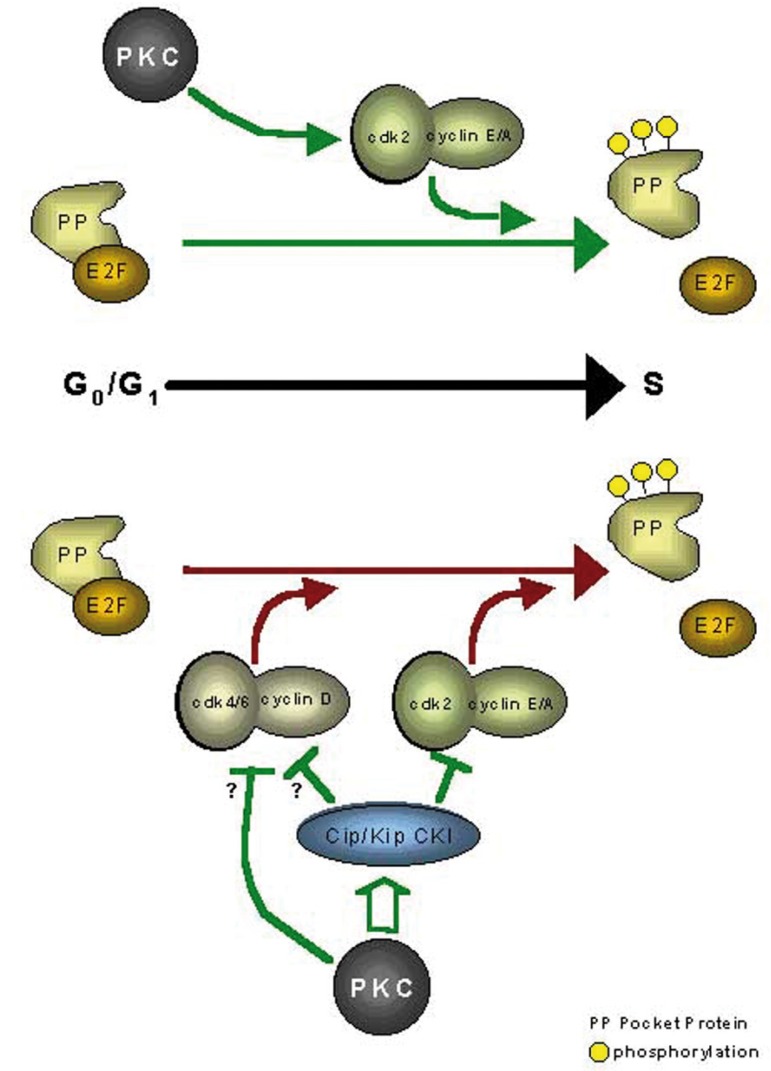
Oral Squamous Cell Carcinoma (OSCC) is biologically characterized by the accumulation of multiple genetic and molecular alterations that end up clinically characterized as a malignant neoplasm through a phenomenon known as multistep. The members of the Cip/Kip family, specifically p21Waf1/CIP1, are responsible for cell cycle control, blocking the transition from phase G1 to phase S. We made a search of articles of peer-reviewed Journals in PubMed/ Medline, crossing the keywords. The goal of this paper is to determine the relationship between p21Waf1/CIP1 expression and several clinical and pathological aspects of OSCC, their relationship with p53 and HPV, as well as genetic alterations in their expression pattern, their use as a prognosis market in the evolution of precancerous lesions and their roles in anticancer treatments. The results of p21WAF1/CIP1 expression in OSCC showed mixed results in terms of positivity/negativity throughout different studies. It seems that, although p21Waf1/CIP1 expression is controlled in a p53-dependent manner, coexpression of both in OSCC is not intrinsically related. Although the presence of HPV viral oncoproteins increases p21Waf1/CIP1 levels, the small number of studies, have forced us to disregard the hypothesis that HPV infected lesions that present better prognosis are due to a p21Waf1/CIP1-dependent control. The role of p21WAF1/CIP1 as cell-cycle regulator has been well described; however, its relationship to OSCC, the clinical and pathological variables of tumors, HPV and different treatments are not entirely clear. Thus, it would be very interesting to pursue further study of this protein, which may have a significant value for the diagnosis, prognosis and therapy of this type of tumors.
Figures
References
-
- Perez-Sayans M, Somoza-Martin JM, Barros-Angueira F, Reboiras-Lopez MD, Gandara Rey JM, Garcia-Garcia A. Genetic and molecular alterations associated with oral squamous cell cancer (Review) Oncol Rep. 2009;22:1277–1282. - PubMed
-
- Fillies T, Woltering M, Brandt B, Van Diest JP, Werkmeister R, Joos U. Cell cycle regulating proteins p21 and p27 in prognosis of oral squamous cell carcinomas. Oncol Rep. 2007;17:355–359. - PubMed
-
- Kapranos N, Stathopoulos GP, Manolopoulos L, Kokka E, Papadimitriou C, Bibas A. p53, p21 and p27 protein expression in head and neck cancer and their prognostic value. Anticancer Res. 2001;21:521–528. - PubMed
-
- Brennan PA, Palacios-Callender M, Umar T, Tant S, Langdon JD. Expression of type 2 nitric oxide synthase and p21 in oral squamous cell carcinoma. Int J Oral Maxillofac Surg. 2002;31:200–205. - PubMed
-
- Queiroz AB, Focchi G, Dobo C, Gomes TS, Ribeiro DA, Oshima CT. Expression of p27, p21(WAF/Cip1), and p16(INK4a) in normal oral epithelium, oral squamous papilloma, and oral squamous cell carcinoma. Anticancer Res. 2010;30:2799–2803. - PubMed
Publication types
MeSH terms
Substances
LinkOut - more resources
Full Text Sources
Other Literature Sources
Medical
Research Materials
Miscellaneous