


Targeting the HGF/c-MET pathway in hepatocellular carcinoma
- PMID: 23388504
- PMCID: PMC4583193
- DOI: 10.1158/1078-0432.CCR-12-2791
Targeting the HGF/c-MET pathway in hepatocellular carcinoma
Abstract
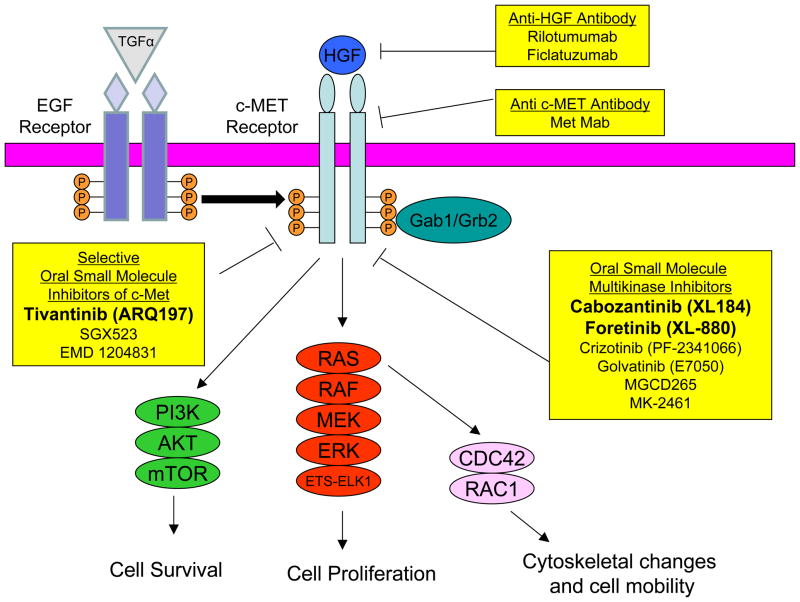
Hepatocellular carcinoma (HCC) is a significant cause of cancer-related morbidity and mortality worldwide. Despite improvements in local therapies, including surgical resection, liver transplantation, and transarterial embolization, the prognosis remains poor for the majority of patients who develop recurrence or present with advanced disease. Systemic therapy with the tyrosine kinase inhibitor sorafenib represents a milestone in advanced HCC but provides a limited survival benefit. Ongoing efforts to study hepatocarcinogenesis have identified an important role for c-MET signaling in the promotion of tumor growth, angiogenesis, and metastasis. In this review, we summarize the preclinical data from human tissue, cell lines, and animal models that implicate c-MET in the pathogenesis of HCC. We also evaluate potential biomarkers that may estimate prognosis or predict response to c-MET inhibitors for more rational clinical trial design. Finally, we discuss the latest clinical trials of c-MET inhibitors in advanced HCC.
©2013 AACR.
Conflict of interest statement
AXZ has served consultant/advisory roles for Sanofi-aventis, Bristol-Myers Squibb, Eisai, Daiichi Sankyo, and Exelixis.
Figures
References
-
- Ferlay J, Shin HR, Bray F, Forman D, Mathers C, Parkin DM. Estimates of worldwide burden of cancer in 2008: GLOBOCAN 2008. Int J Cancer. 2010;127:2893–917. - PubMed
-
- Perz JF, Armstrong GL, Farrington LA, Hutin YJ, Bell BP. The contributions of hepatitis B virus and hepatitis C virus infections to cirrhosis and primary liver cancer worldwide. J Hepatol. 2006;45:529–38. - PubMed
-
- Howlader N, Noone AM, Krapcho M, Neyman N, Aminou R, Altekruse SF, et al. SEER Cancer Statistics Review, 1975–2009 (Vintage 2009 Populations) National Cancer Institute; Bethesda, MD: Apr, 2012. http://seer.cancer.gov/csr/1975_2009_pops09/, based on November 2011 SEER data submission, posted to the SEER web site.
-
- Llovet JM, Ricci S, Mazzaferro V, Hilgard P, Gane E, Blanc JF, et al. Sorafenib in advanced hepatocellular carcinoma. N Engl J Med. 2008;359:378–90. - PubMed
-
- Cheng AL, Kang YK, Chen Z, Tsao CJ, Qin S, Kim JS, et al. Efficacy and safety of sorafenib in patients in the Asia-Pacific region with advanced hepatocellular carcinoma: a phase III randomised, double-blind, placebo-controlled trial. Lancet Oncol. 2009;10:25–34. - PubMed
Publication types
MeSH terms
Substances
Grants and funding
LinkOut - more resources
Full Text Sources
Other Literature Sources
Medical
Miscellaneous
