


Sequence and phylogenetic analysis of nucleocapsid genes of porcine epidemic diarrhea virus (PEDV) strains in China
- PMID: 23389550
- PMCID: PMC3668129
- DOI: 10.1007/s00705-012-1592-4
Sequence and phylogenetic analysis of nucleocapsid genes of porcine epidemic diarrhea virus (PEDV) strains in China
Abstract
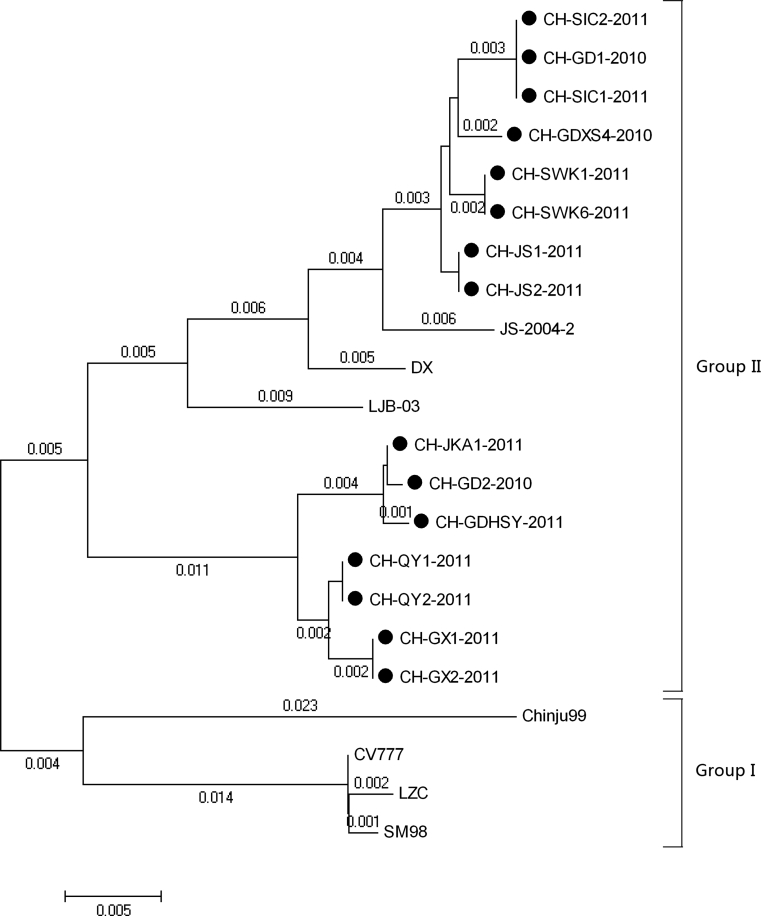
Porcine epidemic diarrhea virus (PEDV) causes acute diarrhea and dehydration with high mortality rates in swine. It has become increasingly problematic in China. Since the nucleocapsid (N) protein is highly conserved, it is a candidate protein for early diagnosis and vaccine development. In this study, the N genes of 15 PEDV strains were amplified by RT-PCR and cloned into the pMT-19T vector, sequenced, and compared to each other as well as to PEDV reference strains. The nucleotide sequences of the N gene of the Chinese PEDV strains consist of 1326 nucleotides and encode a 441-aa-long peptide. The nucleotide sequences of the fifteen PEDV strains in our study were 96.1-100 % identical to each other, and the deduced amino acid sequences were 94.8-100 % identical. Sequence comparison with other PEDV strains selected from GenBank revealed that their nucleotide sequences were 94.2-99.7 % identical to those of the Chinese PEDV strains, and their deduced amino acid sequences were 94.1-99.5 % identical. In addition, the fifteen strains showed a high degree of nucleotide sequence identity to the early domestic strains (98.4-99.7 %) except the LZC strain, but less sequence identity to the vaccine strain (CV777) used in China (94.7-97.7 %). Phylogenetic analysis showed that the Chinese PEDV strains are composed of a separate cluster including three early domestic strains (JS-2004-02, LJB/03 and DX) but differ genetically from the vaccine strain (CV777) and the early Korean strains (Chinju99 and SM98).
Figures

References
-
- Puranaveja S, Poolperm P, Lertwatcharasarakul P, Kesdaengsakonwut S, Boonsoongnern A, Urairong K, Kitikoon P, Choojai P, Kedkovid R, Teankum K, Thanawongnuwech R. Chinese-like strain of porcine epidemic diarrhea virus, Thailand. Emerg Infect Dis. 2009;15:1112–1115. doi: 10.3201/eid1507.081256. - DOI - PMC - PubMed
Publication types
MeSH terms
Substances
LinkOut - more resources
Full Text Sources
Other Literature Sources
