


The pharmacological bases of the antiangiogenic activity of paclitaxel
- PMID: 23389639
- PMCID: PMC3682088
- DOI: 10.1007/s10456-013-9334-0
The pharmacological bases of the antiangiogenic activity of paclitaxel
Abstract
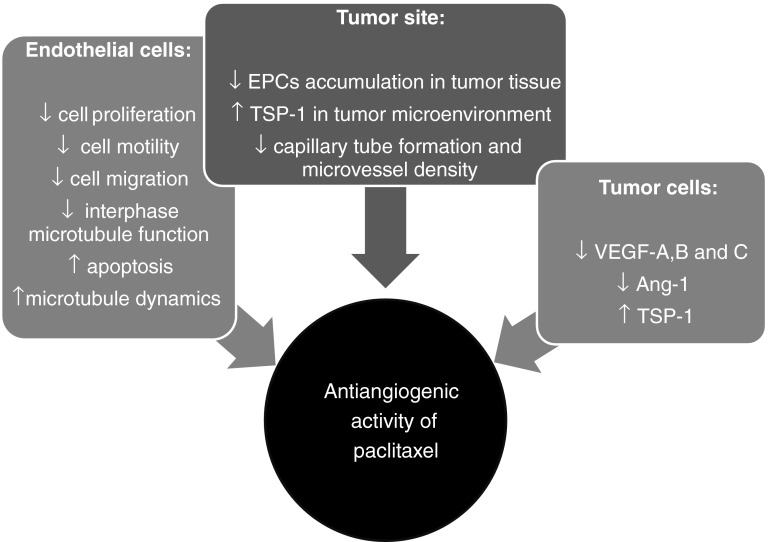
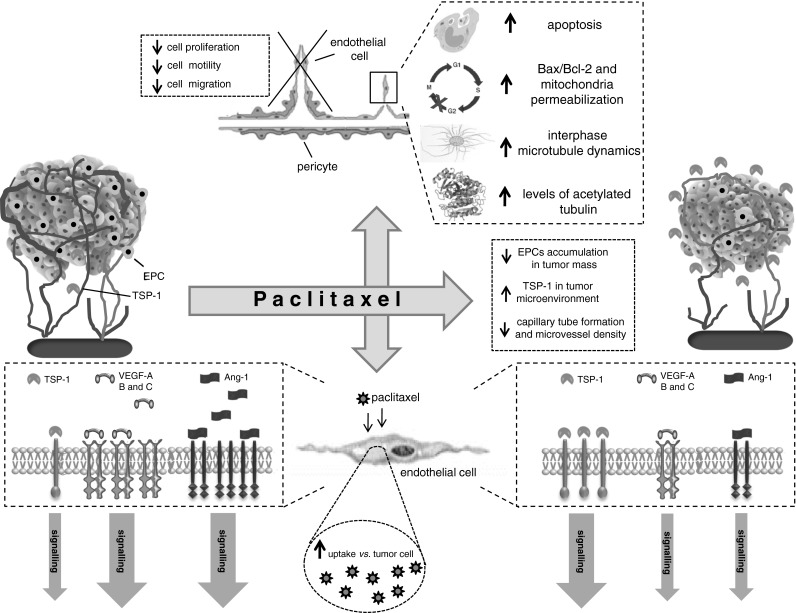
In the mid 1990s, researchers began to investigate the antiangiogenic activity of paclitaxel as a possible additional mechanism contributing to its antineoplastic activity in vivo. In the last decade, a number of studies showed that paclitaxel has antiangiogenic activity that could be ascribed to the inhibition of either tubule formation or cell migration, and to an antiproliferative effect towards activated endothelial cells. Furthermore, paclitaxel was shown to downregulate VEGF and Ang-1 expression in tumor cells, and to increase the secretion of TSP-1 in the tumor microenvironment. Moreover, the new pharmaceutical formulations of paclitaxel (such as liposome-encapsulated paclitaxel, ABI-007, and paclitaxel entrapped in emulsifying wax nanoparticles) enhanced the in vivo antiangiogenic activity of the drug. Thus, the preclinical data of paclitaxel may be exploited to implement a novel and rational therapeutic strategy to control tumor progression in patients.
Figures
References
Publication types
MeSH terms
Substances
LinkOut - more resources
Full Text Sources
Other Literature Sources
Medical
Miscellaneous
