


The kinase domains of obscurin interact with intercellular adhesion proteins
- PMID: 23392350
- PMCID: PMC3633816
- DOI: 10.1096/fj.12-221317
The kinase domains of obscurin interact with intercellular adhesion proteins
Erratum in
-
Correction to "The kinase domains of obscurin interact with intercellular adhesion proteins".FASEB J. 2024 Dec 15;38(23):e70237. doi: 10.1096/fj.202402994. FASEB J. 2024. PMID: 39651913
Abstract
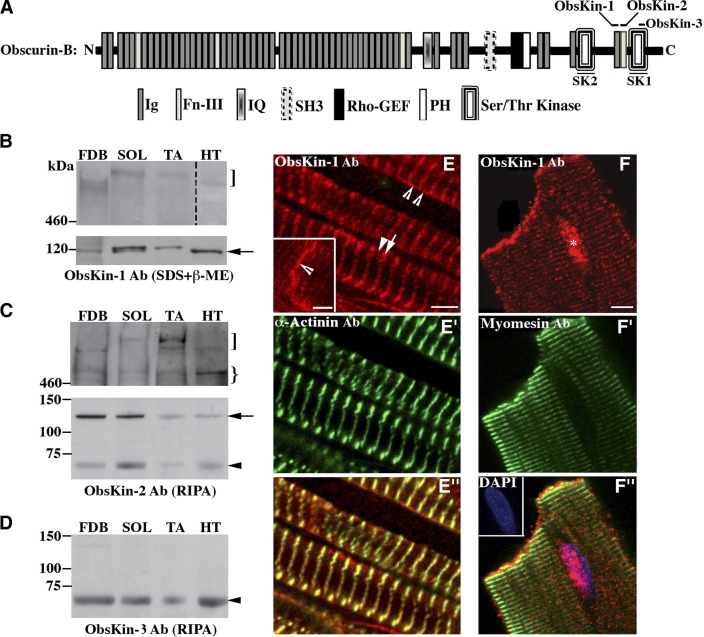
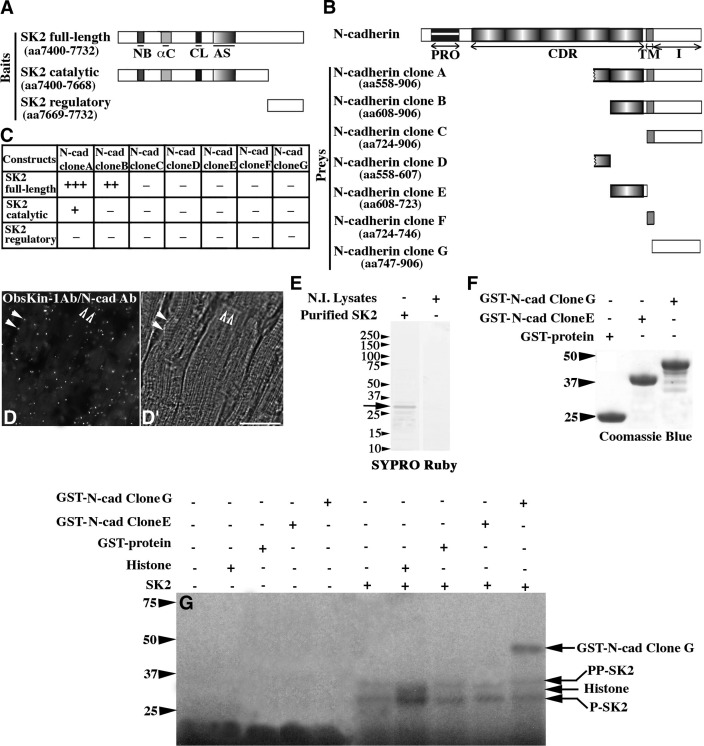
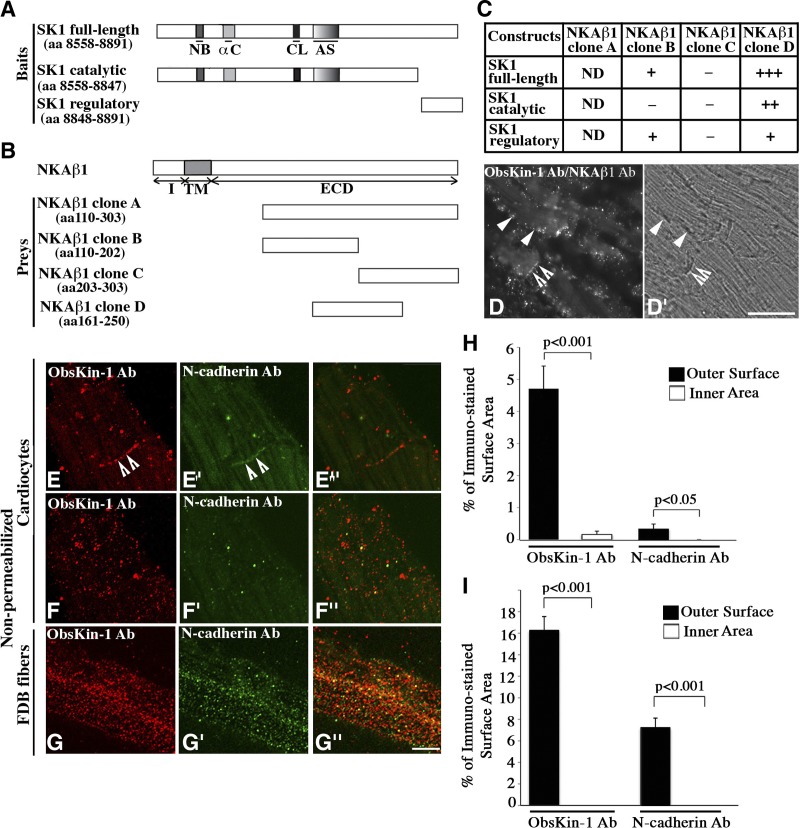
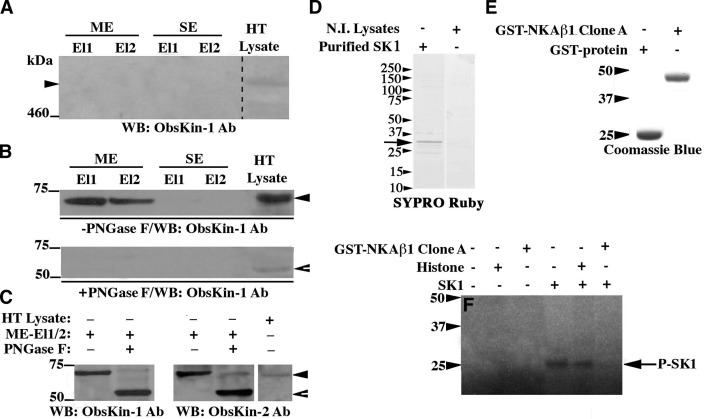
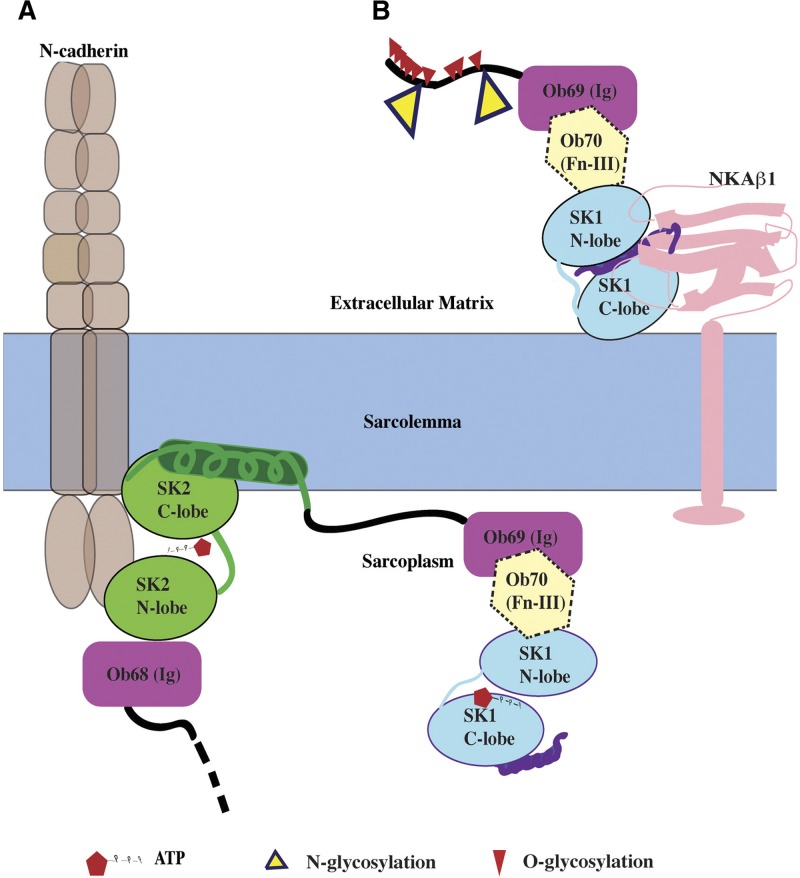
Obscurins comprise a family of giant (~870- to 600-kDa) and small (~250- to 55-kDa) proteins that play important roles in myofibrillogenesis, cytoskeletal organization, and cell adhesion and are implicated in hypertrophic cardiomyopathy and tumorigenesis. Giant obscurins are composed of tandem structural and signaling motifs, including 2 serine/threonine kinase domains, SK1 and SK2, present at the COOH terminus of giant obscurin-B. Using biochemical and cellular approaches, we show for the first time that both SK1 and SK2 possess enzymatic activities and undergo autophosphorylation. SK2 can phosphorylate the cytoplasmic domain of N-cadherin, a major component of adherens junctions, and SK1 can interact with the extracellular domain of the β1-subunit of the Na(+)/K(+)-ATPase, which also resides in adherens junctions. Immunostaining of nonpermeabilized myofibers and cardiocytes revealed that some obscurin kinase isoforms localize extracellularly. Quantification of the exofacial expression of obscurin kinase proteins indicated that they occupy ~16 and ~5% of the sarcolemmal surface in myofibers and cardiocytes, respectively. Treatment of heart lysates with peptide-N-glycosidase F revealed that while giant obscurin-B localizes intracellularly, possessing dual kinase activity, a small obscurin kinase isoform that contains SK1 localizes extracellularly, where it undergoes N-glycosylation. Collectively, our studies demonstrate that the obscurin kinase domains are enzymatically active and may be involved in the regulation of cell adhesion.
Figures
References
-
- Fukuzawa A., Idowu S., Gautel M. (2005) Complete human gene structure of obscurin: implications for isoform generation by differential splicing. J. Muscle Res. Cell Motil. 26, 427–434 - PubMed
-
- Russell M. W., Raeker M. O., Korytkowski K. A., Sonneman K. J. (2002) Identification, tissue expression and chromosomal localization of human obscurin-MLCK, a member of the titin and Dbl families of myosin light chain kinases. Gene 282, 237–246 - PubMed
-
- Sutter S. B., Raeker M. O., Borisov A. B., Russell M. W. (2004) Orthologous relationship of obscurin and Unc-89: phylogeny of a novel family of tandem myosin light chain kinases. Dev. Genes Evol. 214, 352–359 - PubMed
Publication types
MeSH terms
Substances
Grants and funding
LinkOut - more resources
Full Text Sources
Other Literature Sources
Molecular Biology Databases
Research Materials
