


'What's in the NIDDK CDR?'--public query tools for the NIDDK central data repository
- PMID: 23396299
- PMCID: PMC3625049
- DOI: 10.1093/database/bas058
'What's in the NIDDK CDR?'--public query tools for the NIDDK central data repository
Abstract
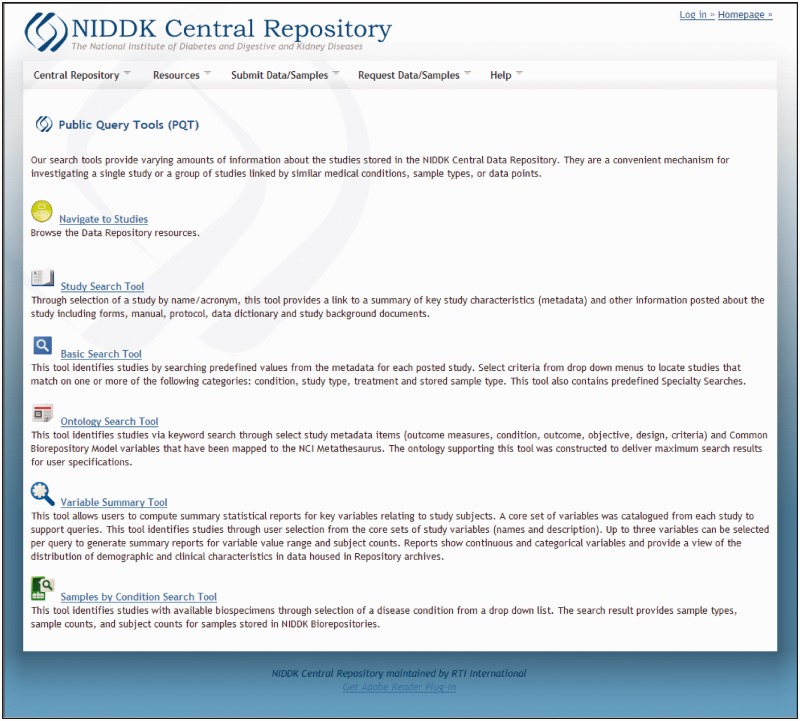
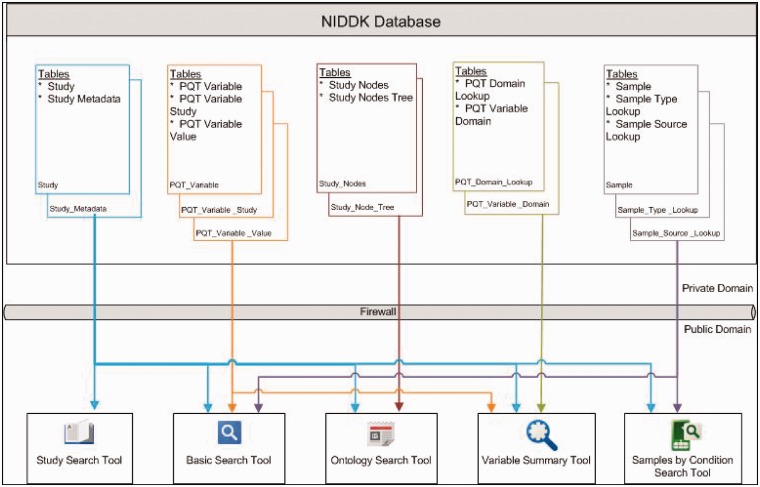
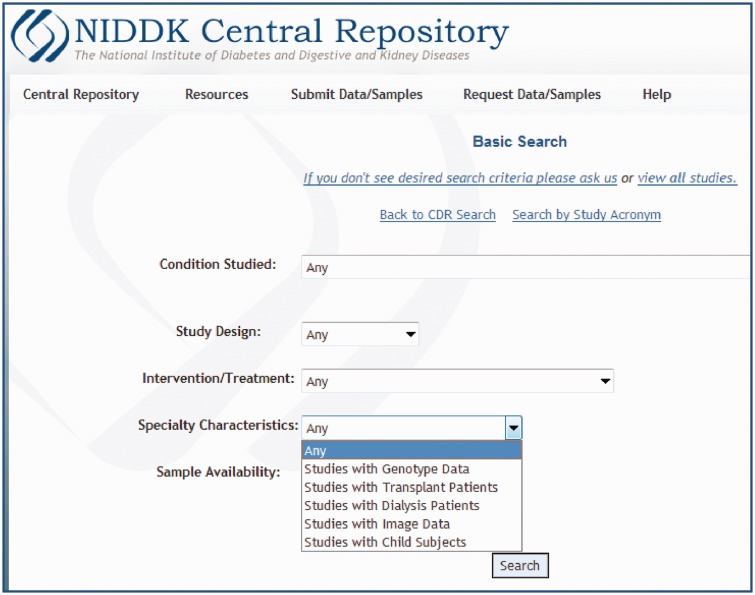
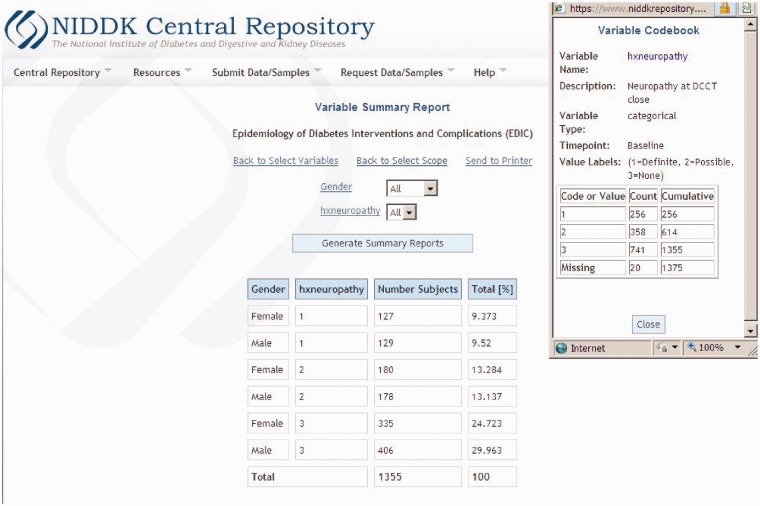
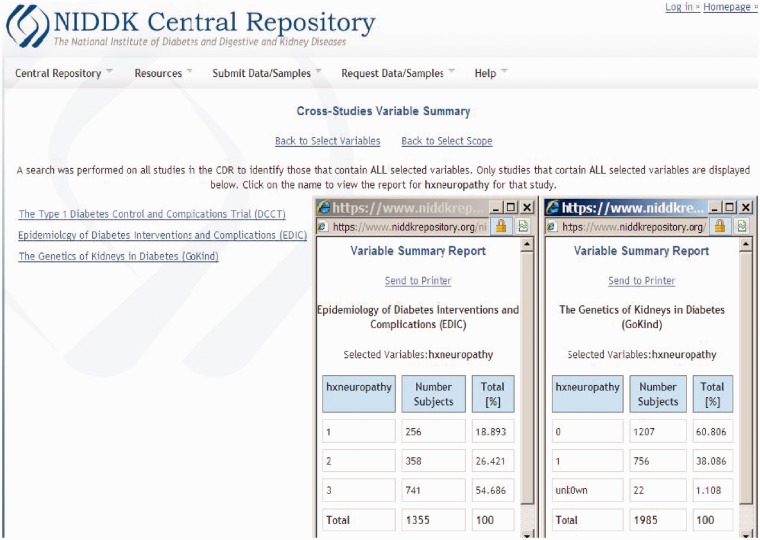
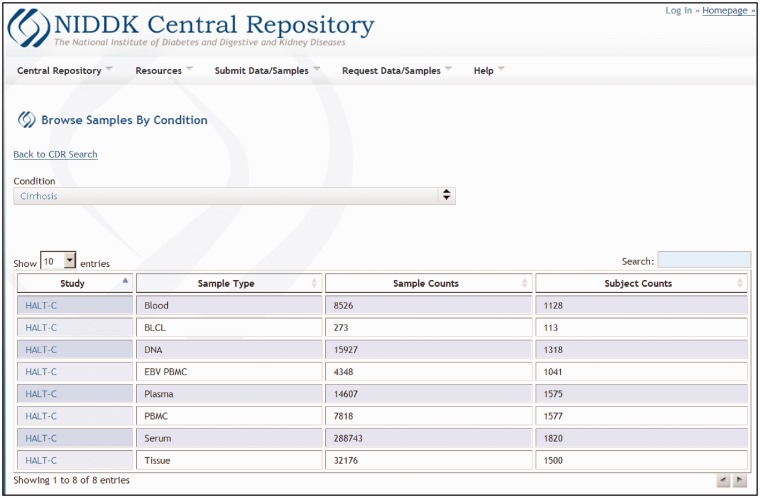
The National Institute of Diabetes and Digestive Disease (NIDDK) Central Data Repository (CDR) is a web-enabled resource available to researchers and the general public. The CDR warehouses clinical data and study documentation from NIDDK funded research, including such landmark studies as The Diabetes Control and Complications Trial (DCCT, 1983-93) and the Epidemiology of Diabetes Interventions and Complications (EDIC, 1994-present) follow-up study which has been ongoing for more than 20 years. The CDR also houses data from over 7 million biospecimens representing 2 million subjects. To help users explore the vast amount of data stored in the NIDDK CDR, we developed a suite of search mechanisms called the public query tools (PQTs). Five individual tools are available to search data from multiple perspectives: study search, basic search, ontology search, variable summary and sample by condition. PQT enables users to search for information across studies. Users can search for data such as number of subjects, types of biospecimens and disease outcome variables without prior knowledge of the individual studies. This suite of tools will increase the use and maximize the value of the NIDDK data and biospecimen repositories as important resources for the research community. Database URL: https://www.niddkrepository.org/niddk/home.do.
Figures
References
-
- BioLINCC in ISBER News. Shea K, Wagner E. BioLINCC: facilitating web access to NHLBI data and biospecimen repositories. 2010;10:5–7. http://www.isber.org/newsletters/documents/July2010.pdf, accessed January 14, 2013.
-
- Massett HA, Atkinson NL, Weber D, et al. Assessing the need for a standardized cancer HUman Biobank (caHUB): findings from a national survey with cancer researchers. J. Natl Cancer Inst. Monogr. 2011 2011, 8–15. - PubMed
Publication types
MeSH terms
Grants and funding
LinkOut - more resources
Full Text Sources
Other Literature Sources
