


Temporal effects of ethanol consumption on energy homeostasis, hepatic steatosis, and insulin sensitivity in mice
- PMID: 23398239
- PMCID: PMC3657580
- DOI: 10.1111/acer.12075
Temporal effects of ethanol consumption on energy homeostasis, hepatic steatosis, and insulin sensitivity in mice
Abstract
Background: Alcoholic liver disease (ALD) progresses from steatosis to inflammation, fibrosis, and cirrhosis. Although ALD has been associated with insulin resistance, it is unclear whether insulin resistance coincides with the development of steatosis.
Methods: We studied the temporal relationship of steatosis and glucose homeostasis in mice fed a Lieber-DeCarli liquid control or ethanol (EtOH) diet for 2, 4, or 8 weeks. We studied the effects of alcohol consumption on energy balance, body composition, and hepatic lipids. Glucose tolerance test was performed, and insulin sensitivity was evaluated with hyperinsulinemic-euglycemic clamp.
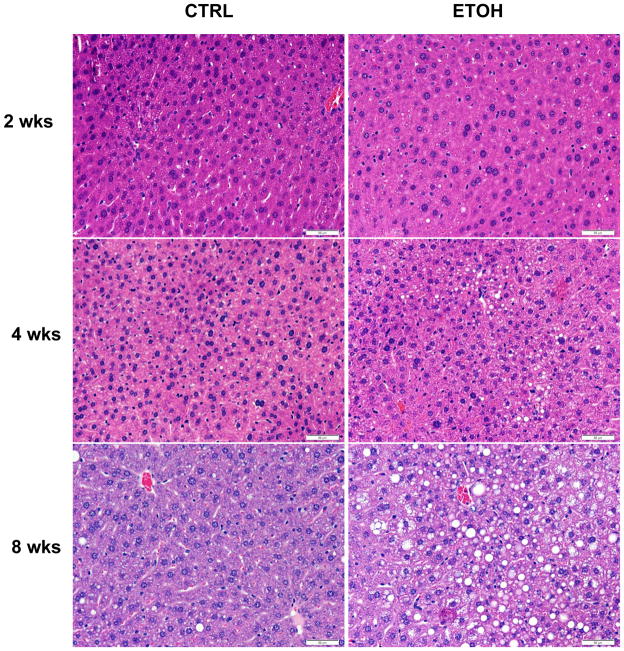
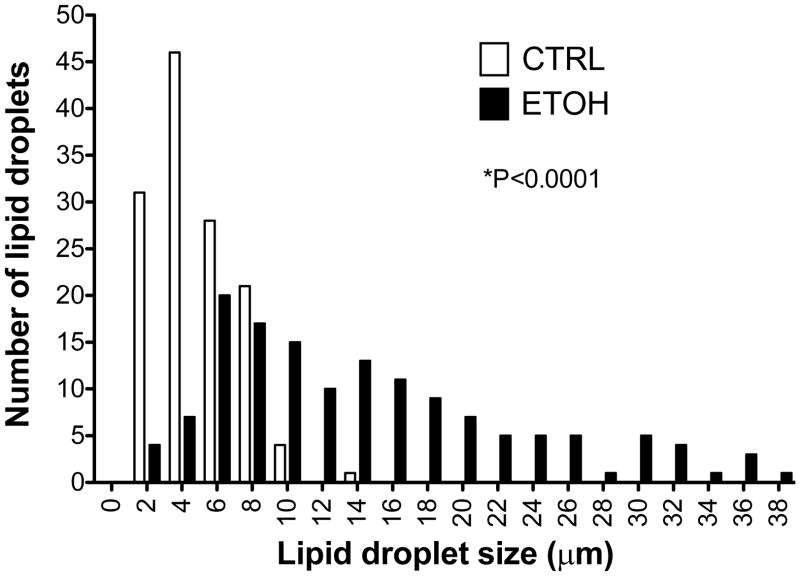
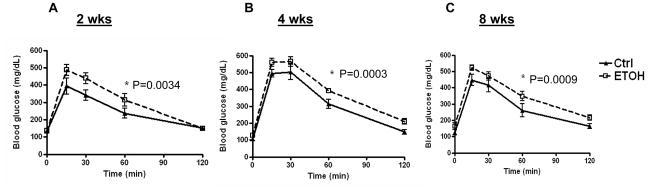
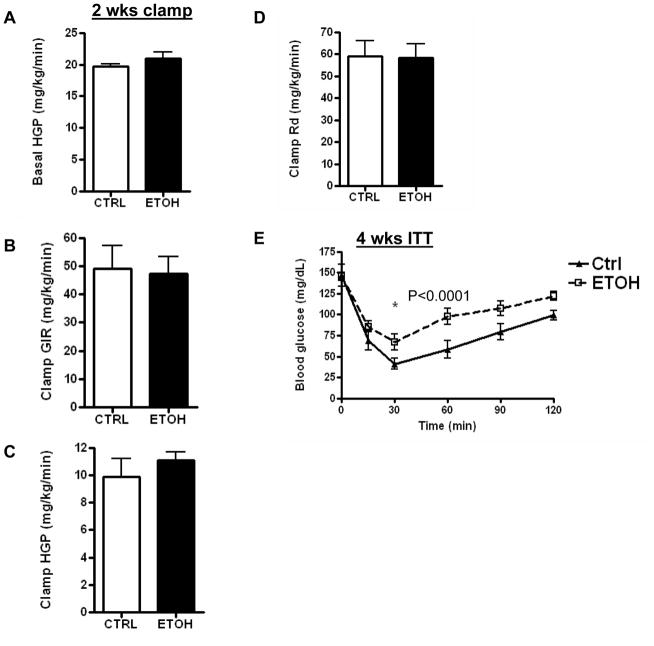
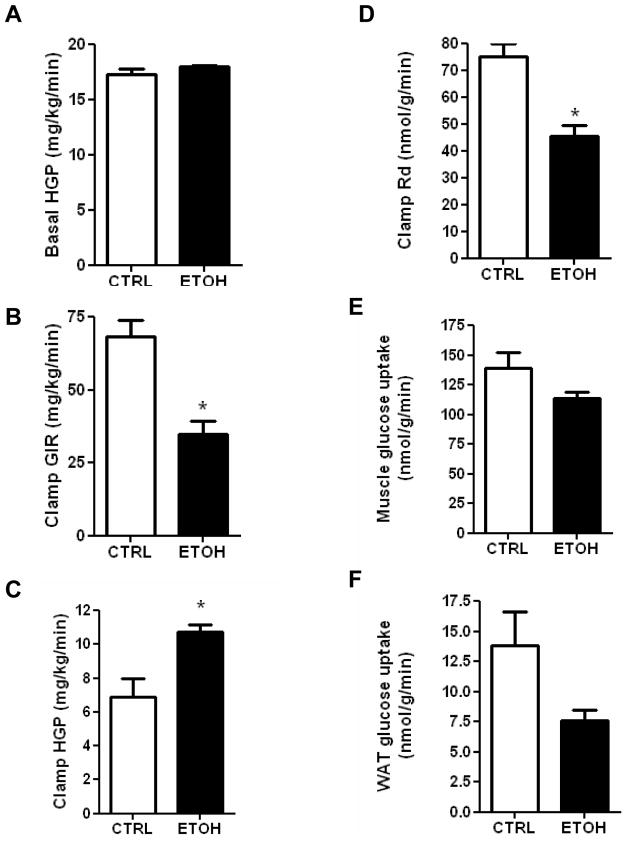
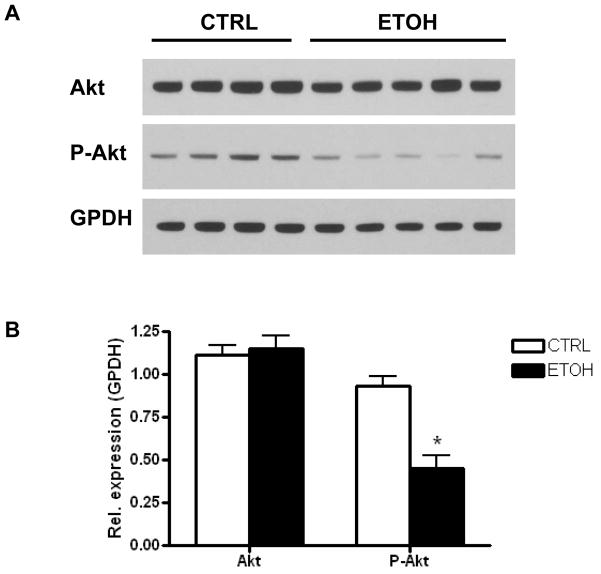
Results: EtOH-fed mice developed hepatic steatosis over time as compared with control-fed mice despite similar energy intake and expenditure, and gain in body weight and fat. EtOH-fed mice developed glucose intolerance as early as 2 weeks, while insulin resistance developed at 4 weeks. A hyperinsulinemic clamp study at 8 weeks revealed both hepatic and peripheral insulin resistance in EtOH-fed mice. Insulin resistance was associated with hepatic steatosis, increased ceramide levels, and Perilipin 2 expression.
Conclusions: Chronic EtOH consumption leads to the development of hepatic steatosis, impaired glucose tolerance, and insulin resistance. These changes are independent of energy intake or expenditure, weight, whole body fat content, and inflammation. A better understanding of the processes linking EtOH-induced steatosis and abnormal glucose homeostasis may lead to novel therapies targeting the progression of ALD.
Keywords: Alcoholic Steatosis; Ceramides; Insulin Resistance; Metabolic Pheno-typing; Perilipin 2.
Copyright © 2013 by the Research Society on Alcoholism.
Conflict of interest statement
There are no conflicts of interest for any of the authors.
Figures
References
Publication types
MeSH terms
Substances
Grants and funding
- P20RR017677/RR/NCRR NIH HHS/United States
- K08 AA021424/AA/NIAAA NIH HHS/United States
- P30 DK050306/DK/NIDDK NIH HHS/United States
- P30 CA138313/CA/NCI NIH HHS/United States
- P30-DK-50306/DK/NIDDK NIH HHS/United States
- C06 RR018823/RR/NCRR NIH HHS/United States
- P01-DK-049210/DK/NIDDK NIH HHS/United States
- T32-DK-007066/DK/NIDDK NIH HHS/United States
- P30-DK-19525/DK/NIDDK NIH HHS/United States
- P01 DK049210/DK/NIDDK NIH HHS/United States
- T32 DK007066/DK/NIDDK NIH HHS/United States
- P30 DK019525/DK/NIDDK NIH HHS/United States
- P20 RR017677/RR/NCRR NIH HHS/United States
LinkOut - more resources
Full Text Sources
Other Literature Sources
Medical
Research Materials
