Differences in response initiation and behavioral flexibility between adolescent and adult rats
- PMID: 23398439
- PMCID: PMC4075123
- DOI: 10.1037/a0031328
Differences in response initiation and behavioral flexibility between adolescent and adult rats
Abstract
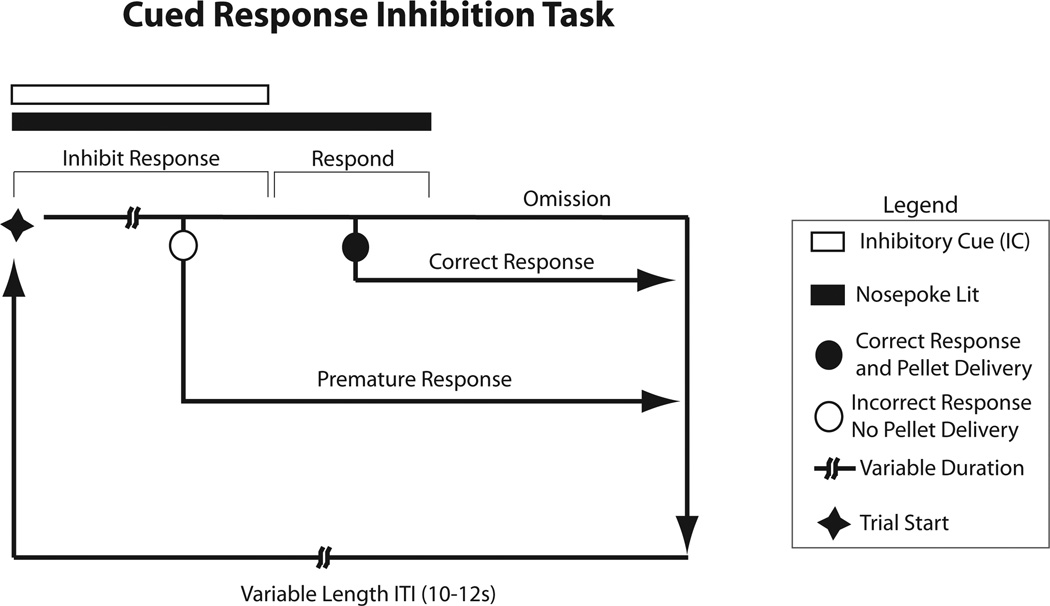
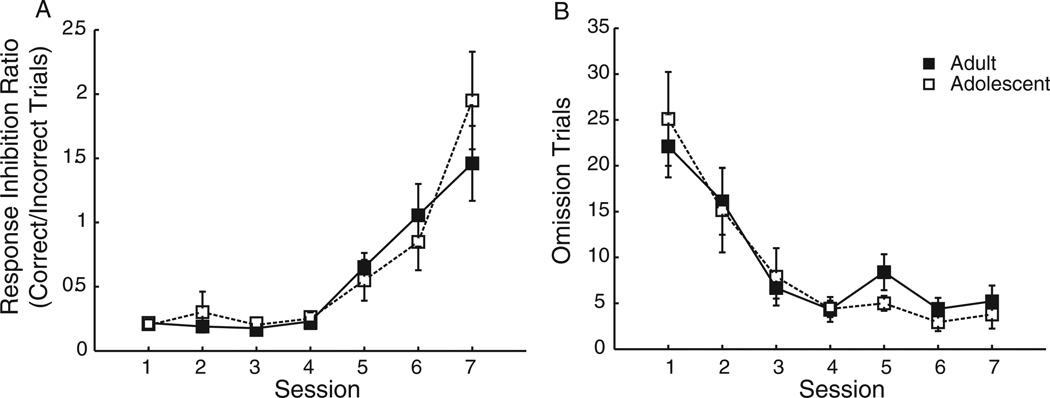
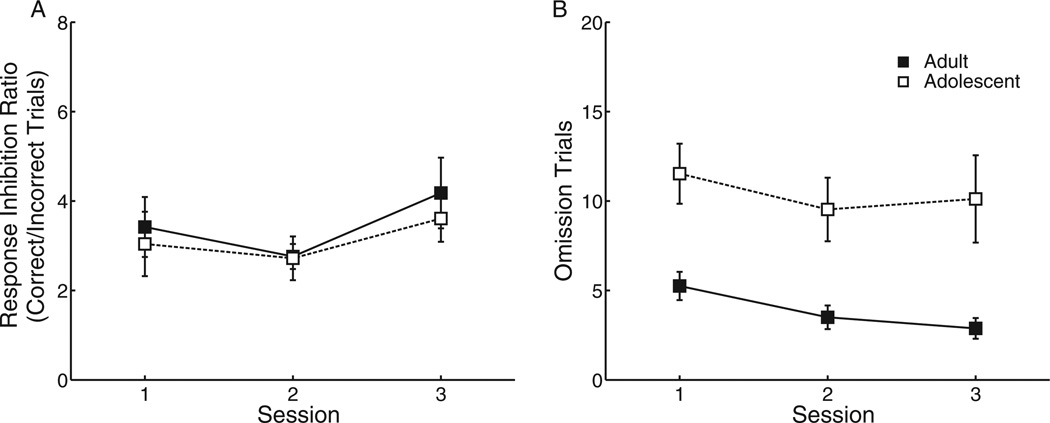
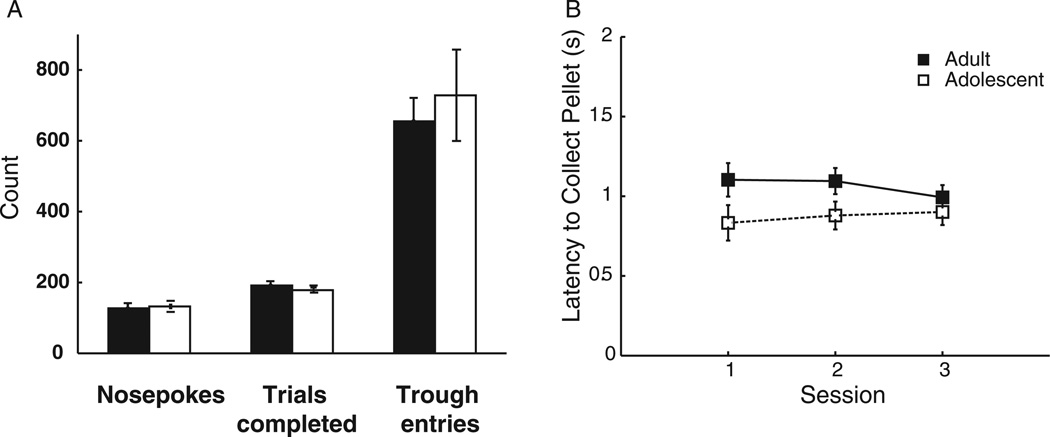
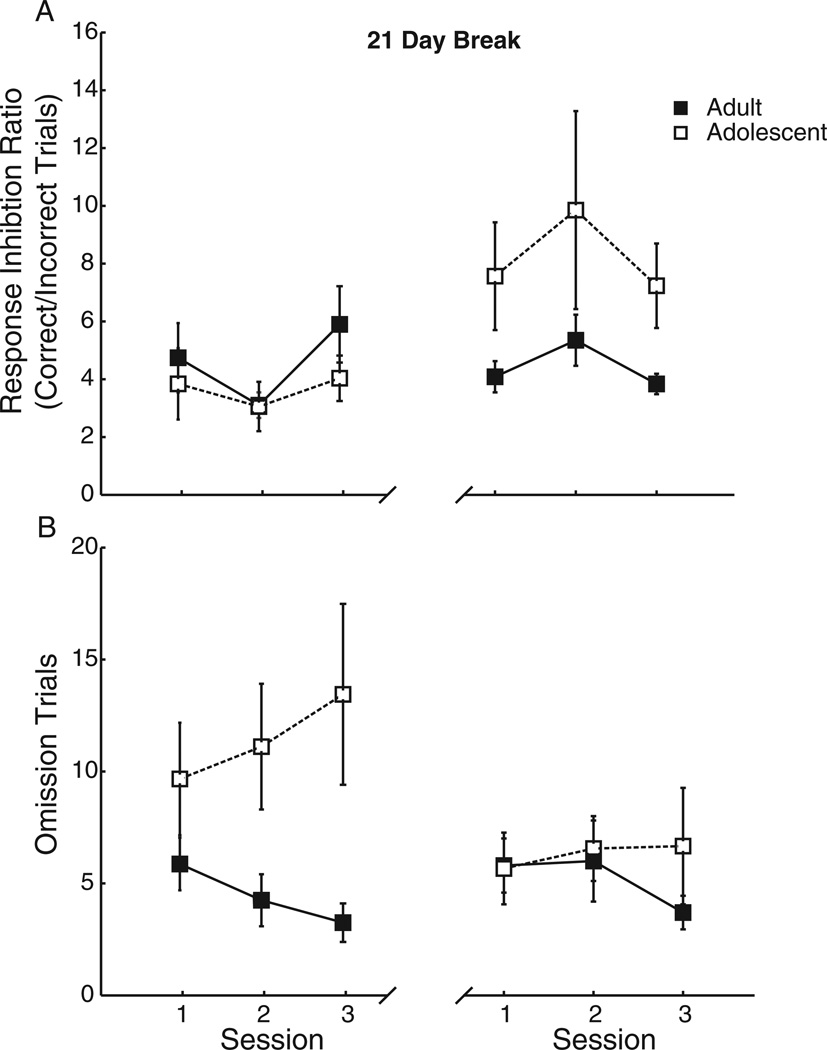
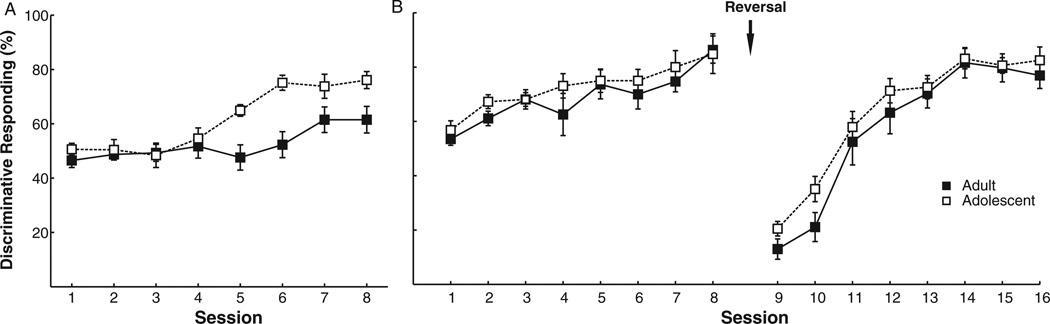
Adolescence is a period of increased vulnerability to psychiatric illnesses such as addiction, mood disorders, and schizophrenia. Rats provide a useful animal model for investigating the differences in behavior and biology between adults and adolescents that stem from ongoing brain development. We developed the Cued Response Inhibition Task, or CRIT, to assess response inhibition and initiation processes by measuring the ability of rodents to withhold a response during an inhibitory cue and then to respond promptly after cue termination. We found no difference between adult and adolescent rats in the ability to appropriately inhibit a response during cue presentation. Adolescents, however, were unable to initiate a response as quickly as adults after cue termination. Further, we observed that this difference in responding was abolished after adolescent rats aged to adulthood with no additional training. In a separate experiment, adult and adolescent rats were trained in CRIT and then trained in another protocol in which the response inhibitory cue from CRIT was used as a Pavlovian cue predictive of reward. Adolescents demonstrated more reward-seeking behavior during the previously inhibitory Pavlovian cue than adults, indicative of greater behavioral flexibility. Taken together, these data suggest that, compared with adults, adolescent rats (a) are less able to initiate a response after response inhibition, (b) equally inhibit behavioral responses, and (c) are more adept at flexibly switching behavioral patterns. Furthermore, this study characterizes a task that is well suited for future pharmacological and electrophysiological investigations for assessing neuronal processing differences between adolescents and adults.
(PsycINFO Database Record (c) 2013 APA, all rights reserved).
Figures
References
-
- Adriani W, Laviola G. Elevated levels of impulsivity and reduced place conditioning with d-amphetamine: Two behavioral features of adolescence in mice. Behavioral Neuroscience. 2003;117:695–703. - PubMed
-
- Andrzejewski ME, Schochet TL, Feit EC, Harris R, Mc Kee BL, Kelley AE. A comparison of adult and adolescent rat behavior in operant learning, extinction, and behavioral inhibition paradigms. Behavioral Neuroscience. 2011;125:93–105. - PubMed
-
- Burton CL, Fletcher PJ. Age and sex differences in impulsive action in rats: The role of dopamine and glutamate. Behavioural Brain Research. 2012;230:21–33. - PubMed
Publication types
MeSH terms
Grants and funding
LinkOut - more resources
Full Text Sources
Other Literature Sources