


An investigation of secondary anti-D immunisation among phenotypically RhD-negative individuals in the Chinese population
- PMID: 23399369
- PMCID: PMC4039707
- DOI: 10.2450/2013.0184-12
An investigation of secondary anti-D immunisation among phenotypically RhD-negative individuals in the Chinese population
Abstract
Background: Despite the introduction of anti-D prophylaxis into clinical practice, RhD alloimmunisation remains a problem, particularly in the context of transfusions and pregnancy-induced alloimmunisation. The incidence of RhD alloimmunisation among phenotypically RhD-negative individuals is unknown in most countries. We investigated RhD alloimmmunisation in RhD-negative pregnant women and transfusion recipients in south-east China in order to optimise the prevention of this phenomenon.
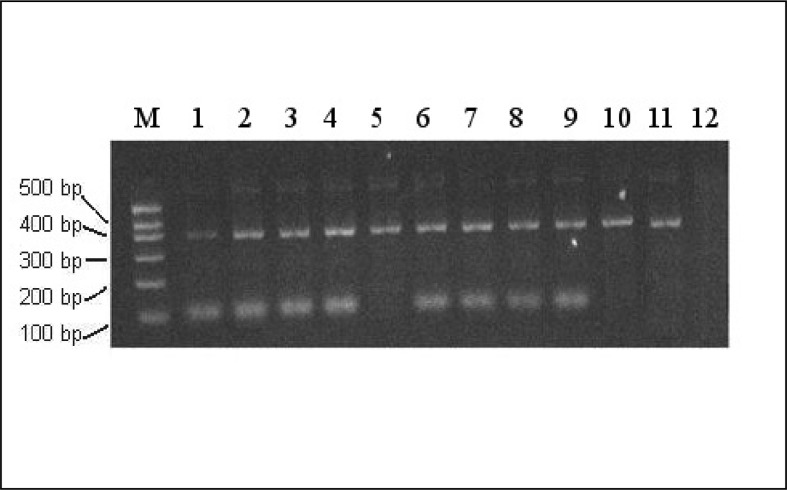
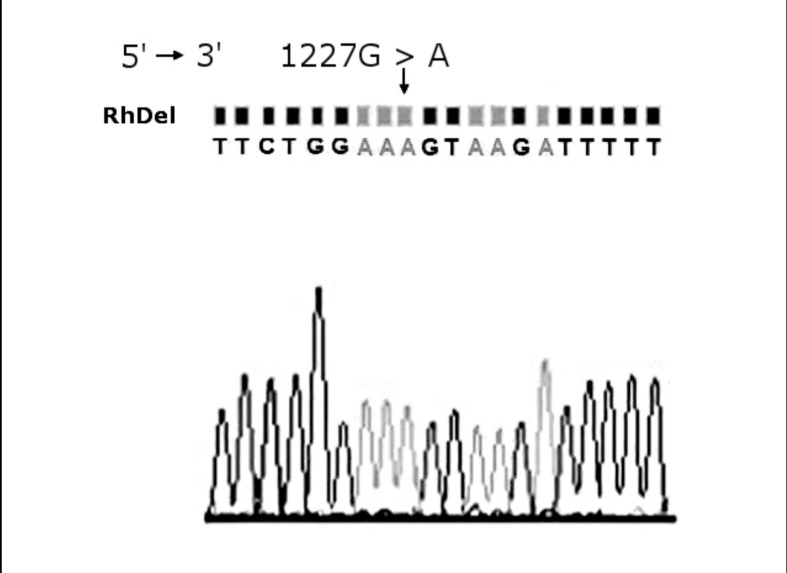
Methods: We analysed the RhD alloimmunisation status of RhD-negative pregnant women and transfusion recipients in south-east China. The RhD blood types of the study population were identified by standard serological methods. The D antigen was further tested with the indirect antiglobulin test to exclude or confirm weak D or partial D types. RhC, c, E and e antigens were typed in all subjects. If anti-D antibody screening was positive, the specificity and titre of the antibody were determined. The Del phenotype was investigated by the polymerase chain reaction sequence-specific primer method.
Results: An anti-D antibody was found in 61 of 416 RhD-negative pregnant women (14.66%), and in 11 of 227 RhD-negative transfusion recipients (4.85%). None of the 72 RhD-negative pregnant women or transfusion recipients with anti-D had the Del phenotype. Anti-D antibodies were not detected among Del phenotype individuals and Del phenotypes were not found in anti-D antibody producing individuals.
Discussion: Our study suggests that the risk of alloimmunity-induced neonatal haemolysis increases in true RhD-negative multipara. Perinatal protection would be necessary in these patients, while antenatal anti-D testing and Rh immune globulin prophylaxis would be unnecessary for RhDel pregnant women. Pregnant women and transfusion recipients with the Del type seldom produce anti-D antibody. RhD-negative recipients are not at risk of alloimmunisation after transfusion with Del red blood cells.
Figures
References
-
- Westhoff CM. The Rh blood group system in review: a new face for the next decade. Transfusion. 2004;44:1663–73. - PubMed
-
- Wagner FF, Flegel WA. RHD gene deletion occurred in the Rhesus box. Blood. 2000;95:3662–8. - PubMed
-
- Singleton BK, Green CA, Avent ND, et al. The presence of an RHD pseudogene containing a 37 bp duplication and a nonsense mutation in Africans with the Rh D-negative blood group phenotype. Blood. 2000;95:12–8. - PubMed
-
- Peng CT, Shih MC, Liu TC, et al. Molecular basis for the RhD negative phenotype in Chinese. Int J Mol Med. 2003;11:515–21. - PubMed
Publication types
MeSH terms
Substances
LinkOut - more resources
Full Text Sources
Medical
