. 2014 Mar;19(3):342-50.
doi: 10.1038/mp.2013.12. Epub 2013 Feb 12.

An important role for cholecystokinin, a CLOCK target gene, in the development and treatment of manic-like behaviors

Affiliations

An important role for cholecystokinin, a CLOCK target gene, in the development and treatment of manic-like behaviors

R N Arey et al. Mol Psychiatry. 2014 Mar.

Erratum in

  • Mol Psychiatry. 2014 Mar;19(3):400

Abstract

Mice with a mutation in the Clock gene (ClockΔ19) have been identified as a model of mania; however, the mechanisms that underlie this phenotype, and the changes in the brain that are necessary for lithium's effectiveness on these mice remain unclear. Here, we find that cholecystokinin (Cck) is a direct transcriptional target of CLOCK and levels of Cck are reduced in the ventral tegmental area (VTA) of ClockΔ19 mice. Selective knockdown of Cck expression via RNA interference in the VTA of wild-type mice produces a manic-like phenotype. Moreover, chronic treatment with lithium restores Cck expression to near wild-type and this increase is necessary for the therapeutic actions of lithium. The decrease in Cck expression in the ClockΔ19 mice appears to be due to a lack of interaction with the histone methyltransferase, MLL1, resulting in decreased histone H3K4me3 and gene transcription, an effect reversed by lithium. Human postmortem tissue from bipolar subjects reveals a similar increase in Cck expression in the VTA with mood stabilizer treatment. These studies identify a key role for Cck in the development and treatment of mania, and describe some of the molecular mechanisms by which lithium may act as an effective antimanic agent.


Conflict of interest statement

The authors declare no conflict of interest.

Figures
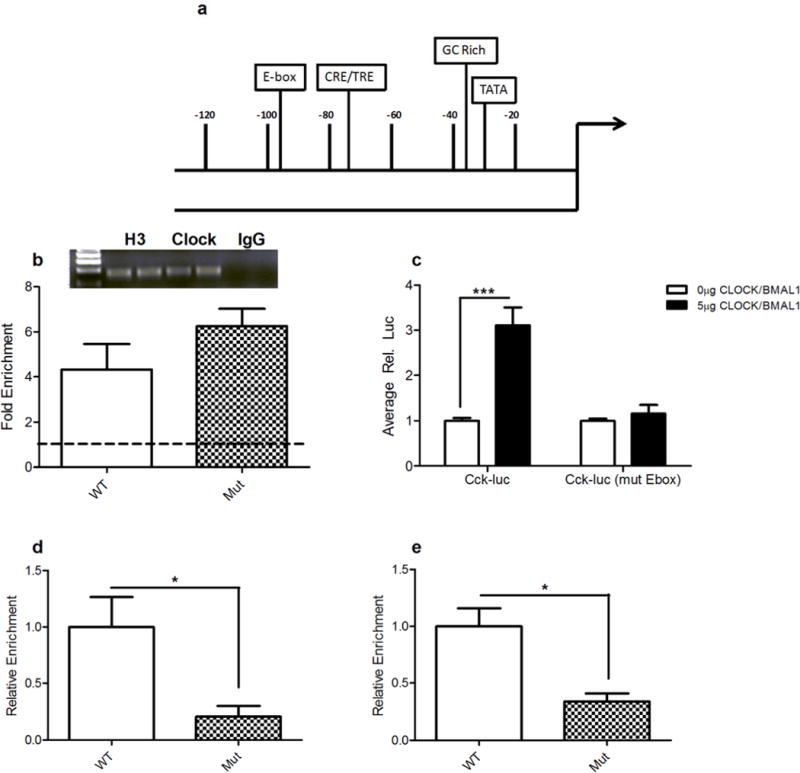
Figure 1
Figure 1. Cck is a CLOCK target gene and is regulated by the E-box element
(a) Diagram of the Cck promoter. The region containing the proximal promoter, including the E-Box, was amplified by quantitative qPCR after ChIP assays were performed. Additional important transcription factor binding sites and regulatory regions are highlighted. (b) Fold enrichment at proximal promoter region following ChIP with a CLOCK specific antibody comparing Clock∆19 mutants and wild-type (WT) littermate controls. One sample t-tests revealed that CLOCK is significantly enriched at the Cck promoter regions (~4–6 fold) above background in both WT (t4=2.920, p = 0.0432) and Clock∆19 (Mut) (t3=6.754. p = 0.0066) mice. Inset are representative agarose gels of q-PCR products from ChIP assays showing AcH3 positive control IPs, IgG negative control IPs, and CLOCK IPs; (n=4–6 per genotype). (c) Relative luciferase activity of PC12 cells transfected with a Cck-luc construct (318 bp) containing either an intact or mutated E-box element. Co-transfection of 5μg of CLOCK and BMAL1 expression constructs resulted in a significant increase in Cck-luc activity (t14=5.314, p =0.0001) when the E-box element was intact. Induction of Cck-luc activity was not detected when the E-box element was mutated; (n=5–8 per group). d) Relative enrichment of MLL1 at the Cck promoter in Clock∆19 mice and WT littermates was assessed by performing ChIP assays with an MLL1-specific antibody. A significant decrease in MLL1 at the Cck promoter was observed in Clock∆19 mice (t8=2.827, p = 0.0223); (n= 5 per group). e) Relative enrichment of H3K4me3 at the Cck promoter in Clock∆19 mice and WT littermates was assessed by performing ChIP assays with an H3K4me3-specific antibody. A significant decrease in MLL1 at the Cck promoter was observed in Clock∆19 mice (t8=2.377, p = 0.0415); (n= 5 per group). In all panels error bars show S.E.M.
Figure 2
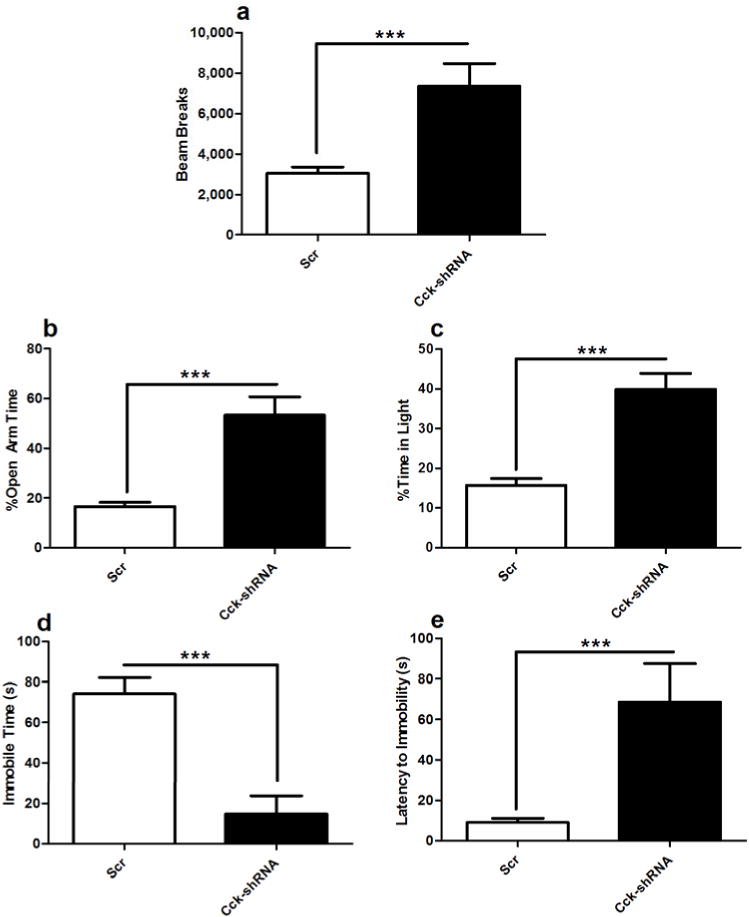
Figure 2. Knockdown ofCckin the VTA of wild type animals results in a manic-like phenotype
(a) Locomotor activity of AAV-Cck-shRNA and AAV-Scr injected C57BL/6J animals was assessed for two hours, 3 weeks after stereotaxic injection. AAV-Cck-shRNA injected animals are hyperactive when compared to AAV-Scr controls (t18= 3.756, p < 0.01). (b–c) Anxiety-related behavior was assessed in AAV-Cck-shRNA and AAV-Scr injected animals using (b) the elevated plus maze (EPM)and (c) dark/light box. AAV-Cck-shRNA injected animals are significantly less anxious than AAV-Scr controls as seen by (b) an increase in open arm time on the EPM (t16=4.90, p < 0.001) and (c) time spent in the light side of the dark/light box (t20=5.528, p < 0.0001). (d-e) Depression-related behavior was assessed in AAV-Cck-shRNA and AAV-Scr injected mice using the forced swim test. AAV-Cck-shRNA injected animals display less depression-related behavior than AAV-Scr controls as evidenced by (d) a decrease in total immobile time (t32=4.935, p < 0.0001) and (e) and increased latency to first bout of immobility (t14=3.126, p < 0.01); (n=15–20 per group). In all panels error bars show S.E.M.
Figure 3
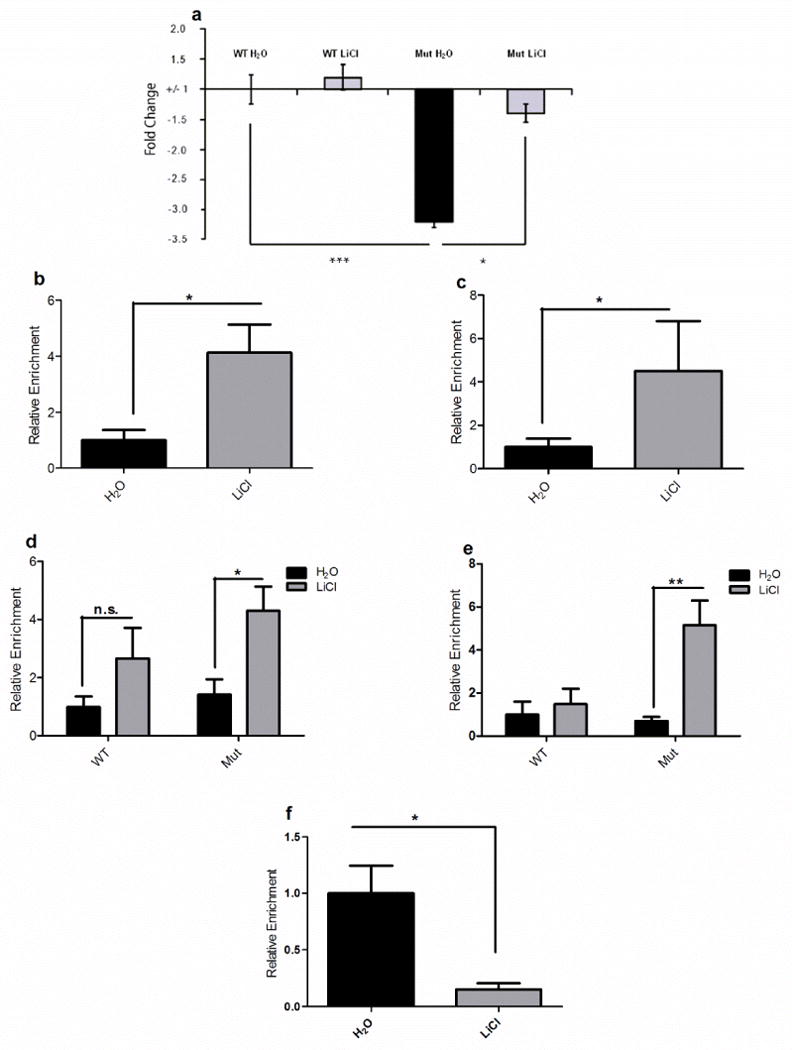
Figure 3. Effect of the Clock∆19 mutation and lithium treatment on Cck expression and H3k4me3 and MLL1 binding at the Cck promoter
(a) Relative mRNA levels of Cck in Clock∆19 mice and WT littermates receiving 10 days of water or lithium treatment (600 mg/L). Levels were normalized to an internal control, Gapdh. Analysis by two-way ANOVA revealed a significant decrease in Cck mRNA levels in untreated Clock∆19 mice compared to WT animals (main effect of genotype F1,20=16.99; p < 0.001). Bonferroni post hoc tests revealed that lithium treatment caused a significant increase in Cck expression in Clock∆19 mice relative to water alone, restoring it to near WT levels (t=2.600, p < 0.05). Lithium treatment had no detectable effect on WT Cck expression. In all panels error bars show S.E.M. (b) Relative levels of histone H3K4me3 at the Cck promoter in Clock∆19 mice following lithium treatment were assessed by performing ChIP assays with a H3K4me3 specific antibody. Lithium treatment caused a significant increase in levels like H3K4me3 at the Cck promoter (t9 = 2.690, p = 0.0248); (n=5–6 per group).(c) Relative enrichment of MLL1 at the Cck promoter in Clock∆19 mice following lithium treatment was assessed by performing ChIP assays with an MLL1-specific antibody. There was no significant change in MLL1 levels in lithium-treated Clock∆19 mice (t8=1.865, p = 0.0992); (n=5–6 per group). (d) Relative levels of acetylated histone H3 (AcH3) and acetylated histone H4 (AcH4) at the Cck promoter in Clock∆19 (Mut) mice and WT littermates following lithium (LiCl) treatment were assessed by performing ChIP assays with a AcH3 and AcH4 specific antibodies. Analysis by two-way ANOVA revealed a main effect of lithium treatment on AcH3 (d,F1,20=9.4, p=0.0061) and AcH4(e,F1,17=11.32, p=0.0037) levels. Bonferroni post-tests revealed a significant increase in levels of AcH3 (t = 2.744, p < 0.05) and AcH4 (t=4.198, p < 0.01) at the Cck promoter in Clock∆19 mice following lithium treatment, while lithium had no detectable effect on WT animals; (n= 5–6 per group). (f) Relative enrichment of CLOCK at the Cck promoter in Clock∆19 mice following lithium treatment was assessed by performing ChIP assays with a CLOCK-specific antibody. A significant decrease in CLOCK binding at the Cck promoter was observed in lithium-treated Clock∆19 mice (t9=3.137,p < 0.05); (n=5–6 per group). In all panels error bars show S.E.M.
Figure 4
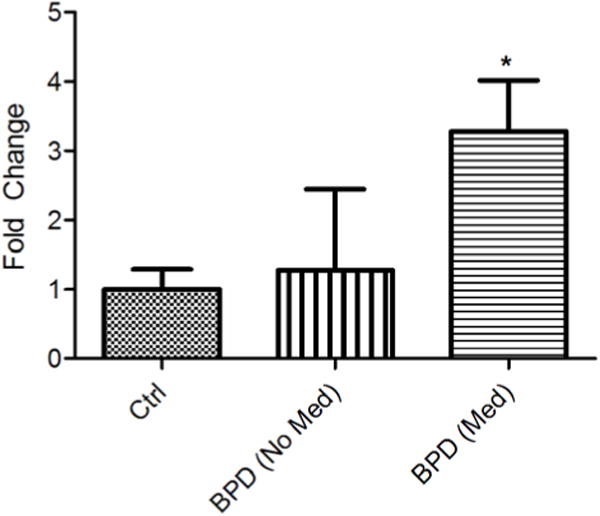
Figure 4. Regulation of Cck levels in the VTA of BPD patients by mood stabilizers
Relative mRNA levels of Cck in the VTA of BPD patients,either receiving (Med) or not receiving medication (No Med), and normal controls. Levels were normalized to an internal control,Gapdh. Analysis by one-way ANOVA a significant difference in means (F=4.5254, p = 0.0266). Bonferroni post hoc tests revealed that BPD patients receiving medication had significantly higher levels of Cck mRNA in the VTA than control patients (t = 2.903, p < 0.05). Cck levels in BPD patients not receiving medication did not differ significantly from either groups; (n = 9 for control, n= 3 for BPD (No Med), n = 8 for BPD (Med). n all panels error bars show S.E.M.
Figure 5
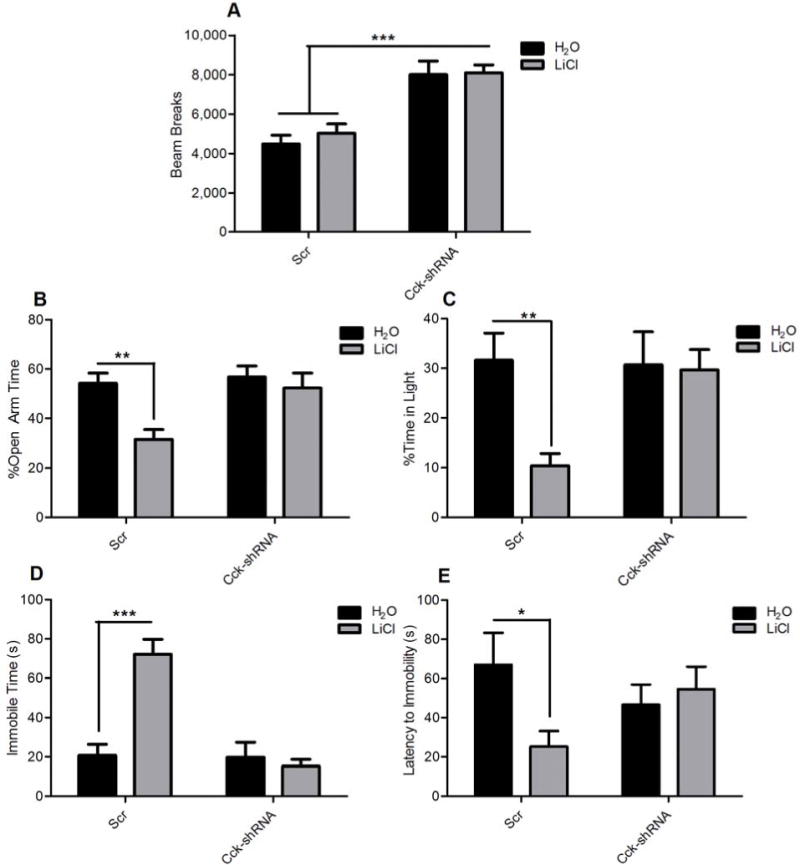
Figure 5. Increased Cck in the VTA is required for lithium’s therapeutic actions in the Clock∆19 mice
(a) Locomotor activity was measured in AAV-Cck-shRNA or AAV-Scr injected Clock∆19 mice for two hours following 10 days of lithium administration. Analysis by two-way ANOVA revealed a main effect of viral injection on locomotor activity (F1,53=36.34, p < 0.0001). Bonferroni post hoc tests revealed that there was no effect of any treatment on locomotor response to novelty. (b–c) Anxiety-related behavior was assessed in AAV-Cck-shRNA and AAV-Scr injected Clock∆19 mice following lithium treatment using the EPM (b) and dark/light box (c). Analysis by two-way ANOVA followed by Bonferonni post hoc tests revealed that lithium treatment caused a significant increase in anxiety-related behavior in AAV-Scr injected animals as seen by (b) a decrease in time spent in the open arms of the elevated plus maze (t=3.051, p < 0.01 and (c) a decrease in time spent in the light side of the dark/light box (t=3.343, p < 0.01). Lithium treatment had no detectable effect on AAV-Cck-shRNA injected animals. (d–e) Depression-related behavior following lithium treatment was assessed in AAV-Cck-shRNA and AAV-Scr injected Clock∆19 animals using the forced swim test. Analysis by two-way ANOVA followed by Bonferonni post-tests revealed that lithium treatment causes a significant increase in depression-related behavior in AAV-Scr injected animals as seen by (d) an increase in total immobile time (t=5.986, p < 0.0001), and (e) a decrease in latency to first bout of immobility (t=2.513, p < 0.05). Lithium treatment had no detectable effect on AAV-Cck-shRNA injected animals; (n=12–20 per group). In all panels error bars show S.E.M.

References

    1. Kupfer DJ, Angst J, Berk M, Dickerson F, Frangou S, Frank E, et al. Advances in bipolar disorder: selected sessions from the 2011 International Conference on Bipolar Disorder. Ann N Y Acad Sci. 2011;1242(1):1–25. - PubMed
    1. McClung CA. Circadian genes, rhythms and the biology of mood disorders. Pharmacol Ther. 2007;114(2):222–232. - PMC - PubMed
    1. Ko CH, Takahashi JS. Molecular components of the mammalian circadian clock. Hum Mol Genet. 2006;15:R271–277. Spec No 2. - PubMed
    1. Lamont EW, Coutu DL, Cermakian N, Boivin DB. Circadian rhythms and clock genes in psychotic disorders. Isr J Psychiatry Relat Sci. 2010;47(1):27–35. - PubMed
    1. Benedetti F, Dallaspezia S, Fulgosi MC, Lorenzi C, Serretti A, Barbini B, et al. Actimetric evidence that CLOCK 3111 T/C SNP influences sleep and activity patterns in patients affected by bipolar depression. Am J Med Genet B Neuropsychiatr Genet. 2007;144B(5):631–635. - PubMed

Publication types

MeSH terms