


Seminal plasma insemination during ovum-pickup--a method to increase pregnancy rate in IVF/ICSI procedure. A pilot randomized trial
- PMID: 23400375
- PMCID: PMC3644137
- DOI: 10.1007/s10815-013-9955-7
Seminal plasma insemination during ovum-pickup--a method to increase pregnancy rate in IVF/ICSI procedure. A pilot randomized trial
Abstract
Purpose: In IVF procedures, endometrial function is a limiting factor of the pregnancy rate and the aims of this study is to determine whether seminal plasma insemination at ovum pick-up in IVF has any effect on pregnancy rate.
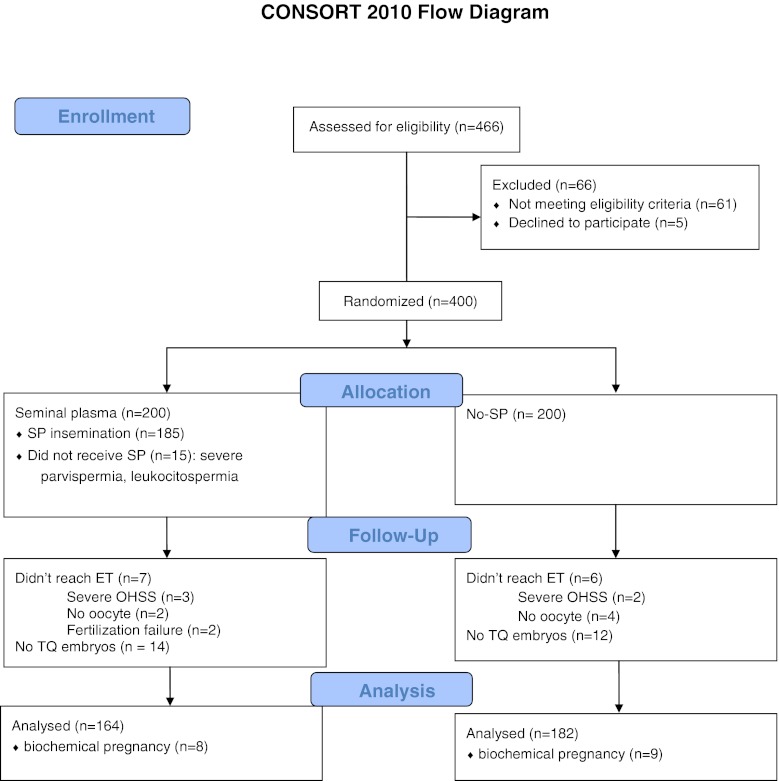
Methods: We designed a single center, 2 parallel groups, randomized pilot study. All couples undergoing an IVF procedure in our clinic between January 2010 and December 2011 were considered for enrollment in the study. The patients who met the inclusion criteria were randomized into two groups by simple randomization: the seminal plasma group (SP group) and the reference group (noSP group). We applied seminal plasma into the cervix and vaginal vault at the time of the OPU in the patients of the SP group. The primary outcome was the clinical pregnancy rate in the SP group compared with the noSP group and the secondary outcome measure was the implantation rate.
Results: 400 patients met the inclusion criteria and were randomized. 54 patients were excluded from the study mainly because they didn't undergo the embryo transfer. Finally, 164 patients were included in the SP group and 182 patients in the noSP group and analyzed. We found a statistically non-significant increase in the pregnancy rate in the SP group (55.5 % versus 44 %, p=0.09) and a statistically significant increase in the implantation rate (34.7 % versus 27.5 %, p=0.026).
Conclusions: Our results support the idea that SP insemination may have the potential to increase pregnancy rate in IVF procedures but further studies must be carried out.
References
-
- Bellinge BS, Copeland CM, Thomas TD, Mazzucchelli RE, O’Neil G, Cohen MJ. The influence of patient insemination on the implantation rate in an in vitro fertilization and embryo transfer program. Fertil Steril. 1986;46:25–26. - PubMed
-
- Coulam CB, Stern JJ. Effect of seminal plasma on implantation rates. Early Pregnancy. 1995;1:33–36. - PubMed
Publication types
MeSH terms
LinkOut - more resources
Full Text Sources
Other Literature Sources
Miscellaneous
