


Hepatitis B surface antigen could contribute to the immunopathogenesis of hepatitis B virus infection
- PMID: 23401786
- PMCID: PMC3562682
- DOI: 10.1155/2013/935295
Hepatitis B surface antigen could contribute to the immunopathogenesis of hepatitis B virus infection
Abstract
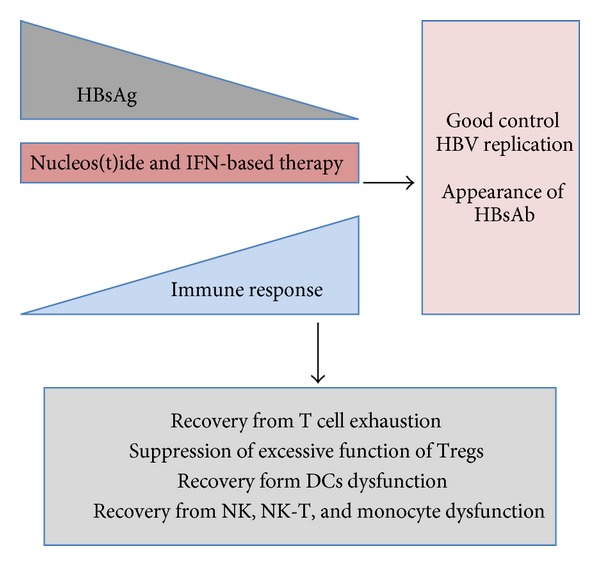
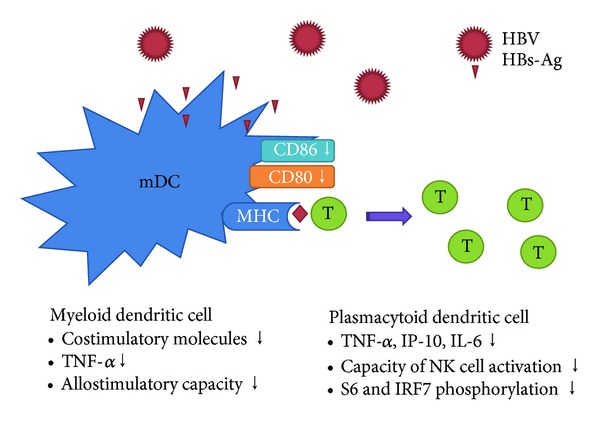
Various findings concerning the clinical significance of quantitative changes in hepatitis B surface antigen (HBsAg) during the acute and chronic phase of hepatitis B virus (HBV) infection have been reported. In addition to being a biomarker of HBV-replication activity, it has been reported that HBsAg could contribute to the immunopathogenesis of HBV persistent infection. Moreover, HBsAg could become an attractive target for immune therapy, since the cellular and humeral immune response against HBsAg might be able to control the HBV replication and life cycle. However, several reports have described the immune suppressive function of HBsAg. HBsAg might suppress monocytes, dendritic cells (DCs), natural killer (NK), and natural killer T (NK-T) cells by direct interaction. On the other hand, cytotoxic T lymphocytes (CTLs) and helper T (Th) cells were exhausted by high amounts of HBsAg. In this paper, we focused on the immunological aspects of HBsAg, since better understanding of the interaction between HBsAg and immune cells could contribute to the development of an immune therapy as well as a biomarker of the state of HBV persistent infection.
Figures
References
-
- Tiollais P, Pourcel C, Dejean A. The hepatitis B virus. Nature. 1985;317(6037):489–495. - PubMed
-
- Lai CL, Ratziu V, Yuen MF, Poynard T. Viral hepatitis B. The Lancet. 2003;362(9401):2089–2094. - PubMed
-
- Summers J, Mason WS. Replication of the genome of a hepatitis B-like virus by reverse transcription of an RNA intermediate. Cell. 1982;29(2):403–415. - PubMed
-
- Ganem D. The X files—one step closer to closure. Science. 2001;294(5550):2299–2300. - PubMed
LinkOut - more resources
Full Text Sources
Other Literature Sources
