


Effectiveness of a minimal psychological intervention to reduce mild to moderate depression and chronic fatigue in a working population: the design of a randomized controlled trial
- PMID: 23402525
- PMCID: PMC3579682
- DOI: 10.1186/1471-2458-13-129
Effectiveness of a minimal psychological intervention to reduce mild to moderate depression and chronic fatigue in a working population: the design of a randomized controlled trial
Abstract
Background: In a working population, common mental complaints like depressed mood and chronic fatigue are highly prevalent and often result in further deterioration of mental health and consequently absence from work. In a large occupational health setting, we will evaluate the (cost-) effectiveness of a Minimal Psychological Intervention (MPI), in reducing symptoms of depression and chronic fatigue in a working population. The MPI is also evaluated regarding its appreciation by worker, nurse, and occupational health physician (process evaluation). The tailor-made intervention is administered by nurses, who are trained in the principles of cognitive behavioural therapy and self-management.
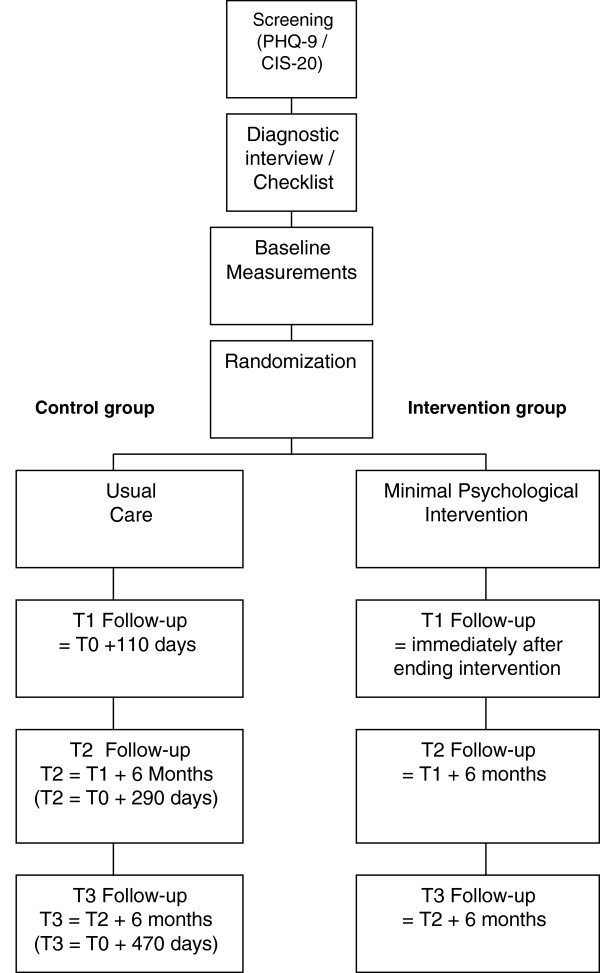
Methods/design: The presented WoPaCoM study (Work Participation of Workers with Common Mental complaints) is a two-armed randomized controlled trial, comparing MPI with usual care. A total number of 124 workers suffering from (chronic) mental fatigue or mild to moderate depression will be included. A stratified and block randomization will be applied, stratifying by customer organisation, income, and gender, using a block size of four. It will include a baseline measurement and subsequently follow up measurements after 4, 6 and 12 months. The primary outcome measures are symptoms of either fatigue (using the Checklist Individual Strength) and/or depression (using the Beck Depression Inventory) and secondary outcome measures include sickness absence, self efficacy, costs and quality of life. Analysis will include both univariate and multivariate techniques and data will be analysed according to the intention to treat principle.
Discussion: Patient recruitment in an occupational setting proves to be complicated and time consuming. Shift work for instance proved to be an obstacle for making appointments for consultation with the nurse. Furthermore, economic developments might have created job insecurity which negatively influenced participation in the study, with workers being anxious to be detected as having psychological problems. Additionally, long-term follow-up in a working population is time-consuming and continuously engages occupational health staff and administrative personnel to control the process of data gathering. However, if the intervention proves to be effective, occupational medicine will have a manageable option for treatment of workers who are at risk of loss of productivity or sickness absence.
Trial registration: Nederlands Trialregister NTR3162.
References
-
- Bültmann U, Kant IJ, Kasl SV, Beurskens A, van den Brandt P. Fatigue and psychological distress in the working population Psychometrics, prevalence, and correlates. J Psychosom Res. 2002;52:445–452. - PubMed
-
- Jansen N, Huibers M, van Amelsvoort L, Kant IJ. Aetiology of prolonged fatigue among workers. An overview of findings from the Maastricht Cohort Study. Tijdschr Psychiatr. 2007;49(8):537–545. - PubMed
-
- Judith A, Ricci J, Chee E, Lorandeau A, Berger M. Fatigue in the U.S. Workforce: Prevalence and Implications for Lost Productive Work Time. JOEM. 2007;49(1):1–10. - PubMed
Publication types
MeSH terms
LinkOut - more resources
Full Text Sources
Other Literature Sources
Medical
