


Surface availability of beta-glucans is critical determinant of host immune response to Cladosporium cladosporioides
- PMID: 23403046
- PMCID: PMC6145803
- DOI: 10.1016/j.jaci.2013.01.003
Surface availability of beta-glucans is critical determinant of host immune response to Cladosporium cladosporioides
Abstract
Background: It is well accepted that mold exposure is a major contributor to the development of asthma, and beta-glucans are often used as a surrogate for mold exposure in the environment. Beta-glucans are an important component of mold spores and are recognized by the immune system by their receptor, Dectin-1. Cladosporium cladosporioides spores have a high beta-glucan content, but the beta-glucans are not available on the surface of live spores.
Objective: We sought to determine whether altering the exposure of beta-glucans in C cladosporioides through heat killing could alter the immune response through binding to Dectin-1.
Methods: In a murine model of mold-induced asthma, mice were repeatedly exposed to either live or heat-killed C cladosporioides and the phenotype was determined by the measurement of airway hyperresponsiveness, airway inflammation, and cytokine production. Pro-inflammatory cytokines from dendritic cells were measured by using quantitative PCR and ELISA.
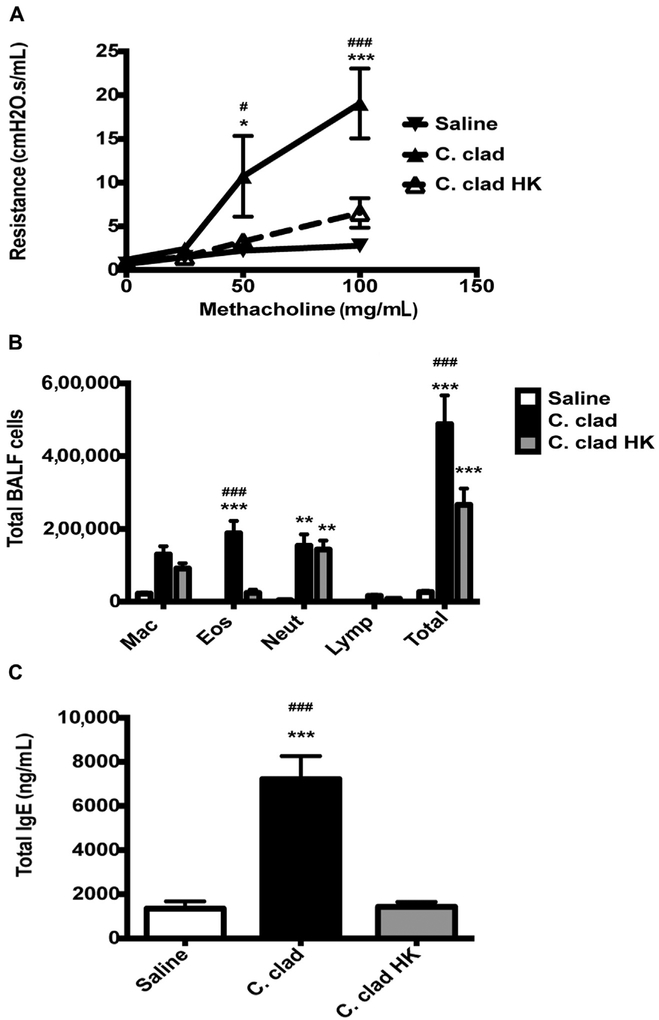
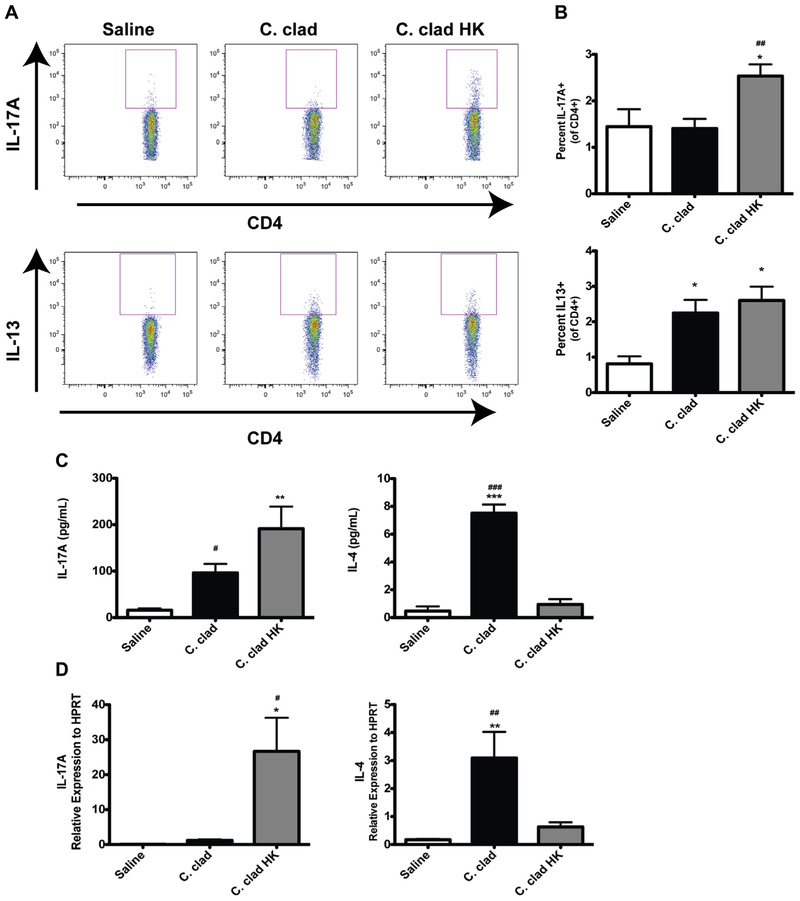
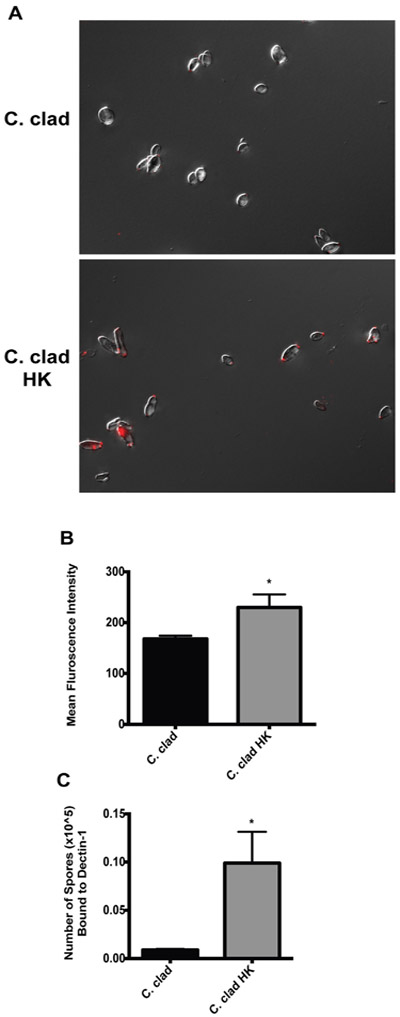
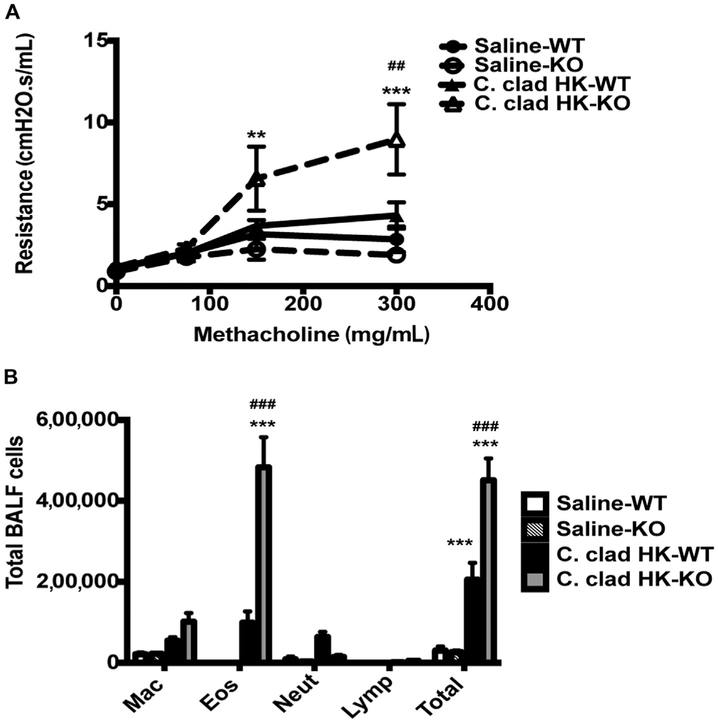
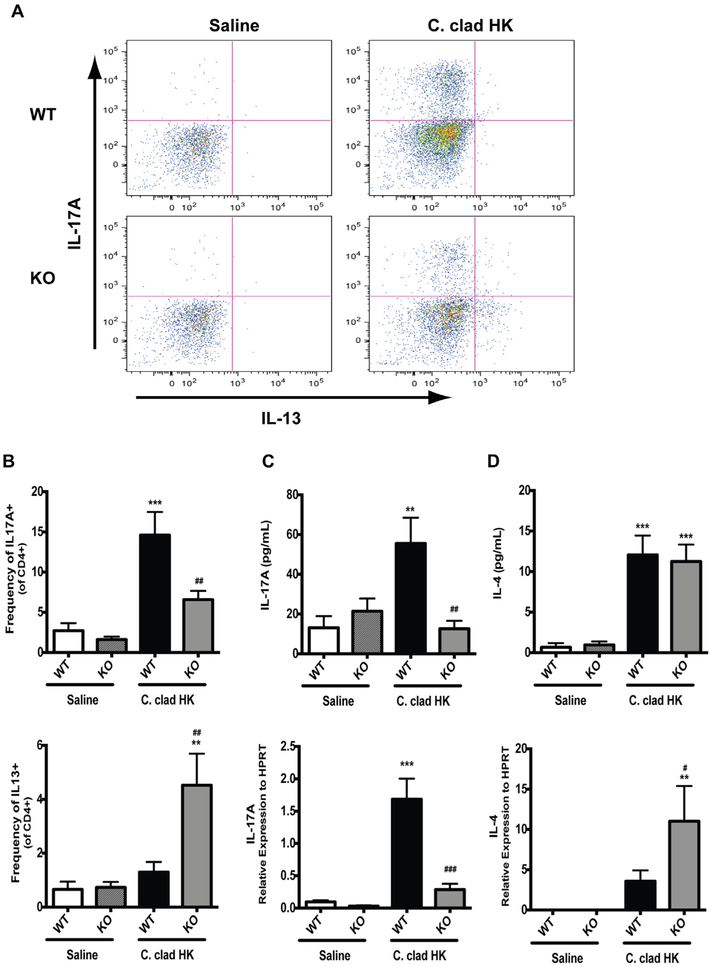
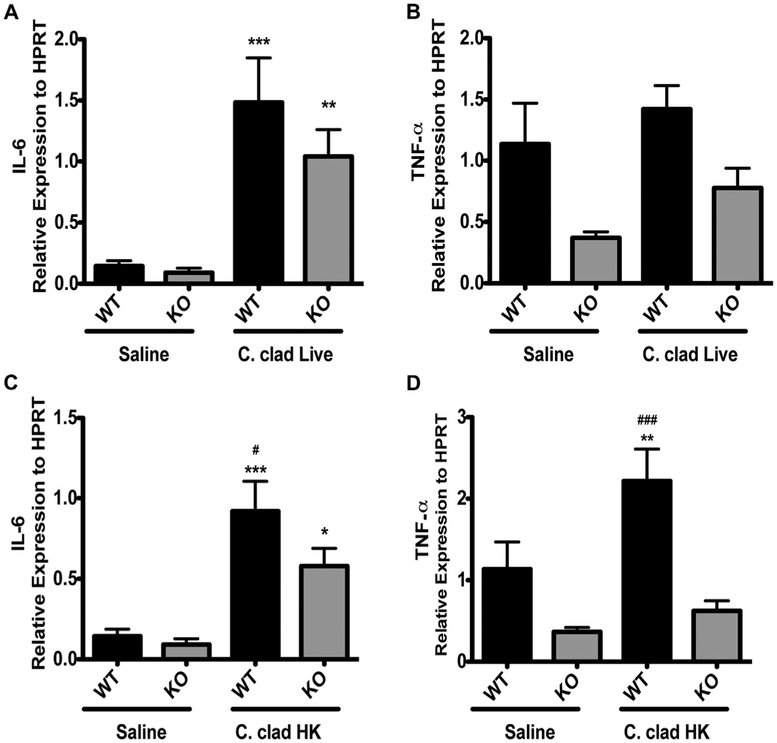
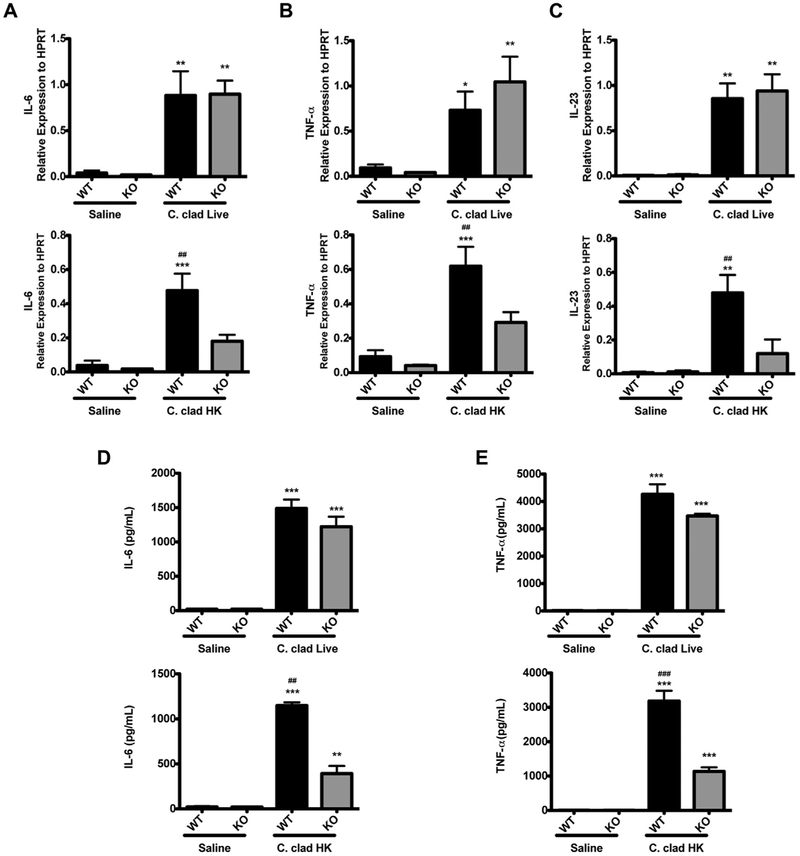
Results: Live C cladosporioides induced robust airway hyperresponsiveness, eosinophilia, and a predominately TH2 response, while heat-killed C cladosporioides induced a strong TH17 response and neutrophilic inflammation, but very mild airway hyperresponsiveness. Heat killing of C cladosporioides spores effectively exposed beta-glucans on the surface of the spores and increased binding to Dectin-1. In the absence of Dectin-1, heat-killed spores induced a predominantly TH2 response analogous to live spores. Furthermore, the production of TH17-skewing IL-6, IL-23, and TNF-α by dendritic cells in response to heat-killed C cladosporioides was dependent on Dectin-1.
Conclusions: The host immune response to C cladosporioides is dependent on the surface availability of beta-glucans rather than the total beta-glucan content.
Copyright © 2013 American Academy of Allergy, Asthma & Immunology. Published by Mosby, Inc. All rights reserved.
Conflict of interest statement
Disclosure of potential conflict of interest: R. A. Mintz-Cole has been supported by a Ruth L. Kirschstein NRSA Individual Fellowship. T. Reponen has received one or more grants from or has one or more grants pending with the US HUD (contract from the Centers for Disease Control and Prevention). G. K. Khurana Hershey has received one or more grants from or has one or more grants pending with the National Institutes of Health. The rest of the authors declare that they have no relevant conflicts of interest.
Figures
References
-
- Eduard W Fungal spores: a critical review of the toxicological and epidemiological evidence as a basis for occupational exposure limit setting. Crit Rev Toxicol 2009;39:799–864. - PubMed
-
- Belanger K, Beckett W, Triche E, Bracken MB, Holford T, Ren P, et al. Symptoms of wheeze and persistent cough in the first year of life: associations with indoor allergens, air contaminants, and maternal history of asthma. Am J Epidemiol 2003;158:195–202. - PubMed
-
- Halonen M, Stern DA, Wright AL, Taussig LM, Martinez FD. Alternaria as a major allergen for asthma in children raised in a desert environment. Am J Respir Crit Care Med 1997;155:1356–61. - PubMed
-
- Black PN, Udy AA, Brodie SM. Sensitivity to fungal allergens is a risk factor for life-threatening asthma. Allergy 2000;55:501–4. - PubMed
Publication types
MeSH terms
Substances
Grants and funding
LinkOut - more resources
Full Text Sources
Other Literature Sources
